Rhythmanalysis

Pathways for Change: The 2022 Annual Meeting, AAG Council, and the Climate Action Survey

Photo illustration of directional signs labeled here, there, and everywhere by Nick Fewings, Unsplash
Credit: Nick Fewings, Unsplash

The in-person component of the 2022 annual meeting was planned to be large. New York is traditionally a popular destination for meetings, and when hotel contracts were signed over five years ago, they were made with the assumption that there would be 10,000 attendees. Last year too, after both the 2020 and 2021 meetings went virtual-only, and before the Delta and Omicron variants upended overly optimistic assumptions about the course of the pandemic in a world of vaccine inequity and hesitancy, AAG anticipated that geographers would flock to New York to satisfy the pent-up demand for seeing their colleagues face-to-face.  

Alas, COVID-19 had other plans. Even at its maximum, fewer than 3,300 participants signed up to come in person to New York, a far cry from the 10,000 for which the conference was budgeted through room and food contracts, while roughly 1,400 signed up to participate remotely. Then Omicron arrived. AAG members — and, importantly, AAG staff — were faced with concerns not only about getting sick themselves, but also about family members, particularly the elderly and those too young to receive vaccinations. AAG also faced the high likelihood that pandemic-induced staffing shortages in New York would result in an inability to provide promised conference services, such as childcare.  

While some geographers argued that the peak would soon be past and that late February would look very different from early January, others pointed to overwhelmed hospitals and uncertainty about the rate of decline of infections after their peak. Some members wrote to AAG to urge it to go online as soon as possible, noting that other large scientific organizations were doing the same, while others wrote to urge AAG to continue with an in-person meeting, pointing out other societies that are not changing their plans. (Notably, many of these are smaller organizations, for whom a significantly smaller number of attendees changes the risk calculation, and which are also more likely to lack the contractual means to cut financial losses). In the meantime, the survey sent out to all members in January indicated that over 60% were not planning to or discouraged from attending due to the pandemic. In the end, a preponderance of ethical, logistical, and financial factors led to AAG’s decision to change the conference from hybrid to virtual.  

For those who had been planning to attend in person, I share your disappointment that we will not be together in New York, but I remain excited about the conference. I hope many attendees will set aside time for many sessions, just as we would for an in-person event. To name just a few events to look forward to, Sheryl Luzadder-Beach will be delivering her Past President’s Address on “Science, Geography, and Human Rights,; and Winona LaDuke will give a keynote address (planned as virtual from the start) on Water Protectors and the rights of wild rice. There will also be a presidential plenary on resurgent ethnonationalism, and a presidential plenary on climate justice 

* * 

Though I’ve laid out the reasons that the meeting will be all-virtual, I haven’t spelled out how the decision was reached. This relates to the more general question of how AAG operates and is governed, something I admit I was foggy on myself when I agreed to be nominated for this position, despite being a long-standing member of AAG. Here’s a brief primer.  

The AAG Council consists of six nationally elected at-large members, an international member, a student member, a member elected from each region, the president, vice president, the most recent past president, and the executive director serving in a non-voting ex officio capacity. Called a Council, this volunteer governing body acts as a board of directors for the Association. As such its tasks include voting to approve annual budgets prepared by the executive director, on any additional spending (such as for the COVID-19 rapid relief program), and on strategic plans; making decisions about editorial boards for AAG journals; deciding whether to adopt the recommendations of various committees and task forces; ratifying awards selected by committees; and approving slates of nominations for elections. The Council also reads and hears updates and annual reports from the regions, on the financial health of AAG, on journal operation, membership and communications, and more.  

Notably, regular Council meetings happen only twice a year. Packed agendas and infrequent meetings have led in the past to member frustration with Council for not moving quickly enough, for example, on decisions about task force or committee recommendations. Recently, AAG has been working with consultants to update its bylaws (you’ll see more communications about this soon) and operations, which will also include streamlining Council meetings to free up more time to discuss strategic issues, and adding one or two Council meetings a year so that major decisions can be made in a more timely fashion.  

A subset of Council is the Executive Committee, which consists of the treasurer and secretary, both elected from amongst councilors, the vice president, president, immediate past president, and again the executive director in ex-officio capacity. This committee meets more often, to prepare for Council meetings and discuss upcoming matters, but does not make any decisions requiring a formal vote. AAG elected officers have specific duties related to their posts. For example, the vice president attends regional meetings (along with the president and past president); the president chooses one or more themes for the annual meeting and writes this newsletter column; the past president delivers a past president’s address. They work with the executive director and the rest of Council to develop strategic plans and goals. But in terms of decision-making, they each simply vote as one member of Council.  

No elected board member is an executive of AAG; that is, they are not responsible for the operational management of day-to-day AAG business. That is the role of the professional staff, and in particular the executive director, who oversees the Council-approved budget and enters into contracts. The Council, in turn, evaluates the performance of the executive director.  

Returning, then, to the modality of our upcoming meeting in light of the Omicron wave, it was the executive director’s role to consult with staff members and Council, which was able to meet on short notice. After learning about and weighing the many relevant considerations, Council agreed that moving to an all-virtual 2022 Annual Meeting was the best option.  

* * 

Meeting modality considerations will continue to be relevant in the future; thus, I would like to share a few preliminary results from the AAG Meetings and Climate Action survey conducted in December. There were 885 responses to the survey, of which 784 were complete; my numbers below refer only to the complete surveys.  

Roughly 94% of respondents stated that they believe it is important and meaningful for AAG to take a leadership role in climate change. In order of popularity, the actions these respondents felt AAG should undertake were to engage in climate advocacy/provide policy recommendations (84%); divest from fossil fuel companies in the investment portfolio (77%); significantly reduce CO2 emissions associated with travel to annual meetings (68%); reduce carbon emissions from day-to-day AAG office operations (60%); and lower carbon emissions from physical infrastructure at AAG (58%).  

The most popular top reason given for attending the annual meeting was to network with other geographers; this was followed by giving papers or participating in panels; then listening to papers or panels; and finally, meeting up with old friends. While giving papers and listening to talks are eminently possible through the virtual format, the virtual networking events and “office hours” that AAG put together for the online 2020 and 2021 conferences were less well attended, whether due to Zoom fatigue, lack of awareness, or the fact that people expect networking to happen more spontaneously or in person. Nevertheless, more than 60% of respondents said they could probably or definitely achieve their meeting goals if the conference alternated annually between virtual and in-person. This rose to 70% for the scenario of alternating between national in-person and a regional networked hub in-person meetings. Also good news is that just over 50% of geographers state that they already renew their AAG membership every year regardless of whether they participate in the conference. Moving forward, one of AAG’s goals is to provide more services to members year-round, so that the other 50% also see benefits of renewing membership, beyond the annual meeting. 

Distinct challenges remain vis-à-vis the cost of hybrid options. Understandably, panelists participating virtually in a hybrid panel want to pay the virtual rather than in-person costs of attendance. AAG staff, however, have calculated that the labor costs of staffing for hybrid sessions is 16 times that of in-person sessions. (In-person, 1 tech can staff 8 sessions; for virtual, 1 tech is needed for 3 sessions; and for hybrid, 2 techs are needed per session, one online and one in person). Perhaps these ratios can improve in the future as technology improves, but for now, to meet service expectations, hybrid panels are expensive. A second challenge concerns streaming of in-person sessions to a virtual audience, something that I personally feel strongly about (75% of respondents also thought it is “very important” or “somewhat important”) given that it integrates remote with in-person components. While this should be possible in the future, we’ve learned that there are cost challenges associated with internet service fees for already-contracted venues. 

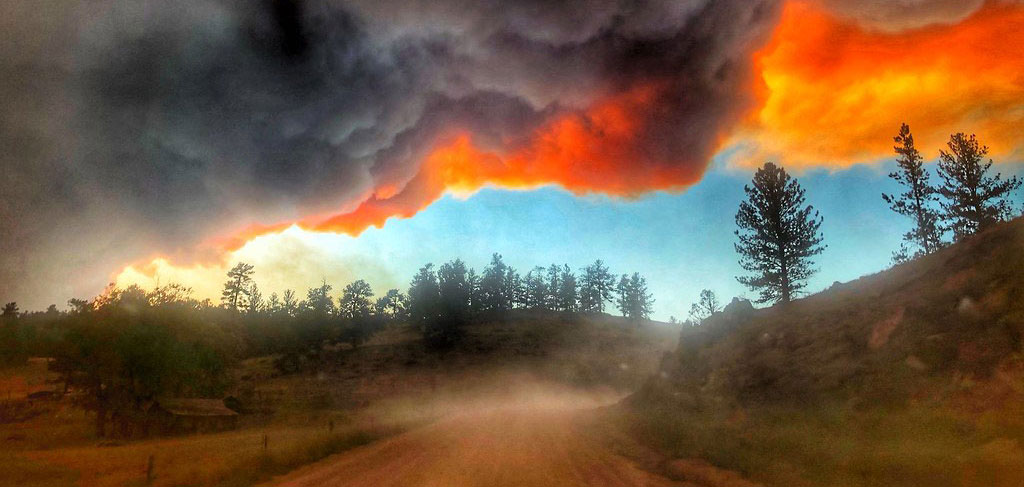
The climate action task force is conducting further analyses on the survey results. What seems clear for now is that, overall, AAG members are committed to acting collectively to address the devastating current and future effects of climate change. This is heartening as I contemplate the most recent close-to-home effects of climate change for me: a catastrophic winter grassland fire in Colorado that destroyed more than 1000 homes and caused more than 500 million dollars in damage in the last days of December, just south of my neighborhood. Geographers are at the forefront of producing knowledge about the relationships between climate change, wildfire, and suburban development. With patience, goodwill, and commitment, our geographical association can also be at the forefront of developing pathways for scholarly societies to respond to climate change. 

DOI: 10.14433/2017.0106


Please note: The ideas expressed in the AAG President’s column are not necessarily the views of the AAG as a whole. This column is traditionally a space in which the president may talk about their views or focus during their tenure as president of AAG, or spotlight their areas of professional work. Please feel free to email the president directly at emily [dot] yeh [at] colorado [dot] edu to enable a constructive discussion. 

    Share

Visiting Geographical Scientist Program – Approved Speakers

The following geographers have expressed a willingness to serve as Visiting Geographical Scientists. Speakers have expressed a particular desire to address the topics listed; however, some may be willing to address additional issues. Speakers who are not on the VGSP speaker list are welcome but are subject to GTU/AAG approval. Please confirm their status as a GTU member and forward their vitae to AAG Communities.

See a snapshot of past VGSP visits


Ahmed_WaquarWaquar Ahmed

Department of Geography, University of North Texas, Denton, TX 76203-5017
Voice 813-206-4352, E-mail Waquar.Ahmed@unt.edu

Current research topics: Geographies of Capitalism, multi-national corporations, foreign direct investments, geographies of development, energy infrastructure, state-society relations, governance, social movements, social theory, and India.

Alderman_DerekDerek H. Alderman

Chancellor’s Professor of Geography, Department of Geography and Sustainability, University of Tennessee, 305 Burchfiel Geography Building,
Knoxville, TN 377; Voice 865-974-0406, E-mail dalderma@utk.edu

Current research topics: Cultural and historical geography with a specific focus on landscapes of public memory, race, heritage tourism, social/spatial justice, critical place naming and mapping studies, and politics of geographic mobility and travel–all with the goal of advancing our understanding of the African American Freedom Struggle and the southeastern United States.

Bednarz_Sarah_Witham_2012Sarah Witham Bednarz

Professor Emerita, Department of Geography, Texas A&M University, 2321 Via Granada Place NW, Albuquerque, NM 87104, Voice 979-229-7247, E-mail s-bednarz@tamu.edu

Current research topics: Geography Education; Geography Education Research; Preparing 21st Century Skilled Students; Innovative Teaching and Learning in Geography and The Geosciences; Women in Geography.

Block_Daniel2019wDaniel Block

Chicago State University, 9501 S. King Drive, Chicago, IL 60628
Voice 773-995-2310, E-mail dblock@csu.edu

Current research topics: Geographies of Food and Agriculture, Urban Farming, Community Geography, Food Access and Health Disparities, Regulation, Chicago, Urban Geography, Race and Health, Community Geography.

Stanley D. BrunnStanley D. Brunn

Department of Geography, University of Kentucky,
Lexington, KY 40506-0027
Voice 859-257-6947, E-mail brunn@uky.edu

Current research topics: Writing and Publishing as a Professional Geographer; Central Asian Landscapes; Geographies of Religion; Engineering Earth: The Impacts of Mega-engineering Projects; Geographers: The Consummate Professionals.

Clark_JessieJessie Clark

Department of Geography, 1664 N. Virginia Street, Reno, NV 89557
Voice 775-784-6345, E-mail jessieclark@unr.edu

Current research topics: Turkey, Kurdistan, Feminist Political Geography and Geopolitics, Security, Gender and Development, Gender and Nationalism

Conzen_MichaelMichael P. Conzen

Committee on Geographical Studies, University of Chicago,
5828 South University Avenue, Chicago, IL 60637
Voice 312-702-8308, E-mail m-conzen@uchicago.edu

Current research topics: The Personality of American Cities; American Cultural Landscapes; U.S. Ethnic Homelands; American Pictorial County Atlases; German ‘Latin’ Colonies in America; Frontier Urban planning in the United States; Explorations in Comparative Urban Morphology (U.S., Brazil, Italy, China); Beginnings of the Modern Wine Industry in Northern California

Photo of Brittany CookBrittany Cook

Department of Geography & Anthropology, Louisiana State University,
Baton Rouge, LA 70803
Voice 225-578-6077, E-mail brittanycook@lsu.edu

Current research topics: Feminist political geography; political ecology; agriculture; critical development studies; rural livelihoods; olives; wheat; community geographies; social reproduction; racial capitalism; commodity chains and quality; gender; labor; food; heritage; Southwest Asia

corey_kennethKenneth E. Corey

Department of Geography, Michigan State University,
East Lansing, MI 48824-1117
Voice 517-432-4750, E-mail kenneth.corey@ssc.msu.edu

Current research topics: Urban and Regional Technology Planning for Local and Regional Intelligent Development; Planning Practice in the Global Knowledge Economy; The Singapore Model for Information and Communications Technology-based Development; Technology Corridors and Intelligence Corridors in Asia; and Global Information Society; Digital Development.

CulcasiKarenKaren Culcasi

330 Brooks Hall, West Virginia University, Morgantown, WV 26506
Voice 304-293-0383, E-mail karen.culcasi@mail.wvu.edu

Current research topics: Critical Geopolitics; Politics of Identity; Feminist Geopolitics, Gender and Conflict, Migration and Refugees, Critical Cartography and the Politics of Representation; the Middle East and the Arab World; Syrian Conflict; Syrian Refugees; Palestinian-Israeli Conflict; Palestinian Refugees; Arab Americans and Migration.

Photo of Meredith DeBoomMeredith DeBoom

Department of Geography, University of South Carolina, Columbia, SC 29208 E-mail meredith.deboom@gmail.com

Current research topics: African politics; China-Africa relations; development; energy transition; environmental geopolitics; Global China; green hydrogen; nuclear energy, political geography; resource politics; uranium.

DevineJennifer2019Jennifer Devine

Texas State University, 601 University Dr., San Marcos, TX 78666
Voice 512-245-3937, E-mail devine@txstate.edu

Current research topics: South – Central American Politics, Human-Environmental Relations, Community Resource Management, Grassroots Social Movements, Global Drug Policy, Feminist and Critical Race Theories, Tourism and Heritage Management.

DeVIVOAngolaMichael S. DeVivo

Department of Social Sciences, Grand Rapids Community College, Grand Rapids, MI 49503-3295
Voice 616-234-4410, E-mail mdevivo@grcc.edu

Current research topics: History of Geography in North America, Leadership in Academic Geography, African Wildlife Conservation and Community Development, Responsible Safari Tourism.

downsrogerRoger M. Downs

Department of Geography, 312B Walker, The Pennsylvania State University, University Park, PA 16802
Voice 814-865-1915, E-mail rd7@psu.edu

Current research topics: Spatial Thinking in Geography; Geography Education; Popularization in Geography; Cognitive Mapping; Hendrik van Loon: A Geographic Popularizer; Richard Edes Harrison: Cartographer Extraordinaire.

Maria FadimanMaria Fadiman

Department of Geosciences, Florida Atlantic University, Boca Raton, FL 33431
Voice 561-297-3314, E-mail mfadiman@fau.edu

Current research topics: Ethnobotany (the relationship between people and plants), Conservation and Cultural Knowledge in Rural Areas across the Globe Focusing on Latin America and Africa, Indigenous and Local People’s Use of the Environment.

Doug GambleDoug Gamble

Department of Geography and Geology, University of North Carolina Wilmington, Wilmington, NC 28403
Voice 910-962-3778, E-mail gambled@uncw.edu

Current research topics: Applied Climatology; Coastal and Island Environments; Caribbean and southeastern United States; Climate Change.

Miriam Gay-Antaki

Department of Geography & Environmental Studies, University of New Mexico,
Albuquerque, NM 87131
Voice 505-277-0111, E-mail mgayantaki@unm.edu

Current research topics: Human dimensions of climate change; climate science, policy and action; feminist decolonial geography; political ecology; science and technology studies; Latin America; Mexico; climate justice

gersmehl_philipPhilip Gersmehl

New York Center for Geographic Learning, 1006N Hunter College, 695 Park Avenue, New York NY 10065
Voice 651-398-7372, E-mail pgersmehl@gmail.com

Current research topics: Geographic Education; Spatial Cognition.

Debs GhoshDebarchana Ghosh

Department of Geography, University of Connecticut, Storrs, CT 06269
Voice 860-486-4292, E-mail debarchana.ghosh@uconn.edu

Current research topics: Structural and social determinants of health; health disparity among the vulnerable populations; healthcare accessibility; community engagement; GIS applications for health research; mixed methods; mapping, cartography; social network analysis.

Tim HawthorneTimothy Hawthorne

Auburn Department of Geosciences, Auburn University, Auburn, AL
Voice 334-844-4281, E-mail tlh0069@auburn.edu

Current research topics: Geographic Information Systems; Critical GIS; Community Geography; Citizen Science; Participatory Methods; Mixed Methods; Service Learning; Geographic Education; Drones; Belize; Mobile Science Labs; Study Abroad; International Fieldwork.

KaplanDaveHeadshotDavid H. Kaplan

Department of Geography, Kent State University, Kent, OH 44242
Voice 330-672-3221, E-mail dkaplan@kent.edu

Current research topics: Nationalism and Ethnonationalism in the US and World today, Ethnic Segregation and its Consequences, Ethnic Economies, Urban Redevelopment, Writing and Publishing as a Professional Geographer, History of Geography as a Discipline, Sustainable Transportation.

KorsonCadey2018Cadey Korson

Geography, St. Clair County Community College, 323 Erie St., P.O. Box 5015, Port Huron, MI 48061-5015
Voice: 810-989-5663, Email: cakorson@sc4.edu

Current research topics: Critical geopolitics, political development of sub-national island jurisdictions, and Indigenous rights in the Francophone Pacific; Indigenous placemaking and urban governance; Popular culture and geography education; Commemoration and national identity.

McCutcheonPriscilla2019wPriscilla McCutcheon

Department of Geography, University of Kentucky, 853 Patterson Office Tower, Lexington, KY 40506-0027
Voice 859-257-6057, E-mail priscilla.mccutcheon@uky.edu

Current research topics: Alternative food movements, sustainable agriculture, Black geographies, race and racism, microaggressions, spirituality and religion.

McMaster_RobertRobert B. McMaster

Department of Geography, University of Minnesota, Minneapolis, MN 55455
Voice 612-625-6080, E-mail mcmaster@umn.edu

Current research topics: Cartographic Generalization; Risk Assessment and GIS; GIS and society.

Miyares_InesInes M. Miyares

Department of Geography, Hunter College, 695 Park Ave,
New York, NY, 10065
Voice 212-772-5443, E-mail imiyares@hunter.cuny.edu

Current research topics: Population/Social Geography, Immigration and Refugee Policy, Urban Ethnic/Cultural Geography, Latin America, Geographies of Hawaii.

William MoseleyWilliam G. Moseley

Department of Geography, Macalester College, St. Paul, MN 55105-1899
Voice 651-696-6126, E-mail moseley@macalester.edu

Current research topics: Human-environment and development geographer with research interests in political ecology, tropical agriculture, food security, land tenure, rural development and Africa.

Napton_DarrellDarrell Napton

Department of Geography, South Dakota State University, Brookings, SD 57007-0648
Voice 605-688-4511, E-mail Darrell_Napton@sdstate.edu

Current research topics: Agricultural Geography in California and the Corn Belt; Recent Changes in United States Land Use and Land Cover; Driving Forces of U.S. Land Use Change.

Naylor_LindsaymugLindsay Naylor

Department of Geography & Spatial Sciences, 125 Academy Street, Newark, DE 19716. Voice 302-831-8271, Email lnaylor@udel.edu

Current research topics: Decolonial geographies, feminist geographies, care, diverse economies, fair trade, food sovereignty, development geopolitics, and bodies.

Nellis_M_DuaneM. Duane Nellis

Office of the President, 150 Administration Building, Box 42005, Lubbock, Texas 79409-2005
Voice 806-742-2121, E-mail pres.webmaster@ttu.edu

Current research topics: Environmental Constraints; Information Technology Applications in Botswana.

price_marieMarie Price

Department of Geography, George Washington University, Washington, D.C. 20052-0042. Voice 202-994-6187, E-mail mprice@gwu.edu

Current research topics: Migration; Latin America; US-Mexico Border, Immigrant Integration and Exclusion; Diasporas; Global Cities.

pryde_philipPhilip R. Pryde

Department of Geography, San Diego State University, San Diego, CA 92182
Voice 619-594-5525, E-mail ppryde@mail.sdsu.edu

Current research topics: Biodiversity Protection in the Post-Soviet Russian Federation; California’s Salton Sea: Migratory Lifeline or America’s Dead Sea.

Jonnell Allen RobinsonJonnell Allen Robinson

Department of Geography, Syracuse University, 144 Eggers Hall, Syracuse, NY 13244-1020
Voice 315-443-4890, E-mail jdallen@syr.edu

Current research topics: Community Geography; Participatory GIS; Engaged Scholarship; Medical Geography; Urban Geography.

rutherford_davidDavid J. Rutherford

Department of Public Policy Leadership, University of Mississippi, University, MS 38677
Voice 662-915-1337, E-mail druther@olemiss.edu

Current research topics: Geography of Religions and Belief Systems; Geography Education; Global Environmental Issues; Geography of the Colorado Plateau; Major Forces of Change in the Contemporary World; Climate change; Geography of Southern California and the Channel Islands.

Shannon_Gary_W_2012Gary W. Shannon

Department of Geography, University of Kentucky,
Lexington, KY 40605-0027
Voice 606-257-2931, E-mail gwshan00@pop.uky.edu

Current research topics: Telemedicine: Restructuring the Medical Care Landscape in the 21st Century; GIS Applications in Health Care Planning; The Geography of Mental Health Care: From Street to Asylum to Street once again; New and Re-emerging Infectious and Contagious Diseases.

Swanson_Kate_2015Kate Swanson

Department of International Development Studies, Marion McCain Building, 6135 University Ave., Dalhousie University, PO Box 15000, Halifax, NS, Canada B3H 4R2  Voice: 902-494-3317, Email: Kate.Swanson@dal.ca

Current research topics: Poverty and Inequality; Children and Youth; Migration; Latin America; U.S./Mexico Border Region

Torres_RebeccaRebecca Torres

Department of Geography and the Environment, University of Texas at Austin, 1 University Station C1200, Austin, TX 78712
Voice 512-232-1580, E-mail rebecca.torres@austin.utexas.edu

Current research topics: Migration; Rural Development; Agriculture; Gender; Tourism; Activist Scholarship.

Leon YacherLeon Yacher

Department of Geography, Southern Connecticut State University, 501 Crescent Street, New Haven, CT 06515-1355
Voice 203-392-5825, E-mail yacher@southernct.edu

Current research topics: Central Asia; History of Geography in Latin America; Latin America; Connecticut Geography.

    Share

About the Newsletter

Newsletter Editor
Emily Frisan

Director of Communications
Lisa Schamess

Director of Design and Digital Platforms
Becky Pendergast

The AAG Newsletter is an online-only publication. It is sent to members’ inboxes 10 times a year and published on the website to highlight the news and other online content published by the AAG.
View the editorial guidelines

Join Our Mailing List

Don’t miss a single issue of the AAG Newsletter. If you don’t already have an account, create one or log in to your current account and select the AAG Newsletter in the communications preferences of your member dashboard. You can also visit the AAG Resource Hub regularly for the most recent news, stories, and announcements.

Past Issues of the AAG Newsletter

Archived copies of the AAG Newsletter from 2003 to 2012 are available as PDFs and following years are compiled on web posts.
View past issues

    Share

World Geography Bowl

world geography bowl

The World Geography Bowl is a quiz bowl tournament held annually since 1993 at the Annual Meeting of the AAG, featuring teams of graduate and undergraduate geography students representing each of the AAG’s regional divisions. Contestants are selected by regional divisions via a competitive process, which in many divisions includes participation in a regional geography bowl held at the division’s annual meeting. If you are interested in participating, contact your regional division leadership for more information.

The winning team, runners-up, and high scoring individuals are awarded with prizes, provided by the generous donations of corporate benefactors. In addition, each participant in the World Geography Bowl receives a travel stipend, co-sponsored by the AAG and that student’s regional division, greatly offsetting expenses for attendance at the national meeting. Typically, approximately 50 students benefit each year from World Geography Bowl stipends.

The World Geography Bowl is fully staffed by volunteers, who write and edit questions and help run the proceedings as judges, scorekeepers and moderators. For more information on organizing a team, joining the World Geography Bowl Executive Committee, or volunteering at the national event, contact the World Geography Bowl executive director, Dr. Jamison Conley, at West Virginia University or the AAG Geography Bowl coordinator, Emily Fekete.

WGB2014_East-Lakes-champs2 geography bowl
AAG Pacific Coast Regional Division 2014 World Geography Bowl Champions
2017 Winning World Geography Bowl Team: Great Plains Rocky Mountain Region

AAG World Geography Bowl Conduct Policy

The American Association of Geographers (AAG) World Geography Bowl is a friendly, team-oriented competition between students in the AAG Regional Divisions. General bullying, intimidation, or hostility directed toward volunteers, audience members, or student competitors (both between and within teams) at the AAG World Geography Bowl is not tolerated. Additionally, as an AAG-sponsored event, the World Geography Bowl falls under the AAG Annual Meeting conduct policy which states:

The American Association of Geographers (AAG) advocates a positive culture of inclusion and respect for the dignity of each individual. AAG opposes all forms of discrimination against and harassment on the basis of an individual’s race, age, religion, creed, color, ancestry, citizenship, national or ethnic origin, language preference, immigration status, disability, medical condition, military or veteran status, social or socioeconomic status or condition, sex, gender identity or expression, sexual orientation, or any other classification protected by applicable local, state or federal law. This policy applies to attendees, AAG staff, speakers, exhibitors, or event venue staff at any AAG-sponsored event, as well as AAG-sponsored meeting social events (such as the international reception, exhibit hall networking events, field trips and receptions).

Therefore, all student competitors, volunteers, and audience members at the AAG World Geography Bowl agree to comply with this policy and alert staff or security when they have knowledge of dangerous situations, violations of this policy, or individuals in distress. Those who are found to be in violation of this policy may be asked to leave, will forfeit their standing towards the MVP Award, and may forfeit their right to participate in future AAG World Geography Bowl events.

For more information about the AAG Conduct Policy visit here.

World Geography Bowl Previous Awardees

2023 Great Plains/Rocky Mountain Division

2022 Southwest Division

2021 Mid-Atlantic Division

2020 Canceled

2019 Mid-Atlantic Division

2018 Mid-Atlantic Division

2017 Great Plains/Rocky Mountain Division

2016 Southeast Division

2015 Association of Pacific Coast Geographers

2014 East Lakes Division

2013 Middle States Division

2012 Great Plains/Rocky Mountain Division

2011 Great Plains/Rocky Mountain Division

2010 Southeast Division

2009 Association of Pacific Coast Geographers

2008 Middle States Division

2007 Middle States Division

2006 Great Plains/Rocky Mountain Division

2005 Mid-Atlantic Division

2004 Southeast Division of the AAG

2003 Southwest AAG

2002 Middle States Division

2001 Southeast Division of the AAG

2000 Southeast Division of the AAG

1999 East Lakes Division

1998 East Lakes Division

1997 Middle States Division

1996 Southeast Division

1995 Southeast Division

1994

1993 Southeast Division

    Share
    Share

Down from the Shelf: Accommodating Color Palettes for All

Graphic shows red and green varied sized dots forming shapes on the globe by Justin Schuetz
Illustration by Justin Schuetz

An Evaluation of Color Selections to Accommodate Map Users with Color-Vision Impairments. Judy M. Olson & Cynthia A. Brewer (1997) Annals of the Association of American Geographers, 87:1, 103-134. (JGS)

No two people see color exactly alike. This is especially true for the 4% of people, mostly men, who have difficulty distinguishing red from green due to genetic variations that affect the presence or function of red or green photoreceptors in the human eye. A smaller fraction of people have difficulty distinguishing blue and yellow.

Variation in color perception has been appreciated since at least the 18th century, but mapmakers have only recently been willing and able to accommodate that variation in their design process. The shift toward more broadly accessible map design has been enabled, in part, by new technologies for choosing and controlling color throughout map production. More fundamentally, it has also depended on rigorous research into how people read colors on maps, research that has emerged in the last 20 years. 

In 1997, geographers Judy Olson and Cynthia Brewer made an important early contribution to that body of work. In the Annals of the AAG, they published a set of experiments that described how different color palettes affected how  people with differences in red-green color perception received and interpreted maps. 

Olson and Brewer designed two sets of color palettes for their experiments: one intended to confuse viewers who had difficulty discriminating red from green and one intended to accommodate those viewers. Among map users who were unable to discriminate red from green, “accommodating” palettes enabled faster responses in legend-matching tasks and were preferred over “confusing” palettes. Notably, their work also revealed that viewers who were able to distinguish red from green showed no clear preference for either set of palettes, regardless of whether they “accommodated” or “confused” other viewers. 

Nearly 25 years after publication of Olson and Brewer’s findings, Brewer has pursued the development of the mapping aid ColorBrewer, which builds on the first essential lessons from their work: people are different, differences should be understood, and accommodating differences doesn’t have to come at a cost.

Try out ColorBrewer for yourself
    Share

Wayfinding: In the Philippines, Local Knowledge Makes a Global Impact

Photo of Philippine pangolin by Lucy Archer, ZSL Philippines
Philippine pangolin by Lucy Archer, ZSL Philippines

The shy, nocturnal pangolin — an animal that looks like a cross between an anteater and an artichoke — is hard to forget if you happen to see one. That’s what researchers from the United Kingdom and Philippines relied on when they sought out 1,296 residents of the Province of Palawan to describe their interactions with the critically endangered Philippine pangolins (Manis culionensis). Researcher Lucy Archer of the Zoological Society of London joined with the Philippines-based research team of Charity Apale, Darlyn Corona, Josefa Gacilos, and Ronald Amada to conduct interviews across the Palawan province in several languages, greatly enhancing their understanding of pangolin habitat and its interactions with human settlements.

Close-up photo of a pangolin in the Philippines by Lucy Archer, ZSL Philippines


Traditional wildlife surveys can take significant amounts of time and are relatively expensive to perform at large spatial scales. In addition, they are often unreliable for rare, nocturnal, and semi-arboreal species that are difficult to detect, like the Philippine pangolin. So, Archer and her collaborators turned to people living throughout the historical range of the species for information. By recording when and where people had last seen a Philippine pangolin, and whether they thought populations were increasing or decreasing in size, the group was able to establish important baseline information about the geographic distribution and status of pangolin populations. At the same time, and just as importantly, this approach yielded an understanding of differences in threats to pangolins across local geographies, and in attitudes of local residents about engaging in conservation. 

Map of pangolin survey sites in the Philippines


“Aside from providing us with much clearer perspective on where pangolins still exist, the people we interviewed also expressed their willingness to conserve the species,” says project manage Charity Apale. “This gives us hope, knowing that the local people in Palawan show inclination towards conserving and protecting the Critically Endangered Philippine pangolin.” 

Archer agrees. “Local people living throughout Palawan province have provided us with a much clearer perspective on where pangolins still occur, and the differences in pangolin status throughout their geographic range,” she says. “With 87 percent  of respondents able to recognize and provide further information on pangolins, we believe local people are well placed to help guide and co-develop conservation efforts for the species.” 

Photo of researchers studying a map of the Philippines where pangolins are natively found by Lucy Archer, ZSL Philippines
Researchers study a map of the Philippines where pangolins are natively found by Lucy Archer, ZSL Philippines


Unfortunately, this work is urgently needed. The Philippine pangolin is one of eight extant pangolin species worldwide, all of which have been placed on the IUCN Red List of Threatened Species, are hunted for meat, and are covered in scales that are trafficked for traditional medicines. Beyond the direct threats posed by trapping and hunting, palm oil plantations are supplanting pangolin habitats at a rapid rate, and climate change poses a diverse set of indirect threats to populations.

Despite the challenges faced by Philippine pangolin populations, Archer and her collaborators are optimistic that their study results will enable conservation action. People living throughout Palawan have provided them with a much clearer perspective on where pangolins occur and on differences in local perceptions of pangolins throughout their geographic range. Both kinds of geographic information will be essential as conservation efforts for pangolins continue to take shape.

Archer, L. J., Papworth, S. K., Apale, C. M., Corona, D. B., Gacilos, J. T., Amada, R. L., Waterman, C., & Turvey, S. T. (2020). Scaling up local ecological knowledge to prioritise areas for protection: Determining Philippine pangolin distribution, status and threats. Global Ecology and Conservation, 24, e01395.


    Share

Geomorphology

The Pandemic, the Scale of ‘We’, and the Fortress-Individual: Geographies of Responsibility

Photo illustration of directional signs labeled here, there, and everywhere by Nick Fewings, Unsplash
Credit: Nick Fewings, Unsplash

The in-person component of the 2022 annual meeting was planned to be large. New York is traditionally a popular destination for meetings, and when hotel contracts were signed over five years ago, they were made with the assumption that there would be 10,000 attendees. Last year too, after both the 2020 and 2021 meetings went virtual-only, and before the Delta and Omicron variants upended overly optimistic assumptions about the course of the pandemic in a world of vaccine inequity and hesitancy, AAG anticipated that geographers would flock to New York to satisfy the pent-up demand for seeing their colleagues face-to-face.  

Alas, COVID-19 had other plans. Even at its maximum, fewer than 3,300 participants signed up to come in person to New York, a far cry from the 10,000 for which the conference was budgeted through room and food contracts, while roughly 1,400 signed up to participate remotely. Then Omicron arrived. AAG members — and, importantly, AAG staff — were faced with concerns not only about getting sick themselves, but also about family members, particularly the elderly and those too young to receive vaccinations. AAG also faced the high likelihood that pandemic-induced staffing shortages in New York would result in an inability to provide promised conference services, such as childcare.  

While some geographers argued that the peak would soon be past and that late February would look very different from early January, others pointed to overwhelmed hospitals and uncertainty about the rate of decline of infections after their peak. Some members wrote to AAG to urge it to go online as soon as possible, noting that other large scientific organizations were doing the same, while others wrote to urge AAG to continue with an in-person meeting, pointing out other societies that are not changing their plans. (Notably, many of these are smaller organizations, for whom a significantly smaller number of attendees changes the risk calculation, and which are also more likely to lack the contractual means to cut financial losses). In the meantime, the survey sent out to all members in January indicated that over 60% were not planning to or discouraged from attending due to the pandemic. In the end, a preponderance of ethical, logistical, and financial factors led to AAG’s decision to change the conference from hybrid to virtual.  

For those who had been planning to attend in person, I share your disappointment that we will not be together in New York, but I remain excited about the conference. I hope many attendees will set aside time for many sessions, just as we would for an in-person event. To name just a few events to look forward to, Sheryl Luzadder-Beach will be delivering her Past President’s Address on “Science, Geography, and Human Rights,; and Winona LaDuke will give a keynote address (planned as virtual from the start) on Water Protectors and the rights of wild rice. There will also be a presidential plenary on resurgent ethnonationalism, and a presidential plenary on climate justice 

* * 

Though I’ve laid out the reasons that the meeting will be all-virtual, I haven’t spelled out how the decision was reached. This relates to the more general question of how AAG operates and is governed, something I admit I was foggy on myself when I agreed to be nominated for this position, despite being a long-standing member of AAG. Here’s a brief primer.  

The AAG Council consists of six nationally elected at-large members, an international member, a student member, a member elected from each region, the president, vice president, the most recent past president, and the executive director serving in a non-voting ex officio capacity. Called a Council, this volunteer governing body acts as a board of directors for the Association. As such its tasks include voting to approve annual budgets prepared by the executive director, on any additional spending (such as for the COVID-19 rapid relief program), and on strategic plans; making decisions about editorial boards for AAG journals; deciding whether to adopt the recommendations of various committees and task forces; ratifying awards selected by committees; and approving slates of nominations for elections. The Council also reads and hears updates and annual reports from the regions, on the financial health of AAG, on journal operation, membership and communications, and more.  

Notably, regular Council meetings happen only twice a year. Packed agendas and infrequent meetings have led in the past to member frustration with Council for not moving quickly enough, for example, on decisions about task force or committee recommendations. Recently, AAG has been working with consultants to update its bylaws (you’ll see more communications about this soon) and operations, which will also include streamlining Council meetings to free up more time to discuss strategic issues, and adding one or two Council meetings a year so that major decisions can be made in a more timely fashion.  

A subset of Council is the Executive Committee, which consists of the treasurer and secretary, both elected from amongst councilors, the vice president, president, immediate past president, and again the executive director in ex-officio capacity. This committee meets more often, to prepare for Council meetings and discuss upcoming matters, but does not make any decisions requiring a formal vote. AAG elected officers have specific duties related to their posts. For example, the vice president attends regional meetings (along with the president and past president); the president chooses one or more themes for the annual meeting and writes this newsletter column; the past president delivers a past president’s address. They work with the executive director and the rest of Council to develop strategic plans and goals. But in terms of decision-making, they each simply vote as one member of Council.  

No elected board member is an executive of AAG; that is, they are not responsible for the operational management of day-to-day AAG business. That is the role of the professional staff, and in particular the executive director, who oversees the Council-approved budget and enters into contracts. The Council, in turn, evaluates the performance of the executive director.  

Returning, then, to the modality of our upcoming meeting in light of the Omicron wave, it was the executive director’s role to consult with staff members and Council, which was able to meet on short notice. After learning about and weighing the many relevant considerations, Council agreed that moving to an all-virtual 2022 Annual Meeting was the best option.  

* * 

Meeting modality considerations will continue to be relevant in the future; thus, I would like to share a few preliminary results from the AAG Meetings and Climate Action survey conducted in December. There were 885 responses to the survey, of which 784 were complete; my numbers below refer only to the complete surveys.  

Roughly 94% of respondents stated that they believe it is important and meaningful for AAG to take a leadership role in climate change. In order of popularity, the actions these respondents felt AAG should undertake were to engage in climate advocacy/provide policy recommendations (84%); divest from fossil fuel companies in the investment portfolio (77%); significantly reduce CO2 emissions associated with travel to annual meetings (68%); reduce carbon emissions from day-to-day AAG office operations (60%); and lower carbon emissions from physical infrastructure at AAG (58%).  

The most popular top reason given for attending the annual meeting was to network with other geographers; this was followed by giving papers or participating in panels; then listening to papers or panels; and finally, meeting up with old friends. While giving papers and listening to talks are eminently possible through the virtual format, the virtual networking events and “office hours” that AAG put together for the online 2020 and 2021 conferences were less well attended, whether due to Zoom fatigue, lack of awareness, or the fact that people expect networking to happen more spontaneously or in person. Nevertheless, more than 60% of respondents said they could probably or definitely achieve their meeting goals if the conference alternated annually between virtual and in-person. This rose to 70% for the scenario of alternating between national in-person and a regional networked hub in-person meetings. Also good news is that just over 50% of geographers state that they already renew their AAG membership every year regardless of whether they participate in the conference. Moving forward, one of AAG’s goals is to provide more services to members year-round, so that the other 50% also see benefits of renewing membership, beyond the annual meeting. 

Distinct challenges remain vis-à-vis the cost of hybrid options. Understandably, panelists participating virtually in a hybrid panel want to pay the virtual rather than in-person costs of attendance. AAG staff, however, have calculated that the labor costs of staffing for hybrid sessions is 16 times that of in-person sessions. (In-person, 1 tech can staff 8 sessions; for virtual, 1 tech is needed for 3 sessions; and for hybrid, 2 techs are needed per session, one online and one in person). Perhaps these ratios can improve in the future as technology improves, but for now, to meet service expectations, hybrid panels are expensive. A second challenge concerns streaming of in-person sessions to a virtual audience, something that I personally feel strongly about (75% of respondents also thought it is “very important” or “somewhat important”) given that it integrates remote with in-person components. While this should be possible in the future, we’ve learned that there are cost challenges associated with internet service fees for already-contracted venues. 

The climate action task force is conducting further analyses on the survey results. What seems clear for now is that, overall, AAG members are committed to acting collectively to address the devastating current and future effects of climate change. This is heartening as I contemplate the most recent close-to-home effects of climate change for me: a catastrophic winter grassland fire in Colorado that destroyed more than 1000 homes and caused more than 500 million dollars in damage in the last days of December, just south of my neighborhood. Geographers are at the forefront of producing knowledge about the relationships between climate change, wildfire, and suburban development. With patience, goodwill, and commitment, our geographical association can also be at the forefront of developing pathways for scholarly societies to respond to climate change. 

DOI: 10.14433/2017.0106


Please note: The ideas expressed in the AAG President’s column are not necessarily the views of the AAG as a whole. This column is traditionally a space in which the president may talk about their views or focus during their tenure as president of AAG, or spotlight their areas of professional work. Please feel free to email the president directly at emily [dot] yeh [at] colorado [dot] edu to enable a constructive discussion. 

    Share