Share
    Share

On the Map: Traveling by Trolley Back to the Dinosaurs

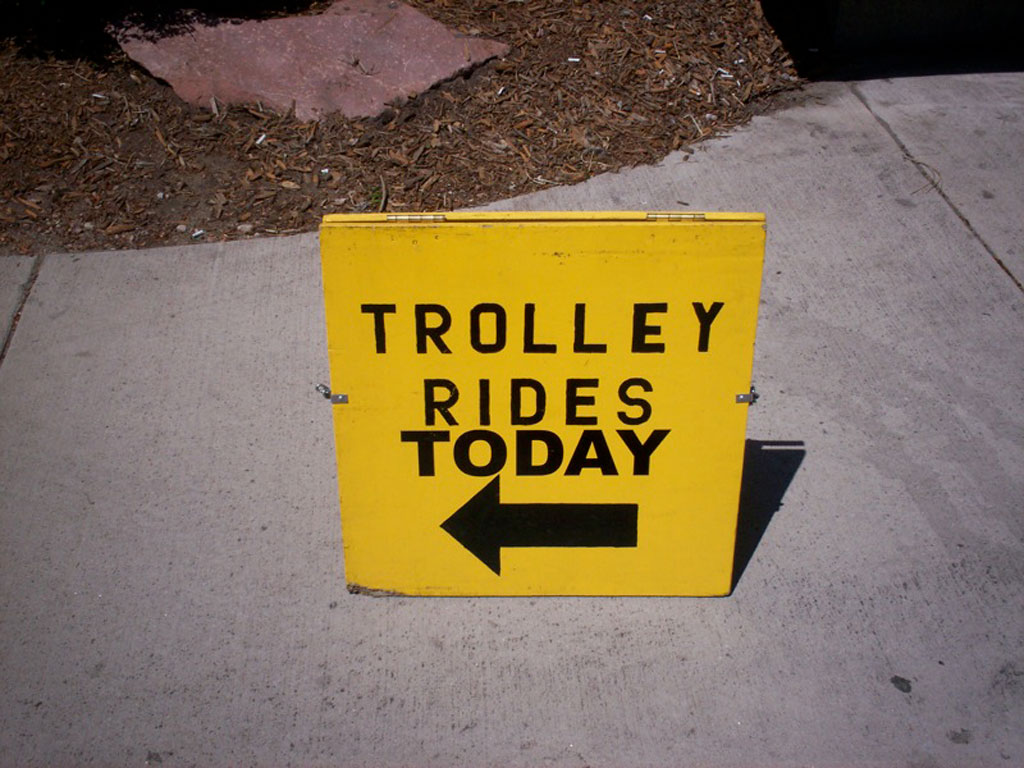
A cheerful yellow sign announces “Trolley Rides Today.” Credit: Paul Swansen, Flickr
A cheerful yellow sign announces “Trolley Rides Today.” Image by Paul Swansen, Flickr (CC BY-ND 2.0)


By Samantha Hinton

From the Fossil Trace Golf Course to the Denver Museum of Nature and Science, Denver is a modern city where the age of the dinosaurs is still present.  

One of the best ways to experience Denver’s dinosaurs is the Denver Trolley route (formerly called the Platte Valley Trolley route) to Lakewood Gulch, home to the site of the first Triceratops fossil ever found. 


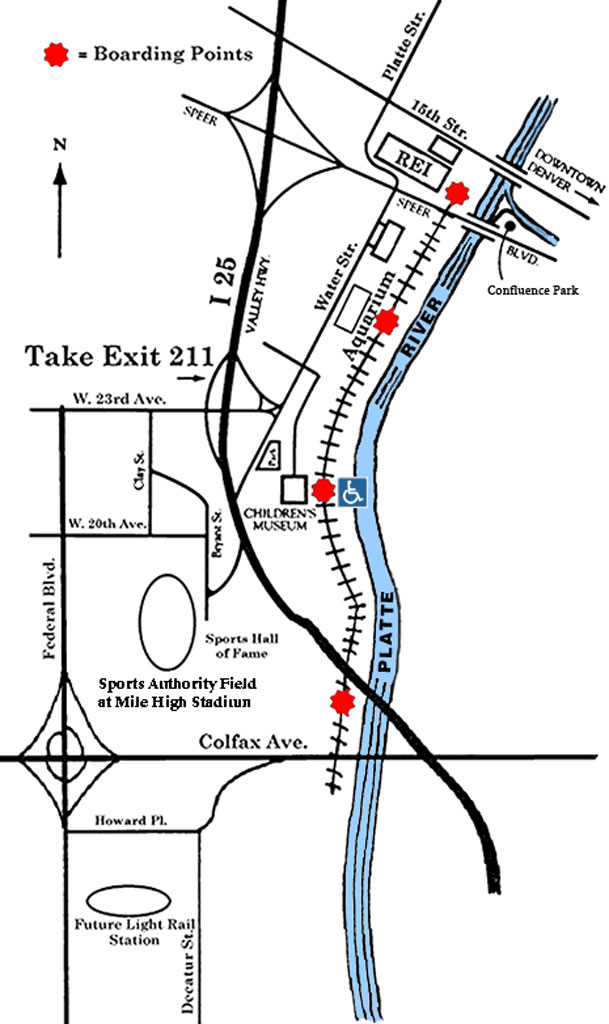
Map showing the Denver Trolley route starting at Confluence Park in downtown Denver and hugging the Platte River Greenway. Credit: Denver Trolley
The Denver Trolley starts at Confluence Park in downtown Denver and hugs the Platte River Greenway. Credit: Denver Trolley


In 1887, American paleontologist, John Bell Hatcher discovered the mostly intact triceratops skull and horns and sent it to colleague, Othniel Charles Marsh. Marsh mistakenly thought the bones were from a bison, and they were not confirmed to be from a triceratops until the following year when another set of remarkably similar fossils was discovered in the area.   

The trolley trip to Lakewood Gulch combines history and paleontology with transportation geography. The current Denver Trolley system recalls the city’s once-extensive electric rail transit system. At its peak in the early 20th century, the trolley system had over 250 miles of track connecting the city and another 40 miles connected Denver to Golden and Boulder. In 1910, the system had 87,819,000 passengers.  


Map showing the Denver streetcar routes in 1917. Credit: Denver Urbanism
Denver streetcar routes in 1917. Credit: Denver Urbanism


Also in 1910, there were only 3,000 automobiles in Denver. After World War II, the American economy highly encouraged modernizing everyday life. By 1928, there were 78,000 privately owned automobiles and trolley ridership declined by 59%. By 1951, all the city’s trolley lines were abandoned and replaced by a new urban bus system.  

The Denver Trolley, a small section of that rail system, was later restored and reopened on July 4th, 1989, to revive some of the history and nostalgia along a route of some of Denver’s most popular attractions. The trolley runs Friday, Saturday, and Sunday from early spring to around Oct. 31. Tickets are $3 for adults and $2 for children. Other stops along the route include Confluence Park, REI’s flagship store, Elitch Gardens, and The Children Museum of Denver.   

Sources: Denver Trolley Colorado, Denver The Mile High City; “Dinosaurs in Denver,” Fossils Facts and Finds; “Triceratops Facts You Need to Know,” Denver Urbanism; “The History of Denver’s Streetcars and Their Routes”  

DOI: 10.14433/2017.0129

    Share

On the Map: Denver’s Five Points and Whittier neighborhoods

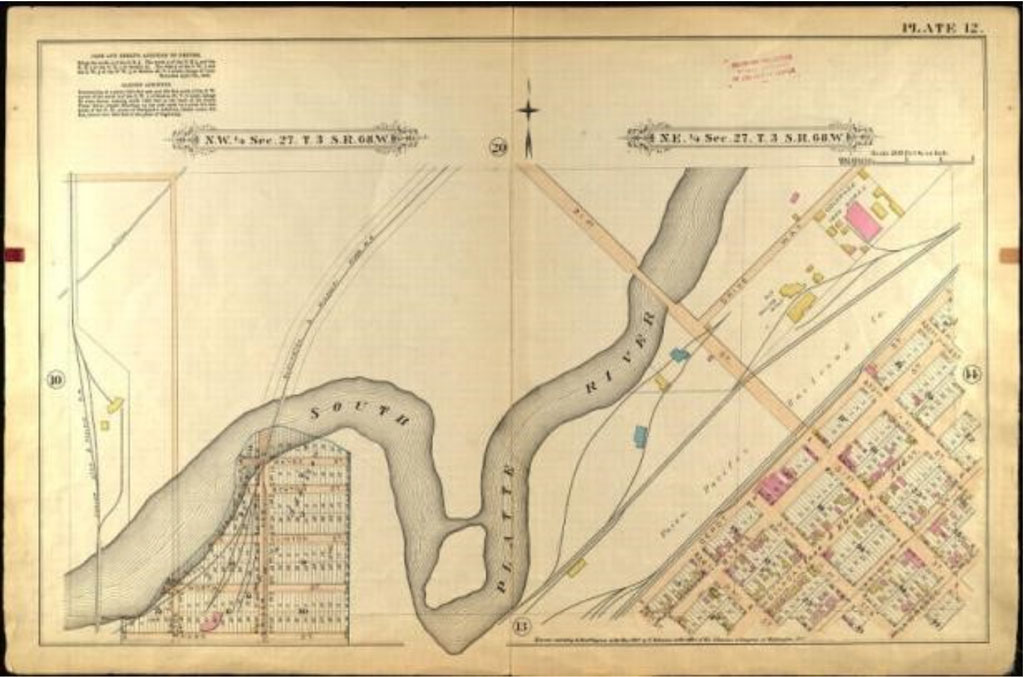
Image of Robinson Atlas of the City of Denver (Plate 12). Source: Denver Public Library, Special Collections

By Sam Hinton with Lisa Schamess

Northeast of downtown Denver, the Five Points and Whittier neighborhoods are among the city’s oldest, the first to extend beyond Denver’s original Congressional Grant. As a longstanding center for African American life in Denver, as well as a hub for the Chicano Movement, these neighborhoods are a vital location in the city.  

Five Points starts at 17th and Downing on the east edge and extends north along Downing to 38th Street. The Whittier neighborhood is less extensive, starting at 23rd and Downing Street and extending north until East Martin King, Jr. Boulevard. Established in the 1870s, Five Points was named after Denver’s diagonal downtown grid with a rectangular suburban grid, which meet at Washington Street, 27th Street, 26th Avenue, and Welton Street. Whittier Elementary School was named in honor of John Greenleaf Whittier (1807-1892), an American poet and abolitionist. 

The neighborhoods were and still are today dynamic and multi-cultural places. Many Latinx-Americans and Asian Americans work and reside in the area. While it was always historically a home to African Americans, increasing segregation in the 1920s resulted in more than 90% of Denver’s African American residents living in Five Points or Whittier during the mid-20th century.  

Throughout the 1930s, 40s, and 50s, the area was also a significant cultural and entertainment destination. The area is home to Denver’s first urban park, Colorado’s oldest Black church, and Temple Emanuel, one of the state’s oldest synagogues. Jazz also runs strongly through Five Points and Whittier’s narrative. Sometimes called the “Harlem of the West,” the area was a popular stop for jazz stars like Billie Holiday, Louis Armstrong and Miles Davis. They played clubs like the Rossonian and the Rainbow Room, and Benny Hooper’s hotel. Today, the annual Five Points Jazz Festival and Juneteenth Music Festival are renowned.  

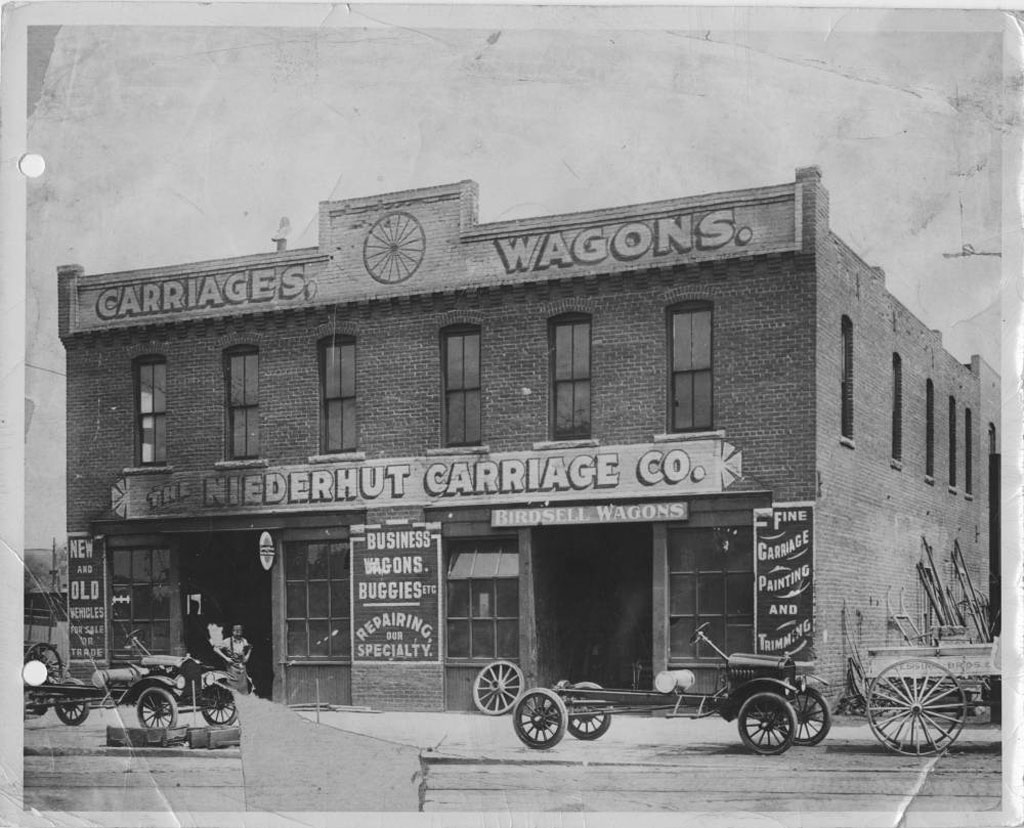
The neighborhoods have a rich entrepreneurial history. For example, the Niederhut Carriage Company was a family-run business by brothers Henry and William Niederhut for a century, and one of the largest transportation manufacturing companies in Denver.  

In 1920, Dr. Clarence Holmes founded a dental practice at 2602 Welton Street and was the first African American to join the Denver Dental Society. A graduate of Howard University in Washington, DC, he otherwise lived his entire life in Denver. He was born to a family that valued civic responsibility: his mother Mary Holmes was the first African American woman to run for the state legislature. Dr. Holmes helped found the Colorado-Wyoming branch of the National Association for the Advancement of Colored People (NAACP). His early years as the first Black dentist in Denver were “rough,” he said in 1973, with obstacles put in his path by segregation, individual racism and intimidation, and white supremacist forces in professional societies and businesses serving dentists. Hear Dr. Holmes offer his oral history to the Denver Public Library in 1973 (Content Warning: frank use of racist terminology). 

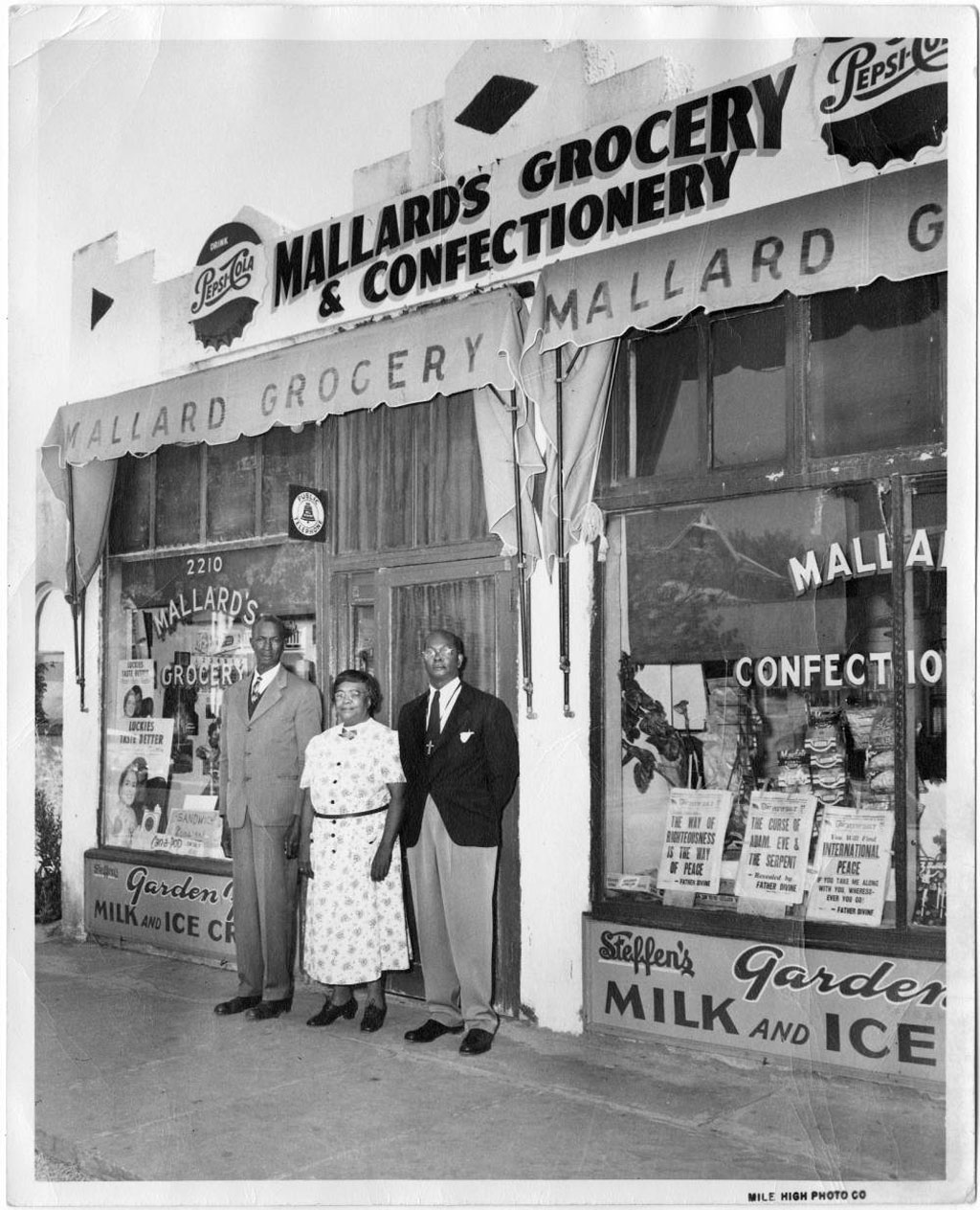
Reverend David West Mallard owned multiple businesses including Mallard’s Grocery and Confectionery. Other notable businesses included Rice’s Tap Room and Oven, The Rhythm Records and Sporting Goods Shop, the American Woodmen’s Insurance Company, and Melvina’s Beauty Shop. 


Photo of Niederhut Carriage Company circa 1900; credit Denver Public Library Special Collections
Niederhut Carriage Company circa 1900. Credit: Denver Public Library Special Collections


Photo of David and Virginia Mallard in front of their store, circa 1948, with an unidentified man. Credit: Denver Public Library Special Collections
David and Virginia Mallard in front of their store, circa 1948, with an unidentified man. Credit: Denver Public Library Special Collections


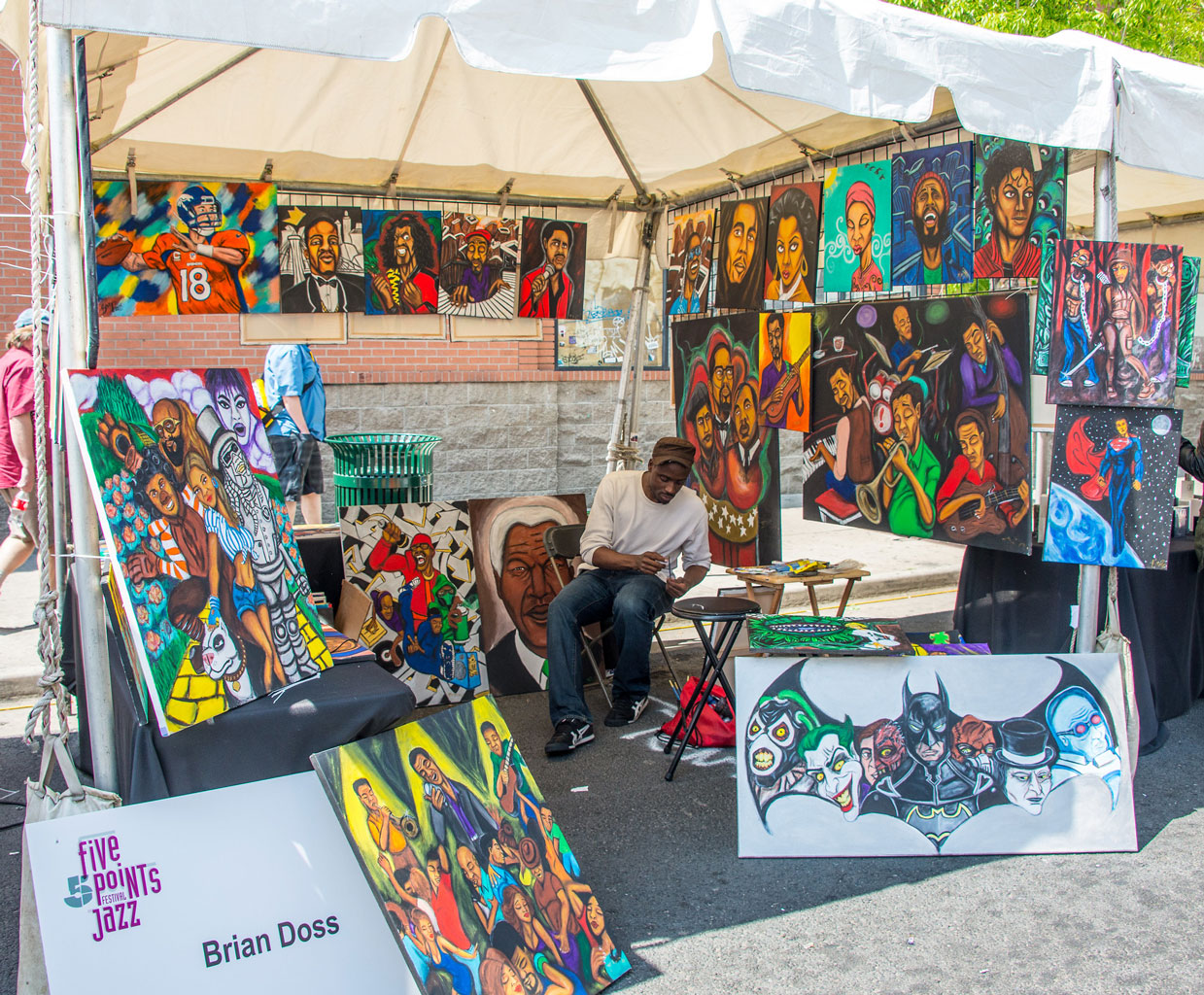
Today, many descendants of the original Black residents no longer live in Five Points. Efforts to bring new life to the community have included a new urban rail line and the renovation of the Rossonian Hotel. These changes, however, have also accelerated gentrification, Nonetheless, the Five Points and Whittier remain an important touchpoint for Black and Latinx communities. The neighborhoods host many artists and are the center of several lively mural projects depicting their history and culture, such as La Serpienta Dorada and the Five Points Mural Gallery.  


Photo of Artist Brian Doss at the annual Jazz Festival in Five Points. Credit: Kent Kanuse, Flickr.
Artist Brian Doss at the annual Jazz Festival in Five Points. Credit: Kent Kanuse, Flickr.


Learn more: 

The neighborhood Business Improvement District hosts a self-guided, self-paced walking tour of Five Points. Five Points Plus is a museum and online exhibit that showcases the human stories and collective memory of living, working, and growing up in Five Points. Developed in partnership with the Black American West Museum and Heritage Center along with Five Points community members and supported by the Blair-Caldwell African American Research Library (Denver Public Library) and Manual Highschool. Prepare for your visit by finding out about the Black-owned and other businesses in the area. 

This article was prepared using sources from Denver.org and the Denver Public Library 

DOI: 10.14433/2017.0126

    Share

Ashok Dutt

Dr. Ashok K. Dutt, Professor Emeritus at the University of Akron, Ohio and a long time AAG member passed away on November 4, 2022. He was 91 years old.

He studied geography at the master and doctoral levels at Patna University (India, 1955, 1961). Subsequently, he was a Post-Doctoral Fellow at the Institute of Social Studies at Hague (Netherlands, 1964)  and studied physical planning under the supervision of  Professor J.P. Thijsee. He then emigrated to the United States and began his academic career at St. Anselm’s College (New Hampshire, 1966-68), Asian Institute, East Carolina University (Summer, 1967) and spent the remainder of his career teaching and conducting research at the Department of Geography and Urban Studies, University of Akron (1968-2004).

He had a distinguished career in teaching and research in the areas of urban, social, medical, and development planning with regional interests in Europe, Asia and US. He published over a dozen co-edited books and more than 200 research papers, book chapters, and encyclopedic entries. A notable contribution of his research was the conceptualization of the models of urban city forms called the Colonial-based South Asian City and Bazaar-based South Asian City. His most recent co-edited book is titled Urban and Regional Planning and Development: 20th Century Forms and 21st Century Transformations (Springer, 2020). He was a Fulbright scholar in India (1988-89) and was recognized as the recipient of distinguished scholar award by the Asian Geography and Regional Development Planning Specialty groups at the Association of American Geographers (1991 and 1992).

He is survived by his wife Professor Emeritus Hiran Dutta, daughters Jhumku Kohtz and Rinku Dutt and grandchildren.

By Sudhir Thakur, Professor, California State University Sacramento

    Share

On the Map: The Spot Where Modern Denver Began

Confluence Park rapids and beach with a backdrop of the Denver Skyline by Kent Kanouse, Creative Commons

The confluence of two rivers in downtown Denver — Niinéniiniicíihéhe (the South Platte River) and Cherry Creek — marks the 1858 gold strike that launched a major city.

This spot also marks the prospectors’ encounter with the Arapaho, whose winter camping grounds and sovereign land this was, as affirmed in the 1851 Treaty of Fort Laramie. In addition to white settlers, Cherokee Nation citizens made up a significant number of the early prospectors, pushed off their own land after the 1828 Georgia Gold Rush and subsequent Trail of Tears.

At the site of Confluence Park, it was William Greenberry “Green” Russell who led the group that began a search for gold there in May 1858. When they found indications four miles south, their temporary settlement became what is now known as Denver.

In the intervening century, the 10.5-mile stretch of the South Platte River where Confluence Park rests fell on hard times, like many urban rivers. By the 1970s, it was a polluted, not only neglected but a frequent dumping site, “Denver’s receptacle for anything they wanted out of sight, out of mind.” according to Colorado State Senator Joe Shoemaker, who led the campaign to restore the riverfront. In 1974, Shoemaker co-founded the Platte River Development Committee with then-Denver Mayor Bill McNichols, eventually transforming it into the Greenway Foundation. The park underwent a long renovation and reopened with more amenities in 2018.

Confluence Park rapids and beach by Kent Kanouse, Creative Commons by Wally Gobetz, Creative Commons
Confluence Park rapids and beach by Wally Gobetz, Creative Commons

Today’s Confluence Park is a public gathering place that offers recreation, paved paths and nature trails, river views and natural landscapes; tubing, and a kayak run. Fishing is permitted, as are wading and shallow swimming at a small beach. Shopping and dining are close by.


Find out more about the Cherokee Nation’s participation in the Colorado Gold Rush

DOI: 10.14433/2017.0118


Sources: Colorado Encyclopedia; “Confluence Park,The Cultural Landscape Foundation; RIVER TOWNS: Denver | The South Platte’s dirty past promises a pristine future,” September 18, 2021 Colorado Politics; OsiyoTV; Uncover Colorado; “The Birth of Denver, from Boom to Bust to Boom,” Indian Country Today, Oct. 29, 2013. 

    Share

Akin Mabogunje

By Toyin Falola

As I heard of the passing of Professor Akin Mabogunje yesterday, August 4, incidentally in Lagos close to the house where he spent the last phase of his life, I began to reflect on the odyssey of life and how one needs a compass to successfully navigate the crescendos and decrescendos. What makes life itself is not just the source of respiration in humans’ biological make-up but the hurdles and smoothness that ironically constitute the essence and the extent of life itself. One might need directions to find a pathway to purpose, so as not to fall or get lost in the labyrinth of life, and sometimes the needed guide are people who have walked the land and stretched its excesses. Professor Akin Mabogunje’s life and career have proven to be the needed trajectory to safely surf the turbulent sea of life. He has become a compass, both figuratively and literally, by living a life worthy of emulation and leading a career that helps understand the complexity of earth itself.

Death is not a period that ends the great sentence of life, but a comma that punctuates it to more lofty significance. Death is not a blind alley that leads the human race into a state of nothingness, but an open door which leads man into life eternal.” ­

—Martin Luther King Jr.

In his autobiography, A Measure of Grace, Professor Mabogunje meticulously maps out his life and career in two parts: “On the Wings of Love” and “Towards the Emerging Vision,” each detailing his journey through life and a career. If Professor Mabogunje could look back, I am certain that he would proudly declare “c’est fini” to his vision, which had manifested with enviable expression. When a man can cease to exist, his image and contributions to society are bound to be legendary, and as such, it is safe to say that his very visions have “emerged” and have redefined the trajectory of scholarship and governmental policies alike. Mabogunje sat at the forefront of the echelon of African geographers, and his brilliance and scholarship drew global applause.

Mabogunje’s journey through life was defined by his quest for knowledge and resolution for success. As a young and brilliant child in Kano, with a father working for the colonial government, he was inquisitive, a character that set him apart from his counterparts. He started school when he was four years old and was younger than many of his classmates, which was a disadvantage because the teacher did not make an exception for him by coming down to his level of understanding. However, Mabogunje quickly adjusted and blended with the other students. His desire for success was once met with a hilarious experience. His father had instructed that he and his colleagues should prepare for higher examinations, and they had to do this by studying. However, Mabogunje’s friend had taken him to get voodoo that would make him pass the exams. Unfortunately, he failed and was taught by life itself that there was no shortcut to success. Following that, his lifestyle and achievements showed that he had taken these lessons from life and converted them into a muse that built his determination for success.

Professor Mabogunje attended the Holy Trinity Church School, Sabon Gari, Kano, before moving to the Anglican Church-run United Native African Church School. His father had participated in the facilitation of an Anglican School, which led to the establishment of the United Native African Church School. Upon the establishment of the school, Mabogunje and his siblings were transferred to become part of the foundational students at the school. In Class IV, he emerged as the best student in Geography, laying the foundation for his successful career as a Geographer. His sterling records continued to develop, especially as a student at the University College, Ibadan, where he won several prizes both within and outside Nigeria. He earned his Master’s degree in 1958 and his Ph.D in 1961, both from the University of London.

Professor Mabogunje did more than merely study or teach geography, he also carved a niche for himself, becoming an epitome of excellence in the field and contributing to the nation’s development. His teaching career and ascension to professorship within twelve years set the pace for his remarkable contribution to the geographical body of knowledge. He quickly reached the apex of intellectual stardom in the field, to the extent that he was nicknamed “the Father of African Geography,” a big credit to his many years of aggressively studying and analysing the geographical explanation of societies and the people resident in them.

Some of his early scholarship focused on the effect and process of Nigeria’s urbanisation, concerning the precolonial, colonial, and post-colonial epochs. While most scholars in 1965 found it easy to align with European opinions that urbanisation had a positive and developmental impact on the economy and other social sectors of society, Mabogunje introduced further ideas and examined Nigerian society beyond this context. He equipped himself with the people’s distinct economic, commercial, and social orientations before colonialism, some of which were still evident during the colonial period. Despite acknowledging the positive developments in other sectors, he emphasised the effect of urbanisation on these economic systems that might cause serious constraints for the country. He explained the philosophies and constitutions of the concept of cities in precolonial Nigeria, which were quite different from European systems.

Regarding the impact of the colonial economy and urbanisation in Nigeria, Mabogunje was particular about the interplay between pre-industrial and industrial urbanisation in Nigeria, and he provided a framework for the construction of data and public policies. His understanding and knowledge, especially on the urbanisation process, were put to specific and broader use, giving particular geographical analyses of Ibadan and Kano and becoming materials for laying the foundation of African urbanisation.

Also, Mabogunje was the epitome of the relationship between the town and gown. His scholarship extended beyond academic endeavours and research and included public assignments aimed at societal development. This was not surprising, as the icon was among the best brains in Nigeria in the fields of geography and urbanisation. His first contribution to society and policy was his participation in the 1962 census, which was considered long overdue after the failures of previously planned ones. Towards the census, he also led the section in charge of listing demarcation areas and was material to the 1963 census, following political factors and tensions in the country.

Additionally, the brilliant geographer played a significant role in the creation and generation of hydroelectric power in Kainji, Niger State, and was part of the discussions on how to relocate the people originally situated in this environment. He participated in research into the region’s situations before, during, and after the dam’s construction, as well as the socioeconomic implications on the people and Nigeria in general. Mabogunje’s contributions to the establishment of Olabisi Onabanjo University, Ago-Iwoye (known as Ogun State University at inception) cannot be forgotten. He contributed his wealth of knowledge and wisdom to the Public Service Review Commission and the Western Region Forestry Commission. His role in the development of the Federal Capital Territory, including other national duties he performed diligently, are some of his remarkable contributions that are instrumental to the fabric of contemporary society.

Mabogunje was not just a national hero; his international reputation helped him to make Nigeria and Africa proud in the international community. As the first African to head the International Geographical Union and United States National Academy of Sciences Foreign Associate, he became a trailblazer in positioning Africans for more international developmental roles and performed his duty with such emulative vigour and determination. Given his accomplishments, it is not surprising that he has won several awards and honours, both on a national and international levels, including the 2017 Vautrin Lud Prize for Geography, the highest award in the field of Geography.

As many have stated, Mabogunje’s movement from different locations and staying among different people must have contributed to his versatility and was instrumental in the foundation of his geographical knowledge that showed him to the world. Aside from his career, he led an exemplary life that touched individuals and served as an inspiration for those who would love to understand life. Indeed, he was a compass for understanding both society and life itself. Mabogunje had a vision for development, which was clear enough for others to build on, thus laying the foundation of Nigerian geographical studies and African urban development.

Although Mabogunje has left us, his legacy will live on like that of every other hero. When he was alive, he asked me to write a book on education in the Western Region in the 1950s; however, I could not deliver. Now that he is gone, I will request him to do a map of heaven, locating the longitude and latitude of hell and Satan, angels, and the abode of God, especially the city of gold, where he has gone on to continue a glorious and well-lived life. I intend to put his findings to good use. This is one hero we are sure to miss, but his hallowed presence will always hold a place of honour in the closet of our hearts.


Toyin Falola, a professor of History, University Distinguished Teaching Professor, and Jacob and Frances Sanger Mossiker Chair in the Humanities at The University of Texas at Austin, is the Bobapitan of Ibadanland. Reprinted with permission from The Premium Times, Nigeria.

    Share

John D. Nystuen

Professor John D. Nystuen, Ph.D., 91, of Ann Arbor Michigan, passed away on July 2, 2022 at his long-time home on Olivia Avenue in Ann Arbor.

After graduating from Oroville High School in Northern California in 1948 he moved to Berkeley and the University of California, completing a Bachelor of Arts degree in Geography in 1953. Immediately after graduating, he finished ROTC training as a Second Lieutenant in the Army Artillery, serving two years at Misawa Airbase in Northern Japan. In 1955 he earned a Master’s degree and Doctorate in Geography from the University of Washington in Seattle. John’s professional career began in 1959 at the University of Michigan in Ann Arbor in the Department of Geography, and later he worked in the Taubman College of Architecture and Urban Planning. John educated a world of doctoral students. He was the chair for more than 70 Ph.D. students from around the globe. Many of his students comment on how much they learned from him and how supportive and caring they found him to be in their intellectual development. Indeed, Gwen notes how John often said that he had learned a lot from his students, as well. He was a master of the one-on-one educational experience. He implemented his belief in interactive educational interchange long before it became fashionable.

John was a leader not only in the mentoring arena but also in the research arena. As one of the first ‘space cadets’ in the quantitative revolution in geography, originated at the University of Washington in Seattle, John retained a lifelong curiosity not only about traditional geographic inquiry but also about the role of the geographer in studying evolving dynamical systems as applied both on the Earth and in the heavens above.

He published numerous books and articles with citations available in major citation indexing services. Many of his publications are archived in Deep Blue, the online persistent digital repository of The University of Michigan. He served in advisory capacities on academic boards specific to mathematical geography (first on that of the Michigan Interuniversity Community of Mathematical Geographers and subsequently on that of the Institute of Mathematical Geography).

In the early 1960s John and Gwen, his wife, met with the seven Sierra Club members who lived in Ann Arbor (out of the 40 who lived in Michigan). They began meeting regularly, going on outings, and working on conservation issues. John was active in recruiting students and faculty from his and related departments. By 1967 they had a large enough membership to become a local Sierra Club group and ultimately formed the state chapter in Michigan. Over the succeeding years, John continued his work on local and state issues — contributing to our local Natural Features Inventory and supporting Gwen in an amphibian survey in local ponds. John also contributed his photography and sketching skills to many local conservation efforts.

John is survived by his wife of 67 years, Gwen Nystuen, and their daughter, Dr. Leslie Ann Nystuen, M.D. [Peter Leopold], sister-in-law Gaile Hoffman [Augustus] of Oakland, California, and nieces and nephews in California, Washington, New Mexico, Canada and Australia.

    Share