Climate Variability and Change: Embracing Complexity and Uncertainty

Julie WinklerLast spring, at a listening session I attended on climate variability and change in northwestern Michigan, a local fruit grower summarized his concerns with the analogy that his industry is the “canary in the coal mine” for the potential impacts of climate variability and change on agriculture. This statement was motivated by the sensitivity of fruit production to climate extremes, particularly changes in the frequency of devastating spring freezes, and the limited short-term adaptation options given the relatively long-term investment of orchard blocks.

Geographers have increasingly become involved in assessments of the vulnerability to, and potential impacts of, climate variability and change. These challenging interdisciplinary endeavors are providing many geographers with exciting opportunities to work collectively with scientists from a range of disciplines, interact directly with stakeholder groups, and engage in research that is not only stimulating but also has considerable applied significance. I am concerned, however, with what I see as a continuing tendency in assessment studies to downplay the complexity and uncertainty of the potential impacts of climate variability and change.

Several years ago, in an editorial in Environmental Science & Technology, Baruch Fischhoff, a well-known decision scientist, argued that scientists, although traditionally trained to consider uncertainty, multiple approaches and a range of data sources, often turn to an advocacy-based communication when they are highly concerned about the potential consequences of either action or inaction and/or when they believe that the “science will not receive a fair hearing.” In advocacy-based communication, a case is made for a specific viewpoint and uncertainty is introduced only through arguments with contrasting viewpoints. Although advocacy-based communication has its place, a potential consequence is the loss of confidence in, and appreciation for, science by the general public. As an alternative, Fischhoff argued for what he refers to as nonpersuasive communication, an approach that explicitly considers uncertainty and “allows science to speak for itself.” From Fischhoff’s perspective, communication of climate variability and change involves climate scientists, or more generally domain scientists, who develop the information to eventually be communicated and confirm that it is scientifically sound, decision scientists who help identify the information relevant to a particular decision, and social scientists who work to overcome communication barriers.

Personally, I have long been uncomfortable with communication regarding climate variability change that fails to convey the associated complexity and uncertainty, particularly the many limitations of climate observations and projections, with which I am all too familiar as a geographer/climate scientist. Thus, Fischhoff’s argument for nonpersuasive communication of climate variability and change resonates strongly with me, although I would expand Fischhoff’s model to include a broader range of experts as domain scientists and would blur the distinctions between the domain, decision, and social science experts, emphasizing instead the communication among experts and between experts and stakeholders.

Climate scientists are not the exclusive domain experts in the communication of the potential impacts of climate variability and change. In fact, few stakeholders can directly incorporate future projections of climate variables in their decision-making. Rather, stakeholders require information on changes in climate-influenced parameters of relevance to their activity or industry. Expertise from a range of disciplines is needed, including social science (e.g., human geography, economics, demography) whose involvement extends well beyond overcoming communication barriers to the development and evaluation of information required for decision-making. For example, while growers of commodity crops (e.g., maize, soybeans, and wheat) are cognizant that changes in temperature and precipitation during the growing season will affect their operations, projected changes in yield and farm income are much more relevant parameters for their decision-making.

Furthermore, inferring potential yield or income from simplified climate scenarios (e.g., change in growing-season mean temperature and precipitation) is suspect given the complex relationships between weather/climate and yield, and between yield and income. Consequently, climate scientists, agronomists, economists and others need to collaboratively explore, in a scientifically sound manner, the ways that a perturbed climate may influence yield and, subsequently, profitability and livelihood.

The concept of the “usability” of assessment outcomes also needs to be broadened. Although a number of previous authors have implored climate scientists to consider the “usability” of their observations and projections, even chiding them for the too often opaqueness of the metadata (when provided) of climate information, the usability of the outcomes of the different impact models employed in an assessment, such as yield models, is less often considered. In addition, one can argue that stakeholders should be part of, rather than separate from, the assessment team, working with decision scientists to identify the information relevant to the decisions that they will be making, and with domain scientists to facilitate the co-creation of that information.

As someone involved in the development and use of climate projections for local/regional assessments, I am often asked by scientists from other fields for advice on the availability and suitability of climate information for a particular assessment. Lately, I have been somewhat disheartened by the number of requests I receive for “simple” climate scenarios (often little more than a projected change in mean temperature and precipitation). To be sure, simple scenarios, even “what if” scenarios, are extremely useful, particularly for vulnerability assessments, and they complement more detailed projections which, in conjunction with suitable impact models, can illuminate potential “surprises” that fall outside stakeholder experience. I am more concerned that a reliance on simplistic projections, especially when paired with relatively unsophisticated impact models, will fail to fully illuminate the complexity and uncertainty associated with climate variability and change, and fail to provide the information needed for robust decision-making, in contrast to when a plurality of approaches — both simple and complex — are employed. I have also been rather dismayed by the disconnect between the very fine spatial resolution at which climate information frequently is requested versus the information content of the scenarios which often varies much more broadly in space.

Another concern is the lack of consideration of the assumptions of the impact models that will be employed in an assessment in the context of the nature and limitations of climate information, or of the contribution of the impact models themselves to the uncertainty of the assessment outcomes. That said, several recent publications represent initial steps in addressing these concerns. In particular, a recent analysis conducted at the University of California-Berkeley illustrated that the high degree of spatial autocorrelation in gridded climate observations can violate the independent assumption of empirical economic models that are often used in assessment studies and recommended that station observations may be the more appropriate choice of climate information for the development and application of these models. Also, members of the AgMIP (Agricultural Modeling Intercomparison and Improvement Project) team recently demonstrated that uncertainty introduced in future projections of wheat yield by the choice of yield model was as large or larger than the uncertainty introduced by an ensemble of climate projections. Both these studies point to the need for careful attention to the assumptions of impact models and to the necessity of evaluating the uncertainty surrounding all components of an assessment, rather than just the uncertainty of the climate information.

Geographers are in a unique position to develop enhanced approaches for climate assessments that improve the usability of assessment outcomes and to advocate for nonpersuasive communication in decision-making that embraces complexity and uncertainty. Geography is an “interdisciplinary discipline.” We regularly and effectively work across the many subfields of Geography and across disciplinary boundaries. We are also sensitive to disciplinary differences in research culture, methods and approaches, and, therefore, can help facilitate a more seamless integration across assessment components. Geographers are already actively involved in assessment efforts, but there is much more that we can do to advance new assessment approaches. The fruit grower in northwest Michigan, and the many others facing complex choices in an uncertain future, could use our help. Let’s step up to the task.

—Julie Winkler

DOI: 10.14433/2013.0023

For more information on articles referred to above see:

Nonpersuasive Communication about Matters of Greatest Urgency: Climate Change” by Baruch Fischhoff in Environmental Science and Technology, pages 7204-7208, November 1, 2007

“Uncertainty in Simulating Wheat Yields under Climate Change” by Asseng et al. in Nature Climate Change, Volume 3, pages 827–832, 2013, DOI:10.1038/nclimate1916

“Using Weather Data and Climate Model Output in Economic Analyses of Climate Change” by Auffhammer et al., NBER Working Paper No. w19087, 2013, DOI:10.3386/w19087

Photo credit: Dwight Burdette; Apple orchard on Wassem Fruit Farm, Augusta Township, Michigan


    Share

New Books: December 2013

Every month the AAG compiles a list of newly-published books in geography and related areas. Some are selected for review in the AAG Review of Books.

Publishers are welcome to send new volumes to the Editor-in-Chief (Kent Mathewson, Editor-in-Chief, AAG Review of BooksDepartment of Geography and Anthropology, Louisiana State University, Baton Rouge, LA 70803).

Anyone interested in reviewing these or other titles should also contact the Editor-in-Chief.

December, 2013

    Share

AAG Names Warren Washington its 2014 Honorary Geographer

The Association of American Geographers has chosen Warren M. Washington to receive the 2014 AAG Honorary Geographer Award for his contributions as a pioneer in the development of coupled climate models and recognizes him as a leading scientist in the area of climate variability and change.

Coupled climate models are now a foundation of climate science, and geographers have been among the many scientists who have extensively employed these models to better understand the complex climate system. The AAG also acknowledges Washington’s leadership role as an advocate for science in general, particularly his service as chair of the National Science Board. Furthermore, this award acknowledges his many contributions as a role model and mentor for young scientists, including members of the geographic community, and his commitment to advancing diversity.

Washington is a senior scientist at the National Center for Atmospheric Research (NCAR), where he also serves as Chief Scientist of the DOE/UCAR Cooperative Agreement in the Climate Change Research Section in the center’s Climate and Global Dynamics Division. Born in Portland, Ore., Washington developed an interest in science at an early age. His interest led him to pursue a bachelor’s degree in physics and a master’s in meteorology from Oregon State University. He then went on to earn a doctorate in meteorology from Pennsylvania State University. According to his NCAR biography, Washington joined the center in 1963 as a research scientist.

Inaugurated in 1997, the AAG bestows its Honorary Geographer Award each year on an individual to recognize excellence in the arts, research, teaching, and writing on geographic topics by non-geographers. Previous awardees have included economist Jeffrey Sachs, biologist Stephen J. Gould, science historian Charles Mann, author Barbara Kingsolver, Nobel Laureate in economics Paul Krugman, authors Calvin Trillin and Barry Lopez, sociologist Saskia Sassen, and architect Maya Lin.

The 2014 AAG Honorary Geographer Award will be presented to Warren M. Washington at the upcoming AAG Annual Meeting in Tampa, Fla., during a special awards luncheon on Saturday, April 12, 2014.

    Share

A MACE for Geographers, or How to Write a Paper

Geography, as a disciplinary field, admits graduate students from different backgrounds with the goal of making them part of a profession that is uniquely situated for grappling with major challenges of the globalized world. Whether studying the pillars of Physical Geography themes, Human Geography concerns, or Geographical Technique abilities, graduate students are here to write their way to graduation. To succeed in the profession, most geographers who follow the Sauerian admonition of “Know Thy Word” point to usage of the written text. I argue that it is not enough to know the word, but to use it correctly! Not everyone is Jared Diamond (ecologist) or Charles Mann (journalist), but everyone can be a facile and persuasive writer of Geography. And, by the power of their keyboard, even becoming honorary geographers.

Most students often write without a road map. In geography, manuscripts shall be treated as a product of intellectual exploration, inquiry and effective communication that follows a meticulous, thoughtful plan for achievement, with a compass at hand. Science writing is no different, particularly with professional journals and scholarly books, because the peer review process ensures that poor papers will not get printed. The “publish or perish” paradigm of American academia, hence, secures that audiences, experts and others, will determine the fate of the geographer. Professionalism, thus, is partially gauged by the impact factor of the outlet, so the author should start focusing on the target journal to get acquitted with its guidelines, recent published collections, format and overall thematic emphasis. Parish (1981) warned that “the style required for research papers is not the same as the style you learned in your writing classes.” You must acquire the ability to express both unambiguously and succinctly, as well as to avoid expressive evocation, complexity, imagery and symbolism. Exhibit your expository style rather than your literary or colloquial one. At any rate, consider the WWW model—What, Where and Why— to sketch ideas to make your geography writing a doddle, not a nightmare (SEAI 2013).

As subject-dependent, geographical research methods are not universal. Analytical tools, methodological protocols, and subject matter are linked vertically amongst the three pillars of geography, but not horizontally. Conversely, writing skills are universal and assignment-independent. Peter Hoffer (2013) advises: to write well, just use your MACE! The acronym for Muse, Artist, Craftsman, and Editor describe four ethereals that shall rest on your shoulders while writing. Let’s get to know them better, following Hoffer:

The MUSE inspires us. She is our creative imagination reified. She brings us ideas, concepts, metaphors, and connections. She runs wild, swirling about us as our ideas flit about when we are gathering our materials and about to write. We need the Muse to guide us as we get down our first impressions, lines of attack, and conclusions. The Muse does not worry about the precise order of these, much less how we express them. Nor should we —not at first. Instead, as we progress in our research, we must let her guide us. The Muse tells us: Do not wait until all the inputs are in —keep on jotting down your insights.

The ARTIST exhibits better control of words than the Muse. The Artist in us demands order, shape, placement, and process. She loves to outline, arranging and rearranging our arguments and our evidence until the pattern satisfies us. The Artist knows that written geography cannot be more than two-dimensional (words going left to right on a line or top to down on a page) while Geography itself is four- dimensional (time, space, and the scalar of historicity, added to the linear narrative). But the Artist also knows how to fabricate a virtual third or fourth dimension. She tells us how and when to interweave analysis and digression.

The Muse and the Artist respect each other well, for the Artist is willing to accommodate a new insight or inspiration somewhere in the organization of the paper; in turn, the Muse recognizes the artist’s need to find some kind of aesthetics, and keeps that evolving pattern in mind as she inspires new ideas.

The CRAFTSMAN is more disciplined than both of them, for the he worries about the finished product. Every Craftsman is known by the professional caliber of his work, just as every graduate student is graded on prose quality. The Craftsman is patient; he drafts a paper according to the artist’s design, then, revises. The best Craftsman is willing to lay aside a paper and return to it, adding new material, cutting away waste. He polishes, trims, and rounds. He routinely produces more than four drafts of a single paper. Moreover, unlike the Muse and the Artist, the Craftsman is happy to have criticism of drafts. His temperament allows him to incorporate constructive comments and rewrite sections that do not work for others. After all, he knows (as the Muse and the Artist sometimes forget) that he is writing for an audience, and ultimately it is that audience’s response that measures the quality of the work transpired. He will perfect the map, the photo, or the line graph that the Artist selected to illustrate the Muse’s hints.

The EDITOR is the last ethereal to check in. Of course, she is always there: chiding the Muse for flights of irrelevant fancy; telling the Artist to tighten the outline to fit the topic; watching every step the Craftsman takes to insure that the reader will understand his meaning. The Editor is the spell checker, grammarian, and style manual. She will brook no shortcuts or technical errors. Every footnote and bibliographical entry must be in correct form as she is detail-oriented. Every quotation must be perfect. The Editor is the superego of the paper, allowing no plagiarism and demanding that every source be cited. Editors, as busybodies, must be repeatedly cautioned to wait their turn with a paper. But, we must listen to the Editor’s admonition: to keep very careful notes; to put page numbers on the index cards, or Xeroxes, or laptop entries, or sticky notes; and to turn every close paraphrase into an exact quotation, lest we slip. Even when the Muse is talking to us and we are writing down an idea at white hot speed, we need to be sure that if such idea originated in one of our secondary sources, we jot down its origin precisely. She will even take the Craftsman’s illustration and check for caption accuracy, date, legend, scale, and halftones. Sometimes the Editor cuts the infograph and includes a table instead.

Hoffer (2013) is quick to point out that MACE is not really as linear as suggested. Although papers usually go through the stages of idea, outline, draft, manuscript and galley proof, in that order, a good writer will always be willing to loop back to earlier stages of the process for emend if needed. Geographers shall insist in having their hard work of proposal development, fund raising, and field performance, rewarded with a publication as recognition of their superb effort with the study. However, either not preparing a paper for publication in the target language of fieldwork regions, or not writing towards an audience that will barely read an output in a scientific journal, often neglects international outreach. There is nothing wrong with publishing in magazines, newspapers, film scripts, television screenplays, or coffee-table books. That your message is getting across diverse constituencies matters, including your peers in the scientific circle you self-adhere when you write a paper. Be literary when you need to be outside the halls of academia, but be scientific with your peers.

One should always be proud of one’s writing; but successful writers do not have overblown egos. They must be willing to go back to the beginning if a paper does not work. In the end, the quality of the manuscript will percolate the sieves of the process; whether a chapter of the Thesis or a section of the Dissertation, most geography graduate students aspire to have a paper published in a journal. The paper will shine when published, knowing that the Muse keeps flirting, the Artist keeps creating, the Craftsman keeps polishing and the Editor keeps emending what will become new writing opportunities, for yet another paper… The more you write, the merrier!

Fausto O. Sarmiento
Professor of Geography
University of Georgia

DOI: 10.14433/2013.0022

References

Hoffer, P. 2013. A mace for graduate students (0r how to write a paper). Printed handout for History Students, University of Georgia. Athens.

Parish, S. 1981. The Student’s Practical Guide: Writing Term Papers for Anthropology (and Related Subjects). Electronic version. https://weber.ucsd.edu/~jmoore/courses/Parish.html

SEAI. 2013. How to write a geography essay. URL: https://www.seai.ie/Schools/Post_Primary/Subjects/Geography_LC/Essay_and_Exam_Tips/Geography_essay_writing/

    Share

Supporting the Regional Divisions

    Share

AAG Announces Recipients of 2014 AAG Honors

The AAG will confer AAG Honors, the Association’s highest honors, to nine individuals and one publishing press for their outstanding contributions to the advancement or welfare of geography. Each year, the AAG invites nominations from the membership, which are then presented to the AAG Honors Committee for consideration. The AAG Honors will be presented at the upcoming AAG Annual Meeting in Tampa, Fla., during a special awards luncheon on Saturday, April 12, 2014.

The following AAG Honors will be presented to:

AAG Lifetime Achievement Honors
Anne Buttimer, University College Dublin and
Alexander Murphy, University of Oregon

AAG Distinguished Scholarship Honors
Meric Gertler, University of Toronto and
Amy Glasmeier, MIT

AAG Ronald F. Abler Distinguished Service Honors
James W. Harrington, University of Washington – Tacoma and
Wei Li, Arizona State University

AAG Gilbert Grosvenor Geographic Education Honors
Darrel Hess, City College of San Francisco

AAG Gilbert White Public Service Honors
Eve Gruntfest, University of Colorado – Colorado Springs

AAG Media Achievement Award
Derek Alderman, University of Tennessee

AAG Publication Award
Esri

AAG Lifetime Achievement Honors

Anne Buttimer is awarded the Association of American Geographers 2014 Lifetime Achievement Honors in recognition of her five decades of distinguished and prolific scholarship as well as extraordinary dedication, service, and perseverance in the name of the geographic profession.  In addition to being a stellar research scholar, Anne has served the field in a number of capacities, recently as President of the International Geographical Union (IGU) and most as Vice-President of Academia Europea, the first geographer to be so elected.  She has also played an active role in the AAG, serving on Council, on the Annals editorial Board, and on the Long-Range Planning Committee.

Anne’s distinguished career reflects major achievements in all three areas—research, teaching, service—generally recognized as constituting the role and duty of academic scholars.  In addition, her special linguistic abilities combined with her intellectual talents place her at the forefront in international geographical activities…a fact attested to, when, on 27 January 2012 she became the first woman to be awarded an honorary doctorate from the University of  Grenoble, France.

Professor Buttimer has also played an important role as a faculty member in geography—first at Clark University in the 1970s, then at Lund in the 1980s, and more recently at University College Dublin. She has been a leader at these institutions, most notably heading the University College Dublin Department of Geography for twelve years. She has also influenced countless students at the places where she has held long-term appointments, as well as at a number of other institutions where she has held shorter-term visiting positions. Her effectiveness as a lecturer can be seen in the wide range of invitations she has received to share her ideas with others. Over the years she has traveled all over Europe, North America, and beyond, giving featured and named lectures at a wide range of institutions of higher education.

Professor Buttimer is a highly respected geographer whose reputation is truly global in scope. In the early part of her career, she was at the forefront of efforts to expand beyond the quantitative approaches that were highly influential at the time. She went on to produce a body of scholarship that explored important philosophical themes at the intersection of the bio-physical and human sciences, that shaped research directions in social geography, and that served as a model for the ways in which geographers can bridge the theory-practice divide. On the latter front, Professor Buttimer chaired an EU-funded research network on sustainable development that had a significant influence on EU policy debates; her work provided important insights into the ways in which communication between scientists and planners can be improved. The extent of her scholarly impact can be seen in the many honors she has received from different universities and professional associations.

Alexander B. Murphy is awarded the Association of American Geographers 2014 Lifetime Achievement Award to recognize his extraordinary contributions to understanding the world’s changing political-territorial order and the impacts of the political organization of space on geopolitical relations and ethno-national identities, his outstanding teaching and mentoring record, and his exemplary leadership and “disciplinary citizenship” in support of geography.

A few of Professor Murphy’s outstanding leadership roles include his service as President and Past President of the Association of American Geographers; chair of numerous AAG committees (including the Healthy Departments initiative); Senior Vice President and Councilor of the American Geographical Society; the National Geographic Society’s Advisory Committee for Geographic Education; conference organizer for the Association of Pacific Coast Geographers; and elected position as one of the few non-European members of the Academia Europaea. These and other national and international leadership roles have strengthened our discipline and made the world a better place.

Alexander has also made a long list of outstanding contributions to his department and university. Along with serving as chair of the Department of Geography at the University of Oregon, he has been appointed to a number of other important campus-wide leadership roles, including the university’s Presidential Search Committee. Professor Murphy has also long been committed to the importance of excellence in classroom teaching, academic advising, and mentoring students and early career faculty. These contributions, along with his numerous other leadership roles such as serving as the first Chair of the Advanced Placement Human Geography Development Committee for the College Board, provide abundant evidence of Professor Murphy’s commitment to the importance of teaching and to geographic education at all levels.

Professor Alexander B. Murphy’s has  made a number of significant contributions to scholarship in the subfield of Political Geography, provided expert teaching and mentoring of students and early career faculty, and served in leadership roles in support of the discipline of geography. These many contributions, along with his enthusiasm for the vital importance of geography education at the high school, college, and university levels; and efforts to carry the message of geography to the general public via newspaper articles, invited lectures in the public arena, and meetings with key educational and policy decision-makers in the U.S. and abroad, have made Alexander Murphy one of today’s most widely known and respected “geography ambassadors.”   Based on these extraordinary achievements and contributions to geography, it is an honor to recognize Alexander B. Murphy with the 2014 Association of American Geographer’s Lifetime Achievement Award.

AAG Distinguished Scholarship Honors

Meric Gertler is awarded the Association of American Geographers 2014 Distinguished Scholarship Honors in recognition of a 30-year career in not only advancing theory in economic geography, but also in establishing benchmarks for the next generation of researchers. His scholarly contributions are wide-ranging and encompass the study of innovation systems, creative cities and the creative economy, industrial clusters, labor flexibility, institutional governance and regional economic development. His papers have been genuinely path-breaking, providing a firm analytical and empirical foundation for understanding the evolution of Canadian and American regional systems over the 20th century. What is particularly significant about Meric’s approach to economic geography is his willingness to engage, through case studies and field research, the scope and coherence of inherited tools and methods of analysis.

Meric is currently President of the University of Toronto. At the time of his nomination, he was Dean of the Faculty of Arts and Sciences at the University of Toronto where he also held the Goldring Chair in Canadian Studies in the University College and Department of Geography.  That position attests to his lifelong interest and commitment to crafting a distinctive Canadian approach to economic geography that has focused on resource industries and the notable Canadian capacity to develop urban innovation systems.  Meric Gertler’s scholarship and leadership in North American economic geography have been recognized with numerous fellowship positions and by major scholarship awards, both in Canada and abroad.  He has made all these contributions while, at the same time, holding significant posts as a university administrator.

Meric Gertler is an unusually creative scholar whose large body of published work is wide-ranging and widely cited.  In the most recent overview of economic geography scholarship, as measured by citations, three articles by Meric Gertler were among the top 25 most-cited articles in economic geography from 1982-2006.  No other author had more single-authored papers in the top 25.

The 2014 AAG Distinguished Scholarship Honors is presented to Meric Gertler for a truly outstanding career of scholarly achievement and intellectual leadership in economic geography.

AAG Distinguished Scholarship Honors

For her insightful and data-rich insights into the geographies of economic development and planning, for her research on patterns and trends in rural poverty in America, and for her outstanding efforts to understand and inform public policy we are delighted to award AAG Distinguished Scholarship Honors to Amy Glasmeier.

Amy Glasmeier, Professor of Economic Geography and Regional Planning in the Department of Urban Studies and Planning at MIT is recognized for her outstanding contributions to Economic Geography especially her work on rural economic development, poverty, and the geography of manufacturing.  Amy is the author and co-author of several monographs – including Manufacturing Time: Global Competition in the World Watch Industry 1750-2000; High-tech Potential: Economic Development in Rural America; From Combines to Computers: Rural Services and Development in the Age of Information Technology; and High Tech America – as well as the Atlas of Poverty in America. These books reflect the topics of her articles, book chapters and policy reports where she has provided important insights into the development of industrial complexes and high-tech industries, geographies of trade policy and globalization, the failures and successes of efforts to end poverty, and the landscape of inequality in the United States.  Her work assesses public policy through careful empirical analysis of economic and census data. One key contribution is Amy’s focus on the unintended effects of public policy, especially in rural America, documenting the impacts of NAFTA, high-tech industries and federal economic development programs on the poor and the prosperity of rural communities.

She is unusually committed to informing public policy in the United States and has completed a large number of policy reports for agencies and organizations that include the Ford Foundation, HUD, USDA Economic Research Service, the Center for Rural Pennsylvania, the Economic Policy Institute, the Aspen Institute, and the Department of Defense.  Her most sustained concern has been the economy of Appalachia where she twice served as the John D. Whisman scholar with the Appalachian Regional Commission and studied the causes of persistent poverty and the possibilities for renewable energy.

With a degree in city and regional planning from UC Berkeley Amy Glasmeier has taught planning and geography at UT Austin, Penn State and MIT providing an important link between urban and regional planning and economic geography. In her writing and presentations she has urged economic geographers to engage with policy, highlighting geography’s skills in understanding spatial impacts and equity and has trained many undergraduate and graduate students in the power of geographic thinking and techniques.

AAG Ronald F. Abler Distinguished Service Honors

Through his research, teaching and service, James W. “JW” Harrington, Jr. has established himself as one of the leading figures in contemporary geography.  His work has had influence across wide areas of our discipline—economic geography, trade theory, regional development, professional development for early career faculty, leadership training, administration and so many other areas.  Currently Vice Chancellor for Academic Affairs at the University of Washington-Tacoma, Dr. Harrington has held leadership positions at many levels at the University of Washington Seattle; University of Buffalo (SUNY-Buffalo); George Mason University; the National Science Foundation; the Association of American Geographers; within the North American Regional Science Council; and other professional organizations as well. From the earliest stages of his career, JW has gone out of his way to create, guide and shape programs which have had a lasting impact on our discipline and on every institution of which he has been a part.

Harrington’s contributions rest on three fundamental qualities he brings to all of his work and service.  The first is a clear vision of geography’s role in society, the economy, and higher education that allows him to see and realize new opportunities and build new initiatives.  Among many other acts of service to the discipline, JW has played a key role in the Geography faculty Development Alliance and in the AAG Healthy Departments Workshops.

Second is a strong sense of collegiality and caring which allows him to engage students and colleagues in constructive and productive dialog in all settings.  JW has always been a compassionate listener and fair-minded leader.  As one of his referees noted: “He listens intently, gathers facts, invites opinion, and then acts … a superb combination for a campus leader.”

Finally, it is impossible to ignore the energy, enthusiasm and commitment JW brings to all of his work.  His boundless passion has given him a remarkable ability to build intellectual bridges and work across interdisciplinary boundaries by drawing people together to focus on their common concerns.  Implied in all of his work is a sense that service, research, teaching, and administration are interconnected at a very fundamental level and that advances in one necessarily entail attention to the others.

These accomplishments have meant that JW has emerged as one of geography’s key public advocates.  His ability to speak with authority, depth and clarity on issues spanning the entire discipline has also made him one of our most influential diplomats in higher education and beyond.

Wei Li is awarded the Association of American Geographers 2014 Ronald F. Abler Distinguished Service Honors in recognition of the impact of her extraordinary service to  geography.  Currently, Professor Li is a Professor of the Asian Pacific American Studies Program, School of Social Transformation and School of Geographical Sciences and Urban Planning at Arizona State University.  She also serves as Affiliate Faculty in the Center for Asian Research, North American Center for Transborder Studies and the Center for Population Dynamics.

Professor Li’s many contributions include leadership roles in the AAG as chair of Ethnic Geography Specialty Group, president of the Population Specialty Group, and member of the Nystrom Award Committee.  Since 2003, Professor Li also has held several prominent memberships in the public sector including an inaugural membership in the U.S. Census Bureau’s National Advisory Committee on Race, Ethnic, and Other Populations.  She has held distinguished appointments and leadership positions for the Bureau including the Asian Race and Ethnic Advisory Committee (REAC), and she is a Steering Committee member for the International Metropolis Project.

Professor Li has served on several other prestigious international boards on behalf of geography including the Scientific Advisory Board and the International Advisory Board for the International Migration and Diaspora Studies Project.  In addition, she has made substantive and lasting contributions to the AAG through membership on the International Research and Scholarly Exchange Committee, the Affirmative Action and Minority Status Standing Committee, the Honors Committee, and as a co-leader for Geography Faculty Development Workshops funded by the National Science Foundation.

Professor Li’s high profile scholarly work on comparative immigration has added both breadth and depth to our discipline as well as to our understanding of Chinese and other Asian groups in North America and around the globe. For over a decade, her exceptional research, teaching and service have continued to help internationalize geography by focusing attention on Asian communities in Pacific-Rim countries and identifying new ways of understanding race and ethnicity in North American cities.

Due to her many contributions, Professor Li was selected for the Distinguished Ethnic Geography CAREER Award and she has served as a fellow for the Institutions of Humanity Research and as Research Associate for the National Bureau of Asian Research and Woodrow Wilson International Center for Scholars.  Her influential work likewise has garnered the attention of the media including reports in the Atlanta Journal-Constitution, Los Angeles Times, New York Times, San Francisco Chronicle, San Jose Mercury News, and Washington Post, National Public Radio and the Canadian Broadcasting Corp.

AAG Gilbert Grosvenor Geographic Education Honors

Darrel Hess is awarded the Association of American Geographers 2014 Gilbert Grosvenor Geographic Education Honors in recognition of over two decades of nationwide service to community college students.  In 2006, he established the AAG Hess Community College Geography Scholarships that support students who transfer from two-year programs to four-year institutions.  Darrel Hess also co-founded the AAG Community College Travel Grants in 2010 that support community college student travel to the AAG Annual Meeting.  Darrel directly supports both of these funds, largely through royalties received from his successful Physical Geography textbook.  These funds provide an important incentive for those students who discovered a love of geography during what they assumed would be a terminal two-year program and who may not have continued in the discipline without the added support.  Darrel Hess travels widely to share his teaching insights on geographic education and is a regular contributor to sessions at the AAG Annual meeting on this topic.

AAG Gilbert White Public Service Honors                                     

Eve Gruntfest is awarded the Association of American Geographers 2014 Gilbert White Public Service Honors in recognition of her career-long achievements in the study of hazard warnings and response to natural disasters.  A student of Gilbert White, Dr. Eve Gruntfest began her career with an important study of public response to the 1976 catastrophic Big Thompson Flood in Colorado, producing important insights into warning systems and human behavior.   As a faculty member at University of Colorado-Colorado Springs she brought compassion to her research, teaching and public service on extreme events and hazards.

As an expert on hazard warning systems, flash floods and social science aspects of atmospheric science she has served on National Research Council committees, the science advisory board for the National Oceanic and Atmospheric Administration, and has spoken about her research and its applications to organizations that include the US National Weather Service, the US Army Corps of Engineers, the Association of State Floodplain Managers, and the Weather Channel.

She has directed several initiatives to bring the insights of social science to meteorology and train young scientists including the Social Science Woven into Meteorology (SSWIM) program at the National Weather Center in Oklahoma which focuses on issues such as improving forecasts and warnings, reducing social vulnerability to natural hazards, and understanding community and cultural adaptations to weather extremes. She also founded and directs the Weather and Society Integrated Studies (WAS*IS) that seeks to support early career people who want to make meteorology more socially relevant and was the co-director of the International Flash Flood Lab at Texas State University.   She has served as an associate editor for Weather, Climate and Society and the Journal of Flood Hazard Mitigation.

In 2009 she received the Kenneth E. Spengler Award from the American Meteorological Society (AMS) for her ‘30-year career dedicated to developing a collaborative interdisciplinary community and to creating linkages that have infused new perspectives into our knowledge and practice’. The award recognizes those whose efforts have contributed to the growth of the weather and climate enterprise while materially fostering a sense of community and creating synergistic linkages. She served on the board on outreach and public education for the AMS and as chair of their board on societal impacts for a number of years.

The enduring significance of her work was highlighted during the serious floods of 2013 in Colorado, when several media outlets noted the importance of her Big Thompson research that recommend signs telling people to ‘climb to safety’ during flash floods that are now found throughout the canyons in the region.

AAG Media Achievement Award

Derek Alderman is awarded the Association of American Geographers 2014 AAG Media Achievement Award for his extraordinary contributions to promoting the important role that geography plays in people’s lives through a diverse range of media outlets. Dr. Alderman and his research have been frequently cited in local, regional and national news outlets, including print, radio and television, over the course of his nearly two decade long career as a professional geographer. He is perhaps best noted for his efforts to highlight the significant and often controversial battles around street naming and commemoration of Dr. Martin Luther King’s life and legacy to diverse local and national audiences through public media engagements. Over and over again, Dr. Alderman has been the informed voice in stories detailing battles over King streets in one city and town after another. He has been quoted in a wide array of newspaper stories and radio reports – from the New York Times and USA Today to the San Jose Mercury News and San Francisco Chronicle. His research has been featured on MSNBC and the NPR programs Marketplace and Morning Edition, among others. In all of Dr. Alderman’s media engagements, he has consistently translated complex issues of social and spatial justice into readily understandable and digestible nuggets of information that help to inform and elevate public debate. Moreover, he has worked hard and successfully to narrow the gap, not just between the worlds of academe and journalism, but between the ivory tower and the street. In these efforts, he represents the very best of what U.S. geography can offer through public media outreach. Based on these extraordinary achievements and contributions to geography, it is an honor to recognize Derek Alderman with the 2014 Association of American Geographer’s Media Achievement Award.

AAG Publication Award

Esri, the Environmental Systems Research Institute, was founded in 1969 as a land-use consulting firm.  In the mid-1970s, Esri launched their first effort in the software development arena, developing the Polygon Information Overlay System (PIOS) for San Diego County.  Esri is a world leader in GIS software products, estimated to have better than 40% of the more than $1 billion global GIS software market share, about four times more than any other vendor.

As GIS technology has developed and its usage has grown, there has been a continually growing demand for instructional material, including introductory text books, technical materials describing newly developing applications of GIS, and in-depth discussions on detailed topics such as projections, color, and map design.  Through its Esri Press division, Esri has become a major player in the GIS-related publication arena, publishing more GIS-related titles than probably the next three publishers combined.  To date, their catalog includes nearly 100 titles.

Esri first entered the publication realm in 1984 with their annual Map Book, a collection of maps illustrating contemporary examples of cutting-edge mapping and analysis.  Since then they have continued to expand into publishing an array of both classic and new books dealing with mapping and geography.  They currently have about 100 titles available.  The Esri Press has reissued and made available such landmark works as Notes and Comments on the Composition of Terrestrial and Celestial Maps a classic 1772 work by Johann Heinrich Lambert and translated by Waldo Tobler.  More recent re-issued classics include Arthur Robinson’s 1952 The Look of Maps: An Examination of Cartographic Design, Eduard Imhof’s 1965 Cartographic Relief Presentation, and Jacques Bertin’s 1967 Semiology of Graphics; Diagrams, Networks, Maps.   In addition, they have published many new titles that complement the reissued classics.

In addition to publishing about the science, application, and technology of (GIS), Esri Press also has publications that support potential and existing users of GIS technology in a myriad of disciplines including health care, environmental science, geology, planning, sociology, political science, history, and ecology.

It is ironic that, in this era of the “paperless-office,” the leading developer and vendor of digital GIS materials is also a leader in the publication of print-media materials.  With the growth of GIS and its importance to the discipline of geography, we should celebrate Esri’s contributions to publications in Geography.  This AAG Publication Award is conferred on Esri in recognition of exceptional and outstanding contributions to Geography through a vigorous and prolific publication program.


Updated December 5, 2013

This article has been updated to correct Meric Gertler’s position at the University of Toronto. At the time of his nomination, Meric was President-Designate and had just stepped down as Dean of the Faculty of Arts and Science. He assumed the university’s presidency on November 1, 2013. We regret any confusion and congratulate Meric Gertler on his new appointment. 

    Share

Monk Receives Honorary Degree from Autonomous University of Barcelona

Jan Monk

The Autonomous University of Barcelona awarded Jan Monk of the University of Arizona with the degree of Doctor Honoris Causa. The award, presented on October 16, 2013, cited her contributions to gender and feminist geography, engagement with qualitative research in social and cultural geography, and extensive fostering of international ties in the discipline. In her introduction at the ceremony, Professor Maria Dolors Garcia-Ramon noted that this is only the second time in the history of the university that an honorary degree has been awarded to a geographer. She indicated appreciation for Dr. Monk’s long-term association with the University both on the campus and in supporting its faculty and graduate student geographers who have visited her home institution and in settings including AAG meetings.

    Share

Texas State U. Student Completes Dissertation Field Work in Costa Rica

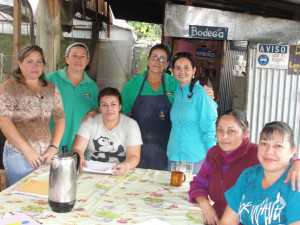
Texas State University student Laura Cano Amaya visited Costa Rica this summer for her dissertation field work. She observed connections between food security and risks in natural hazards, focusing on the development of household resilience to food insecurity measurement. In a collaborative work with the Universidad Nacional de Costa Rica, she conducted a survey in five communities in the vicinity of the Poás Volcano – one of the most affected areas of the 2009 earthquake.

With the assistance of the government and other organizations, much has been accomplished by the affected communities in the recovery phase after the earthquake. Nonetheless, after almost four years, the tourist industry is just starting to recover. Some of the reconstruction housing projects are on hold and families are still struggling to feed their families. The town of Cinchona was declared uninhabited after the earthquake and the residents were relocated to a new housing development called Nueva Cinchona. Although the families are appreciative of the “nice houses” they received, they don’t have access to land resources as they did before. One resident of Nueva Cinchona commented:  “we used to grow fruits and vegetables for us to eat. That helped us, especially at the end of the month. Now we are told that we cannot grow anything or have chickens here. It makes it hard.”

She will  present her finding during the AAG Annual Meeting April 8-12, 2014, in Tampa, Fla.

Research supported by: Texas State University, Universidad Nacional de Costa Rica, and AAG.

Laura Cano Amaya (third from right) with members of the Agribusiness Women Association of Dulce Nombere, Costa Rica. This is one of several income-generation projects for women implemented in the communities impacted by the earthquake. (Photo by Ismael Amaya)
Poás Volcano in Costa Rica

The epicenter of the Cinchona earthquake of 2009 was to the east of the Poás Volcano in the Ángel-Varablanca fault. (Photo by Ismael Amaya)

New housing development Nueva Cinchona built to relocate the residents of Cinchona.

New housing development Nueva Cinchona built to relocate the residents of Cinchona after their town was declared uninhabited. This is a suburban type development with playgrounds, outside gym, and firefighter station in a rural setting.

Tourism activity is slowly coming back as road conditions are improving.

Tourism activity is slowly coming back as road conditions are improving.

This is a picture of a landslide in Varablanca that caused the collapse of a road and houses claiming several human lives.

The environmental impact of the earthquake is still present in many areas. This is a picture of a landslide in Varablanca that caused the collapse of a road and houses claiming several human lives. Landslides caused most of the structural damage and human loss in this area.

    Share

Steven Kale

Steven R. Kale, 65, died November 7, 2013, in his hometown of Salem, Oregon, following a brief illness. Kale achieved much in his life in academics, his profession, and in relationships with others in his life.

Kale, the middle of three children, was born in Manhattan, Kansas, in 1948 to Alton and Ruby Kale. His early years were spent in central Kansas where he and his older brother James became Eagle Scouts. After graduating from Mankato High School in 1966, Kale matriculated at Kansas State University. He earned degrees in Geography and Business Administration. Later, he obtained a master’s degree and doctorate from the University of Nebraska in Lincoln.

In 1975, Steve started his career as an economist at the Nebraska Department of Economic Development. From 1982 to 1989, Kale taught courses and conducted research in economic development, area and community development, renewable energy, and other topics at Oregon State University in Corvallis.

Kale left the University in 1989 to take on transportation work at the Oregon Department of Transportation. He remained at ODOT for 16 years and retired as the agency’s primary freight planning person. However, Steve continued to work, setting up his own consulting firm and taking on jobs for several Oregon ports and intermodal freight businesses to help them plan seed funding for projects. He also subcontracted with other consulting firms on a variety of transportation related projects.

Steve was an active member of many professional organization and national bodies, including the American Institute of Certified Planners and the Intermodal Freight Transport Committee of the Transportation Research Board where he served as the chair. Kale was also active in the Association of American Geographers and the International Geographic Union. His enthusiasm for geography and interest in his alma mater kept him involved on the KSU Geography Alumni Board.

Kale’s lifelong interest in far-away places took him to Oulu, Finland; Mendoza, Argentina; Sidney, Australia; Dubrovnik, Croatia; and much of Europe. He also managed to visit all 50 U.S. states. Steve’s travels also took him to the Arctic Circle twice: once in Alaska and another time in Finland.

A lover of the outdoors, Kale was also interested in hiking, camping, skiing, canoeing, whitewater rafting, and bird watching. He was an ardent supporter of environmental protection and cultivated lifelong friendships with many people. Steve’s personal and professional qualities were very much respected. He will be dearly missed.

Steve was preceded in death by his mother Ruby (Streit), father Alton Dale Kale, his sister Elaine and brother James. He is survived by three nephews: Jonathan Cote, David Kale, and Dan Kale.

    Share

William J. Black

The faculty, staff, students and alumni of the Department of Geography mourn the loss of Professor Emeritus William R. Black on October 15th, 2013 at his home in Bloomington, Indiana. Though Bill had fought cancer for a number of years prior, his death was unexpected. A native of Brownsville, Pennsylvania, Bill graduated from California State College of Pennsylvania in 1964. Afterward he moved to Iowa City where in 1966 he earned a M.A. in Geography and in 1969 a PhD. He served on the faculty of the Department of Geography at Miami University of Ohio from 1968-1969 before moving to the Department of Geography at Indiana University in Bloomington. He remained at IU throughout his career, retiring in 2007 as Professor Emeritus after his second 4-year stint as Chair of the department, having also served in that capacity from 1985-1989. Additionally, he held appointments and leadership positions in the Transportation Research Center, Regional Analysis and Planning Program, and the Center for Urban and Regional Analysis in the Schools of Business and Public and Environmental Affairs at IU. Outside Bloomington he held a visiting professorship at Purdue University in 1973 and was a Guest Scholar of The Brookings Institution in 1982.

Bill was a foundational figure in Transport Geography. He directed over 20 transportation research and planning projects, published over 200 research papers and reports, and authored, co-authored, or served as editor of seven books. These contributions include comprehensive studies of the Federal Local Rail Service Assistance Act, a germinal textbook in transportation analysis, and a survey book of sustainability in transportation. He was responsible for the formation of the Transportation Geography Specialty Group of the Association of American Geographers and was a key figure in the development of the Journal of Transport Geography. He also served on the editing board of several major journals in transportation and environmental studies. For his ‘Significant Contributions to Transportation Geography’’, he was awarded the Edward L. Ullman Award by the Association of American Geographers in 1995 and was selected to present the Fleming Lecture in Transportation Geography at the Association of American Geographers meeting in Pittsburgh in 2000. He was extensively involved in the Transportation Research Board of the National Research Council, including serving twice as chair of the Committee on Social and Economic Factors. For his efforts he received the Board’s Distinguished Service Award in 2002, and designation as Emeritus Member for Significant Contributions to the Organization in 2005.

He was a singular academic in the extent of his involvement, contributions, and achievements outside academia. He was extensively involved in the planning and restructuring of American railroads in the turbulent 1970s for that industry. He served as Director of Rail Planning for the State of Indiana from 1974 to 1975, and was a Chief on the Activation Task Force of Conrail during its formation in 1975 to 1976. He served as the first Director of Transportation of the State of Indiana when that department was formed in 1980. He was also responsible for the routing and planning of the public transportation system in Bloomington, Indiana when it was introduced in 1972. His service to the State of Indiana was recognized by then Governor Otis T. Bowen in 1980 when he was named a Sagamore of the Wabash for Public Service, the highest honor a civilian can be awarded by the Indiana Governor’s office. Upon retirement, Bill stepped away to pursue a life-long love of creative writing. In retirement, he produced a biography of World War I correspondent and Brownsville, PA native Percival Phillips, and was working on one of Philander Case Knox when he died. He also published Mitigating Circumstances: The United States of America vs. Robert Black and Greenhouse Effects, A Novel as e-books.

Perhaps most of all, Bill had a way with words that was unmistakable to anyone who read his work or conversed with him. He had a knack for saying the most impactful thing at just the right time and as succinctly as could be stated. This made him an insightful teacher, engaging public speaker, delightful writer to read, and perhaps most meaningful for those who knew him, a most helpful confidant and mentor.

    Share