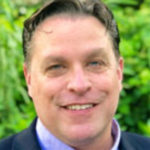
Dr. Gary Manson, age 86, of Haslett, Michigan, passed away peacefully on Thursday, December 14, 2023.
Gary received his undergraduate degrees from the University of Montana and his master’s degree and Ph.D. from the University of Washington in 1969. Upon graduation, Gary spent 36 years teaching and holding several academic leadership positions at Michigan State University’s Department of Geography, including chairing the Department during most of the 1980s. In the 1990s, he held various leadership roles, including director of the Landscape Architecture Program, and in 2000, was appointed associate dean for academic and student affairs at the College of Social Science.
Later in his career, his research focused on internal migration within the United States. He explored patterns, causes, and consequences of population movement within the country, publishing in journals such as The Professional Geographer, the Journal of Geography, and The Social Science Journal. Among his academic accolades, he received numerous awards for his contributions and mentorship, including MSU’s William J. Beal Outstanding Faculty Award, Teacher-Scholar Award, and Distinguished Academic Staff Award. Dr. Manson retired in 2006 as the acting dean of Social Science after a distinguished career at MSU.
Gary Manson was born on August 5, 1937, in Monona, Iowa. At the age of 19, he married his high school sweetheart, Patrosenia (Pat) Nonog, and they were happily married for 62 years until her death in 2018. They enjoyed each other’s company while traveling, fishing, cooking, entertaining friends, and loved MSU football and basketball.
Joseph L. Scarpaci, professor emeritus at Virginia Tech, died December 30, 2023 after a brief illness. A Pittsburgh native and longtime AAG member, Scarpaci was honored in 2020 with the AAG Kauffman Award for Best Paper in Geography & Entrepreneurship.
At Virginia Tech, he taught in a remarkable range of fields, including geography, urban planning, historic preservation, landscape architecture, and Latin American studies. He was also the Executive Director of the Center for the Study of Cuban Culture + Economy.
Scarpaci earned his bachelor’s degree at Rutgers, a master’s degree from Penn State, and his Ph.D. from The University of Florida. His colleague and former student Sara Beth Keough remembered him this way in a tribute in The Geographical Review: “Joe was a prolific writer and speaker. He published numerous books and was one of those academics who had to include only ‘selected articles and presentations’ on his website because the entire list was so long.” He was a repeat recipient of Fulbright Fellowships, and his work was recognized by organizations such as the AAG, the Conference of Latin American Geography, and the Library of Congress.
Scarpaci’s research focused on the urban and social geographies of international development in Latin America, with a specialization in Cuba. Among his publications is Havana: Two Faces of the Antillean Metropolis, to which the American Library Association awarded the Choice Outstanding Book Award. Scarpaci also opened up new horizons of understanding for students through his 20-year career at Virginia Tech, taking them abroad and introducing many of them to Cuba and Latin America over the years.
Scarpaci also represented the discipline closer to home in the United States: In 2008, the Virginia Social Science Association named him their Geography-Scholar. He was also elected the vice chair of the AAG Latin American Specialty Group from 2008-2011.
He was an enthusiastic traveler and also “curated a milieu of passions and hobbies,” according to the Pittsburgh Post-Gazette, “including cycling, yoga, tennis, bird watching, ESL and Spanish instruction, [and] conservation.” Even after moving to Blacksburg, he remained faithful to his Pittsburgh roots, helping to organize high school class reunions and fundraising for the Pittsburgh-based women’s health research, in memory of his mother Josephine. He was devoted to his family, and doted on his first grandchild, Josephine “Josie” Collier.
Scarpaci is survived by his wife of 47 years, Gilda Machin-Scarpaci; children Cristina Scarpaci (Christopher Collier), Michael Scarpaci (Katie Scarpaci); granddaughters Josephine Collier and Remy Collier (who was born only a month after he passed); and siblings, Darlene Violetta (Bradley Violetta), Josette Scarpaci and Sam Scarpaci.
On August 14, 2023, geography lost a vital voice, Dr. Karen Bakker. She was a professor at the Department of Geography at University of British Columbia since 2002, having earned her Ph.D. at Oxford University, where she was a Rhodes Scholar. She leaves an astonishing record of achievement: as Fellow of the Radcliffe Institute for Advanced Study 2022-3; as recipient of a John Simon Guggenheim Memorial Foundation Fellowship 2022, a SSHRC Connection Award and Trudeau Fellowship in 2017; and as Stanford University’s Annenberg Fellow in Communication, and Fellow of the Royal Society of Canada’s College of New Scholars. She is the author of more than 100 academic publications and seven books.
In 2005, she was recognized with the AAG Glenda Laws Award for her uncompromising commitment to advance understandings of the nature of governance, the significance of natural resources, and the importance of distributive justice in contemporary societies. She organized many panels and presentations at AAG meetings, particularly on the topic of water governance. She also supervised more than 30 graduate students and postdocs, secured funding for indigenous scholars in the department, and oversaw the work of scores of undergraduate students.
In recent years, Dr. Bakker brought her geographical fascinations with environmental perception and scientific world-making to the realm of sound. In The Sounds of Life (Princeton 2021), she builds a prismatic portrait of planetary ecology through the medium of chirps, buzzes, and low cetacean moans. The book garnered immediate critical acclaim, including from the very scientists it featured. It also reaches a broad public through her April 2023 TED Talk. Her next book, Gaia’s Web, (upcoming with MIT Press), explores how interconnected digital and natural networks will impact biodiversity conservation, environmental governance, and cultivate greater empathy for other species. Both books drew from her Smart Earth Project seeking to mobilize digital technologies to address some of the most pressing challenges of the Anthropocene.
Karen Bakker will be remembered too, for her fierce public engagement. She founded the Program on Water Governance at UBC, where she produced insightful analysis about the environmental, social and economic impacts of large dams like Site C and on a range of critical issues including water security, water privatization, Indigenous water sovereignty, and the human right to water. Research results from these studies have circulated widely in the media, and connected diverse academic, policy, and practitioner worlds.
At UBC, and in the community, Dr. Bakker was an outspoken advocate for equity issues, leading the pay equity process as the Chair of the Faculty Association Status of Women committee. She also frequently engaged local politicians on social and environmental issues of concern to the community — hosting meet-the-candidate nights and engaging in debate on key issues.
The faculty and staff of UBC has said, “We will remember Karen as multi-faceted and superbly talented in all realms. Writing, speaking, researching, or chatting about any topic imaginable, Karen always had interesting things to say and could offer incisive commentary and engaged banter — whether it be about cooking, gardening, stand up paddle boarding, or the local food cart scene in Vancouver. Indeed, alongside her academic pursuits she authored award winning books about feeding children healthful food under her nom de plume Karen Le Billon.”
Dr. Bakker was a committed mother, partner, and friend who transformed fields of knowledge related to water governance, neoliberal natures, and digital environmentalism. She also transformed those who worked alongside her. Her immense energy, passion, and intellect will be dearly missed. We join the UBC faculty in its statement, “We grieve together with her family, friends, and all the communities of which she was a part.”
This remembrance draws deeply from “Remembering Karen Bakker” on the University of British Columbia website, and is used with modifications and permissions from Dr. Bakker’s partner Phillip Le Billon.
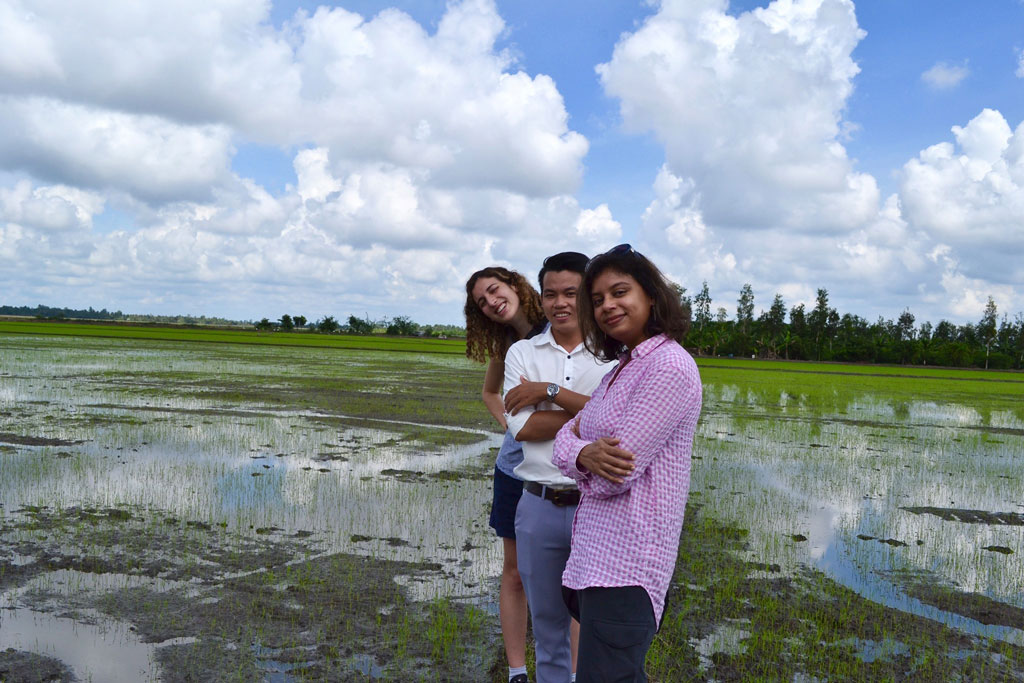
Pinki Mondal conducting fieldwork in Vietnam with student collaborators. She says she feels a special calling to work with students.
As a child, Pinki Mondal eagerly awaited her father’s arrival home from long trips around the world, working for one of India’s mercantile navy companies. Her earliest geography lessons came in special moments with him: “When he used to come back home, we would sit down with a map like an Atlas, and he would ask me, ‘give me a country name.’ And my job was to point that out on a map.”
This first exposure to the study of geography sustained her, despite formal classes in elementary school that were less of a thrill. “I was not a great fan [of geography class],” she confesses. “The focus is so much on memorizing facts that sometimes it takes the joy out of it, out of the learning process.”
Fortunately, a dedicated geography teacher named Rita Chakraborty took note of Mondal’s lack of enthusiasm. When Mondal was in fifth grade, Ms. Chakraborty “would ask me, ‘why don’t you draw a map? Whatever you want.’” For each of the questions on an exam, Mondal was allowed to draw and connect her answers instead of just answering textual questions. “I would draw a map of that study area and point out my answers on that. I was not great at drawing, but that brought the joy back and it just stayed on. I think she realized that that’s the connection I have with geography: Identifying different places in different parts and just drawing that would give that joy back to me. I don’t know how she did it. But she did that. And I just kept doing it and I just loved it.”
Mondal uses radar data to study highly diverse landscapes. This image is from fieldwork in Vietnam in 2019.
Mondal studied geology, chemistry, and mathematics as an undergraduate at the University of Calcutta and got her master’s degree in applied geology from Jadavpur University. For her M.S. thesis, she worked with satellite images of the Sundarbans, “an immensely complicated and human-modified coastal system in India and Bangladesh,” she says. Part of a World Heritage Site, the Sundarbans are known for one of the world’s largest mangrove forests and the confluence of major rivers, with tidal waterways, mudflats, and small islands that host intricate coastal ecologies, including hundreds of birds, the endangered Bengal tiger, and other threatened species. It has also been home to millions of people for thousands of years. “The beauty of this landscape, viewed through the eyes of a satellite, just blew my mind,” Mondal recalls. “I knew at that moment that studying environmental geography was going to be the rest of my academic career.” She went on to get a doctorate in geography from the University of Florida, and now specializes in fragile coastal systems as assistant professor and director of Environmental Science at the University of Delaware.
Translating Science to the Public
As an Elevate scholar, Mondal hopes to become adept at distilling the core messages from her research so that she can better connect with a wider audience.
“I never thought of using some of my more technology-heavy work for such communications, but through Elevate I now have the training to get the core messages out, even from a more specialized piece of work.”
— Pinki Mondal
Recently, Mondal has translated the findings of her work with students and colleagues on the encroachment of salt water on croplands in Delaware, due to sea level rise. This climate-driven impact is threatening corn crops along with a centuries-old way of life for local farmers. Mondal used her media training from Elevate to field many interviews for print and viewing.
Aside from her work as a public scholar, Mondal enjoys mentoring and collaborating with students. “For undergraduate students, this is often about introducing them to the beauty of satellite imaging of our beautiful planet,” she says. “For graduate students, it is about being part of their journey of growing from a student into a scholar.”
She believes that geographers are uniquely suited to get the word out about climate impacts and solutions. “Through geography, I learned to connect the dots between space and society using satellite remote sensing. But I feel that all geographers, physical or human, strive to do just that — making the connection between our physical and human worlds. At the end of the day, Earth is an interconnected system where we need to understand how humans are changing their environments and how that is forcing our ‘normal’ to a new normal. Without geographic knowledge — the why or what of where — we won’t be able to synthesize the place-based knowledge for a global understanding.”
This article is part of a series of Member Profiles focused on AAG Elevate the Discipline scholars. Elevate the Discipline is an annual program that provides training opportunities and resources to help geographers connect their work to public and policy arenas. Find out more about Elevate the Discipline.
Share
Stories
Member Profile: Mark Ortiz
Mark Ortiz (left) pictured with other members of the North Carolina Climate Justice Collective (NCCJC) Leadership Team in 2017. He has been a member of the Leadership Team of NCCJC since he was a graduate student at UNC-Chapel Hill.
Mark Ortiz was almost finished with his bachelor’s degree at the University of Alabama, doing a self-designed major in environmental studies, when he realized that geography offered him the space to study nature and society in connection with one another. “I started reading work in critical geography and political ecology and felt that it was a natural fit where I could pursue the intersectional questions that interested me,” he says. He went on to earn his master’s and Ph.D. in geography from UNC-Chapel Hill.
Now, as a Presidential Postdoctoral Scholar in the Penn State Department of Geography, and an incoming assistant professor there, he focuses on transnational youth movements, the global politics of climate change, and youth popular and social media cultures. He also challenges himself to translate his knowledge to action, engaging students and community members in his work, serving with numerous youth and intergenerational climate justice organizations, and being an expert panelist and consultant on youth empowerment for international organizations such as IDEO and the U.N. Foundation, as well as a delegate to U.N. climate change and sustainable development meetings around the world.
“What I’ve been really impressed by with the youth movement and the young folks that I’ve worked with is that there’s a real spirit of building across traditional boundaries, boundaries that they’ve kind of inherited from older decision makers or adults and really trying to build new alliances and solidarities, which I think is really important.”
— Mark Ortiz
Ortiz has also observed that young climate activists and scientists have a shared goal: to translate scientific findings into creative demonstrations that engage the public and illustrate what’s at stake. Ortiz sees his role, among others, as helping more people to access, interpret, and understand what is happening to the Earth’s climate, and to help “create imaginative knowledge products” such as stories, multimedia, and more.
“I am interested in dismantling the barriers that I feel separate the university — the “Ivory Tower” version of it — from our communities,” he says. In research and practice, he pushes at those barriers, which “often result in uneven and extractive relationships that benefit the university but have limited tangible benefits for communities.” He feels a sense of responsibility to make his work more legible to broader audiences, and to create stories with the young people whose activism he studies.
He was drawn to apply for Elevate the Discipline to advance his work in finding new approaches to storytelling that will better represent the global diversity of voices in contemporary youth climate activism. Recently, Ortiz’s vision resulted in the Penn State announcement of a landmark initiative, which he created and directs: The Global Youth Storytelling Initiative. The initiative will be carried out in collaboration with students Rasha Elwakil (undergraduate) and Timothy Benally (master’s student), as well as a Youth Advisory Board and Intergenerational Council.
Ortiz’s leadership style draws on the lessons he has learned as a community organizer, as well as the principles of feminist care ethics and the movement for “slow scholarship.” He sees himself as an introverted person with a deep interest in community and coalition-building. Far from being at odds, these two elements of his nature bring together his special attribute as both scholar and collaborator. “My calling and my approach are grounded in listening and bridging. I think I have an ability to facilitate unlikely alliances and to slow down discussions, to avoid and deconstruct assumptions and build slower, more deliberate partnerships.” He believes that higher education institutions must invest in such a slowing down if they are to have the credibility to engage in community-based work.
Mark Ortiz (left) pictured with other members of the North Carolina Climate Justice Collective (NCCJC) Leadership Team in 2017. He has been a member of the Leadership Team of NCCJC since he was a graduate student at UNC-Chapel Hill.
“One of my mentors always talks about things moving at the speed of trust rather than the speed of tenure,” he says. “That means thinking about partnerships differently and stepping back from the framework of speed.”
Ortiz has been excited at how the Elevate program has helped him to build his network of mentors and collaborators across the discipline. “Already I’ve met people in the cohort who have been supporters and offered advice and guidance in various ways. I’m interested in paying this forward to as the Elevate program continues.”
“As critical human geographers, we’ve always had a different approach to science.” he says. He sees geography as an inherently vital, interdisciplinary space of inquiry for the many actors and interconnected questions of climate response, human rights and needs, and solutions that are equitable and just. “My graduate training as a geographer included classes in climate science, law and policy, social movement studies, and critical youth geographies frameworks, all of which have equipped me with conceptual tools to speak with a wide variety of potential collaborators across a range of disciplines.”
“I notice that a lot of disciplines are beginning to pick up language that has long been used by geographers, especially critical human geographers. This creates a real opportunity for geography to be at the leading edge of efforts to define and act on climate and society questions and issues.”
This article is part of a series of Member Profiles focused on AAG Elevate the Discipline scholars. Elevate the Discipline is an annual program that provides training opportunities and resources to help geographers connect their work to public and policy arenas. Find out more about Elevate the Discipline.
Share
President's Column
Building Vibrant Departmental Cultures, Part One
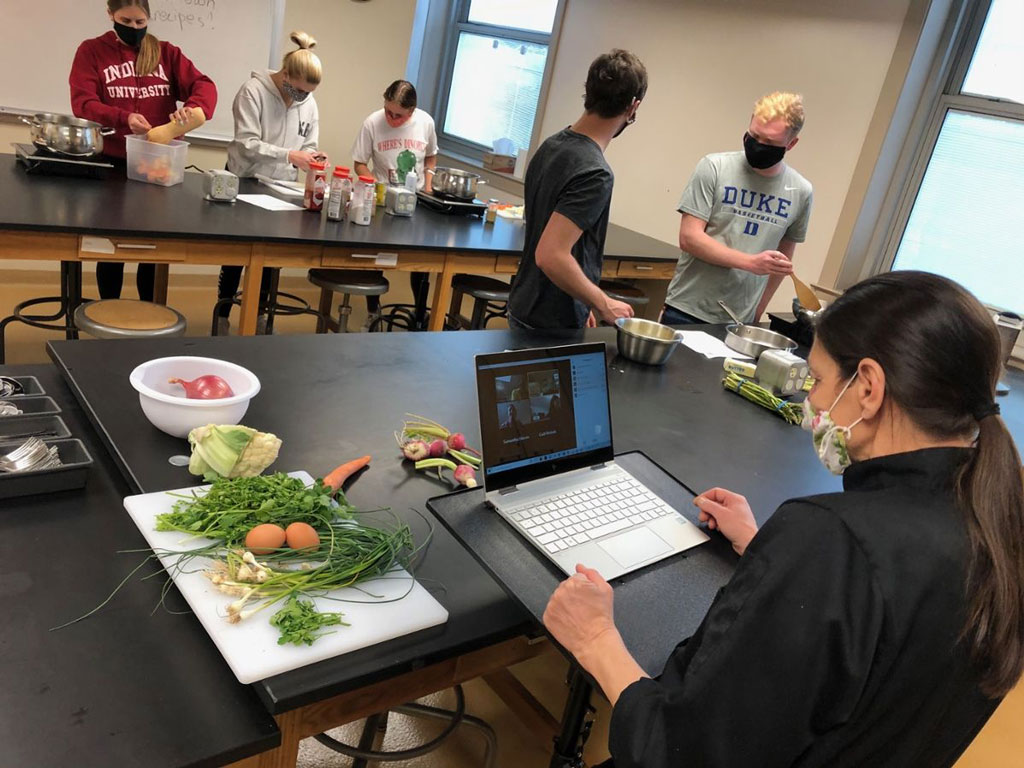
Dr. Olga Kalentzidou teaches a hybrid course on the geography of Indiana’s foodways. Credit: Kayte Young, WFIU Public Radio
A familiar story with an unfamiliar ending
The Geography Department at Indiana University Bloomington was nearly dissolved in the early 2010s. Neither enrollments nor research productivity were an issue. Instead, we were almost taken down by personal distrust and conflict, and by intellectual disagreements between physical and human geographers.
Thus far, this story is likely familiar: many of the departments that closed over the last few decades were plagued by similar cultural and intellectual issues. What’s different is the next part of the story: a decade later, IU Geography is a cohesive, thriving department. We have built a culture that values and respects a broad range of geographic scholarship, and works to support students, staff and faculty professionally and personally. Our reputation on campus as a collegial, highly functional department has given us credibility and administrative goodwill, and drawn FTE (Full-Time Equivalent) transfers from less collegial departments.
There are many paths to this outcome, but in this and two upcoming columns, I want to share a few things that were most effective for us, in hopes one or more of them might be useful for you:
Re-organizing to avoid traditional divides among physical/human-environment/human geography;
Building a culture of respect and care for students, staff and faculty; and
Creating more horizontal and transparent policies and administrative structures.
Organizing around problem areas rather than traditional geographic divides
With just seven faculty members remaining when the dust settled in 2012, we had a choice about how to move forward: either to specialize in a way that capitalized on the strength of some faculty but would force others out of the department, or to build an interdisciplinary vision that capitalized on all of our strengths. Happily, we chose the latter option.
Our goal was to make the interdisciplinary character of geography a strength rather than a source of conflict. We wanted there be clear intellectual benefits for our hydrologist to have a political ecologist of water in the department, and vice versa. To do that, we abandoned the classic physical/human-environment/human geography divide and instead arranged ourselves by problem areas: cities, development and justice; climate and environmental change; food and agriculture; and water resources (we also have a methods-focused cluster in GIS/RS). In each area, the goal was to include a range of courses and faculty that spanned physical, human-environment, and human geography.
Long-term payoff
No one here at IU Geography would argue that the process of overcoming traditional disciplinary divides is complete. In some areas (e.g., climate and environmental change) we were able to achieve our interdisciplinary vision immediately. In other areas (e.g., cities, development and justice) it took until this year to have the full range of faculty. But we have succeeded in building ties that bridge physical/human-environment/human divides via grant proposals, courses, and interdisciplinary committees for graduate students. Our undergraduates now draw connections between our classes that we had never considered ourselves.
While we still keep an eye on the balance of faculty across the traditional physical/human-environment/human divide, organizing by topic drops the tension level in hiring decisions and graduate admissions. The topic structure is also far more legible to undergraduates, who may care a lot about food and agriculture but have no investment whatsoever in the divide between physical and human geography.
As a long-term champion of integrating critical biophysical and social research, I will close by noting that IU Geography’s topical organization brings our departmental structure in line with the world around us. If you believe in the core claim of the Anthropocene that our world is now inextricably eco-social, then our intellectual structures should be, too.
Please note: The ideas expressed in the AAG President’s column are not necessarily the views of the AAG as a whole. This column is traditionally a space in which the president may talk about their views or focus during their tenure as president of AAG, or spotlight their areas of professional work. Please feel free to email the president directly at rlave [at] indiana [at] edu to enable a constructive discussion.
Share
President's Column
Reciprocal Research: What Geography Gains from Public and Engaged Scholarship
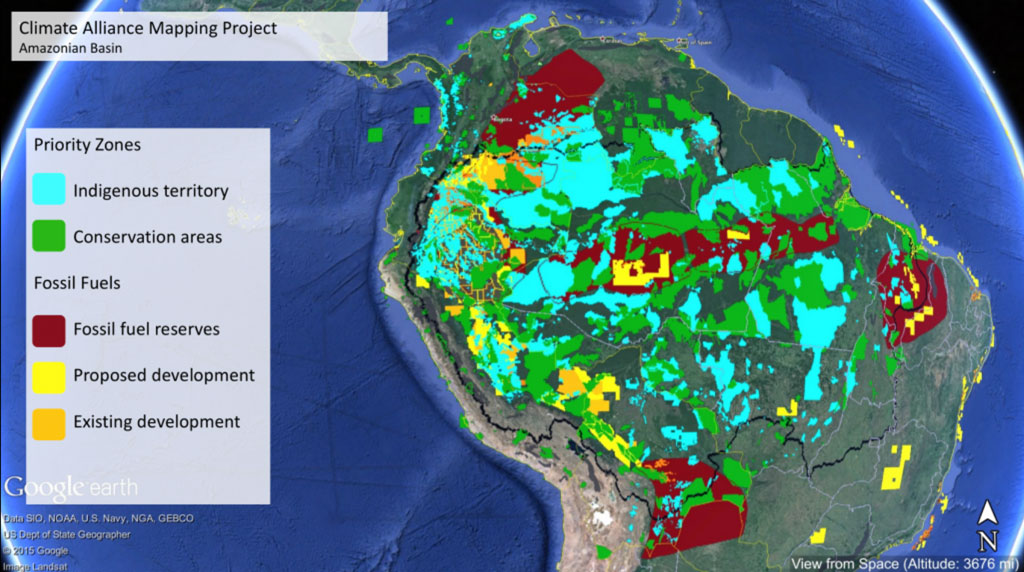
The Climate Alliance Mapping Project was developed by the Public Political Ecology Lab at the University of Arizona, working with Amazon Watch and the Americas-Wide Initiative to Advance Climate Equity, an alliance of environmental justice and indigenous rights organizations.
There is a strong and growing consensus in geography against extractive scholarship (sometimes referred to as parachute or helicopter science), in which scholars land at their field sites, extract the social and/or biophysical data they need, and leave without building reciprocal relationships to the communities and landscapes they study (e.g., Tooth and Viles 2021, Gewin 2023, Soares et al. 2023). The scholars benefit via publications, grants, etc., but give nothing back in return.
Reciprocal scholarship, by contrast, describes work that counters extractive scholarship through a wide range of approaches such as honoring communities’ right to refuse that they or their biophysical environment be studied (Liboiron 2021); developing questions, conducting research and analyzing results cooperatively with communities (Lane et al. 2011, Breitbart 2016); and protecting communities’ right to control what happens to data produced about them (Williamson et al. 2023). These public and engaged scholarship practices have many different names, including participatory action research, public science, community geographies, co-production, participatory modeling, and data sovereignty. Some are relatively new; others have long histories. There are reciprocal approaches across all geographic fields, from physical geography to GIS to human/environment and human geography. And in every place I have visited during my 16 months in the AAG presidential rotation, I have heard from geographers (especially undergraduate and graduate students) that they are deeply interested in conducting reciprocal scholarship.
Despite this enthusiasm, reciprocal scholarship is undervalued in geography. While community-engaged work by geographers such as the Anti-Eviction Mapping Project, the Public Political Ecology Lab, and the British Columbia Caribou Project are lauded as examples of publicly-relevant scholarship, they often do not count when it comes to promotion or hiring decisions. Geography departments frequently classify them as Service rather than Research, which means that reciprocal scholarship does not count towards the body of substantive work that graduate students are required to produce to earn MA/MS/PhD degrees and faculty are required to produce for tenure and promotion. Similarly, public agencies and non-profit organizations that employ geographers rarely take the painstaking work required to conduct effective science communication and community-engaged environmental management into consideration in their internal promotion processes (Kearns 2021).
In response, we have launched the AAG Public and Engaged Scholarship (PES) Task Force, whose members include geographers and our fellow travelers from a range of institutions (academic and professional, community college, liberal arts college, R2 and R1), levels of seniority, and subfields:
Gary Langham, AAG Executive Director, (ex officio member)
Our goal is to protect and value PES by developing:
Recommendations for how AAG can reward and protect public and engaged scholarship (PES) by geographers inside and outside academia;
Sample policies and best practices for incorporating PES in theses, dissertations, tenure and promotion cases, and personnel evaluations outside academia;
Guidelines for external reviewers, funding agencies, and others evaluating PES; and
Best practices for overcoming common institutional barriers to PES, such as compensation for community partners.
I have one immediate request to move our inquiry forward: sometime in the next few weeks, you will receive an email from AAG with a link to a short survey on your involvement in reciprocal, public, and engaged scholarship. Please fill it out so we can document the extent of PES work among geographers.
I will update you on our work as it progresses.
We look forward to hearing your input as we work with AAG to make public and engaged scholarship a more visible and valued area of geography.
Breitbart, M. 2016. “Participatory Action Research.” In Key Methods in Geography, edited by N. J. Clifford, M. Cope, T. Gillespie and S. French. Sage.
Gewin, Virginia. 2023. “Pack up the Parachute: Why Global North–South Collaborations Need to Change.” Nature 619 (7971): 885–87. https://doi.org/10.1038/d41586-023-02313-1.
Lane, S. N., C. Landstrom, and Sarah Whatmore. 2011. “Imagining flood futures: Risk assessment and management in practice.” Philosophical Transactions of the Royal Society, A 369:1784-1806.
Soares, Bruno Eleres, Ana Clara Sampaio Franco, Juliana S. Leal, Romullo Guimarães de Sá Ferreira Lima, Kate Baker, and Mark Griffiths. n.d. “Decolonising Ecological Research: A Generative Discussion between Global North Geographers and Global South Field Ecologists.” Area n/a (n/a). Accessed October 4, 2023. https://doi.org/10.1111/area.12901.
Tooth, S., & Viles, H. A. (2021). Equality, diversity, inclusion: ensuring a resilient future for geomorphology. Earth Surface Processes and Landforms, 46(1), 5-11. https://doi.org/10.1002/esp.5026
Please note: The ideas expressed in the AAG President’s column are not necessarily the views of the AAG as a whole. This column is traditionally a space in which the president may talk about their views or focus during their tenure as president of AAG, or spotlight their areas of professional work. Please feel free to email the president directly at rlave [at] indiana [at] edu to enable a constructive discussion.
Share
From the Meridian
A Fine Balance: Using Our Collective Power for Good in Hawai‘i
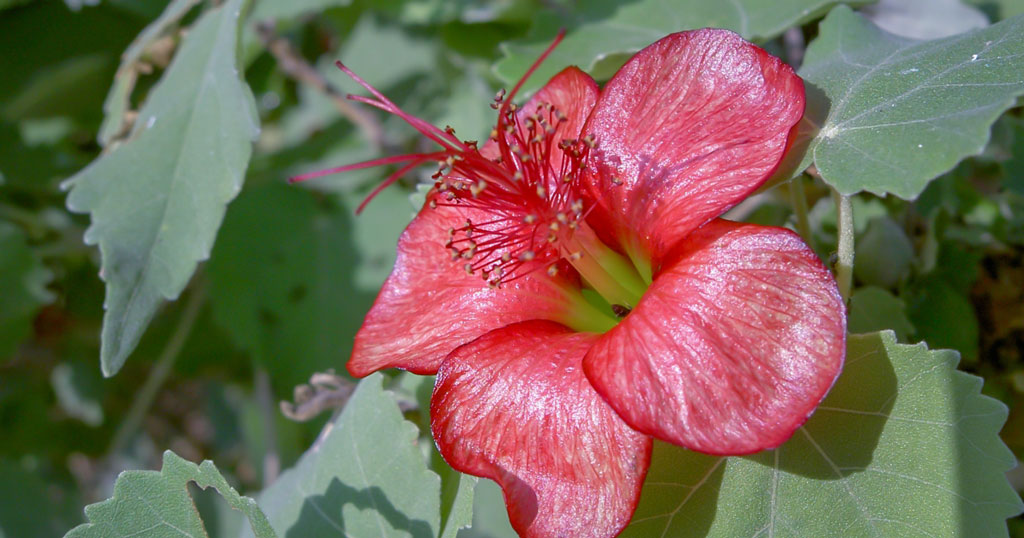
The Ko’oloa’ula is an endangered plant in the mallow family that grows on Maui and many other islands in Hawai'i. Credit: U.S. Fish and Wildlife Service.
As AAG prepares for our 2024 annual meeting, I have talked with and worked beside AAG thought leaders and Kānaka representatives, seeking the greatest possible benefit to Hawaiians and Hawai‘i. AAG President Rebecca Lave has described the recommendations and actions from these discussions in her July and August articles, as well as this month’s. Let me add my thoughts and perspectives.
A recent article from The Guardian on the devastating fires on Maui brought home the urgency and complexity of what we are trying to accomplish. Climate change has already plagued the islands for decades. Now, in the wake of the fire, so much more has been lost, from the lives lost and missing to the immense cultural treasures and shared community memories of places that are now gone. Businesses and livelihoods are lost and will take months and years to rebuild if they can return. To add insult to injury, in Lahaina, a former capital of the Hawaiian Kingdom that burnt to the ground, predatory land speculators are already harassing local property owners, aiming to capitalize on the destruction. Maui is recovering from COVID-19 and depends on tourism for its economy, with about 75% of its workforce reliant upon it. The question of whether, when, and how to accept visitors is uppermost in many Mauians’ minds: “For so many people to face economic uncertainty or challenges, on top of those who have lost everything in the fire – it compounds the issues and prolongs the recovery,” said T Ilihia Gionson, a public affairs officer for the Hawai‘i Tourism Authority. “That is the risk of discouraging travel to Hawaii generally. It’s a fine balance.”
“Going forward, I don’t know if it’s less tourism, but I think more mindful tourism,” Trisha Kehaulani Watson of ʻĀina Momona told The Guardian. “We have to think about enhancing and evolving the visitor experience to be one that invites people who can contribute to Hawaii, as opposed to just taking from us.” [To aid Maui, see our resources here.]
What is happening now in Maui reinforces what is at stake in our effort to live up to our best when visiting Honolulu. We must find ways to leverage our members’ collective talents and AAG’s resources to support the lives of the people living where we will convene. We also must provide attendance choices supporting individual decisions to join us in person, virtually, or at one of the regional nodes. We must educate our members about Hawaiian history, culture, and current issues in a discursive, mutual way, not extractive. Even as we look to lighten our carbon footprint, we must be mindful of our whole footprint and tread with care.
Our Work to Be Good Guests in Honolulu
AAG met in January for in-depth discussions with Kānaka people, geographers, and community members. Their feedback made us realize the issue was not whether we would come to Honolulu but how. They emphasized the need for reciprocity and mindfulness of where we were and what we could bring to replenish it. The AAG immediately agreed to implement all the recommendations suggested by the Kānaka community. For example, I am working with our engagement leader, Neil Hannahs, to develop webinars to help attendees learn more about these themes in the run-up to the annual meeting. Attend one of AAG’s educational webinars on Hawai‘i
We are now working to implement the other recommendations from these conversations. Kānaka geographers and local people with a range of knowledge are being engaged in developing themes for the annual meeting that center on their issues and concerns, such as US militarism, food sovereignty, and colonial legacies. Field trips and events will be paired with these themes to create meaningful experiences on the Island. AAG will also work with interested specialty groups to select Hawaiian keynote speakers and foreground Kānaka themes. Kānaka Maoli and other Pacific Basin Indigenous groups receive free registration, and AAG will provide free vendor space and publicity for local Kānaka-owned businesses.
It is important to note that one of our most important potential contributions to the meeting is also the most contested and potentially challenging to manage: the presence of thousands of geographers whose work is to understand space and place and respond to the most critical issues of the day. Bringing them into learning and collaborating with Hawaiian community leaders, academics, and others could be one of the great legacies of the 2024 meeting – if we act with care and visit with mindfulness.
Reducing Our Overall Climate Change Impact
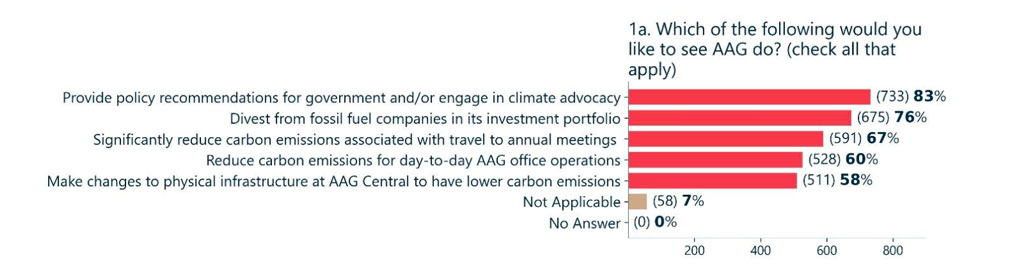
In late 2021, AAG asked members what actions they wished AAG to take to reduce climate change impacts. Here is what you said:
This bar chart depicts results from a survey of AAG members. Among the 93% who urged AAG to take leadership on climate change, the top suggestion was that AAG take a role in policy and advocacy for climate action.Taking Responsibility: AAG Acts on Climate Change
Since then, AAG has made significant strides across all of these categories. AAG continues to engage in policy and advocacy, from supporting member attendance at the UN Climate Change Conference (COP27) to promoting our members’ authorship of key elements of global climate change assessment; from the focus on Climate and Society as our inaugural theme for the new Elevate the Discipline media and advocacy training program for geographers, to actions at key flexion points in the public discourse, including sign-on letters and statements calling on the United States to address climate change).
AAG has also now completely divested from fossil fuels. We continue to work on reducing carbon emissions associated with travel to meetings (virtual options, nodes). We reduced the emissions at our headquarters and day-to-day by moving to a LEED Gold building and adopting a hybrid-plus-remote workweek. In short, we’ve made excellent progress.
The AAG Annual Meeting in Denver had a 36% reduction in carbon emissions, compared to the 2010 baseline from our report.
Reducing our emissions from travel to meetings is related to the AAG pledge to reduce emissions by 45% by 2030, relative to our 2010 meeting. To measure this, we adopted a method to estimate carbon from travel. Our first meeting since developing the approach was in Denver. Denver had a 36% reduction compared to the 2010 baseline (6663 vs. 10,414 tCO2) and a 58% reduction compared to our 2015-2019 average (16,244 tCO2). Some of this reduction was due to changes in in-person attendance, but also from new options like virtual participation and nodes. Our analysis showed that attendees further from Denver were more likely to attend a node or attend virtually. All this suggests that we are on track to meet our 2030 goals. Meeting our net-zero goals by 2050 will require new approaches.
Leveraging Institutional Power
In August, we met with the AAG Environment and Energy Specialty Group (EESG) to consider options for addressing the 2024 meeting’s carbon footprint. We are working with them and the Climate Task Force on this issue.
Those meetings reinforced the importance of the hybrid meeting and regional attendance nodes, not only to reduce the carbon burden but also for preserving our members’ ability to choose the kind of meeting they wish to attend. Meeting with EESG also reminded me of our ability and responsibility to act on our collective buying power with our hotels and other vendors. For example, hotels are slowly starting to adopt net-zero standards. These efforts should be evaluated carefully but also supported and championed. Imagine this: if AAG and similar academic societies used its collective economic influence to accelerate the adoption of net-zero buildings at all our meeting venues, how much more carbon would be saved compared to anything we could do as individuals.
As we work toward an AAG Annual Meeting that can be truly responsive and respectful of the place and people hosting us, I also think about power, its uses, and its proportions. I think about what I can accomplish on behalf of our membership that I cannot accomplish as an individual. I felt helpless when I saw the devastating wildfires on Maui in mid-August in a summer of extreme heat, fires, and floods worldwide. Nevertheless, I reflect on my ability to bring some change at scale on behalf of AAG to transform how we convene and channel our collective power for the greater good.
Please note: The ideas expressed by Executive Director Gary Langham are not necessarily the views of the AAG as a whole. Please feel free to email him at glangham [at] aag [dot] org.
AAG Members get exclusive access to publications, prominent journals, unique advocacy, grant, scholarship and professional opportunities with access to industry focus communities, and event discounts, including our annual meeting.
Some content may only be accessible if you belong to specific Specialty or Affinity Groups. You can still update your membership below. You will need to go through the Join flow, but you do not need to repurchase your membership unless it is expired or about to expire.
To provide the best experiences, we use technologies like cookies to store and/or access device information. Consenting to these technologies will allow us to process data such as browsing behavior or unique IDs on this site. Not consenting or withdrawing consent, may adversely affect certain features and functions.
Functional
Always active
The technical storage or access is strictly necessary for the legitimate purpose of enabling the use of a specific service explicitly requested by the subscriber or user, or for the sole purpose of carrying out the transmission of a communication over an electronic communications network.
Preferences
The technical storage or access is necessary for the legitimate purpose of storing preferences that are not requested by the subscriber or user.
Statistics
The technical storage or access that is used exclusively for statistical purposes.The technical storage or access that is used exclusively for anonymous statistical purposes. Without a subpoena, voluntary compliance on the part of your Internet Service Provider, or additional records from a third party, information stored or retrieved for this purpose alone cannot usually be used to identify you.
Marketing
The technical storage or access is required to create user profiles to send advertising, or to track the user on a website or across several websites for similar marketing purposes.
To provide the best experiences, we use technologies like cookies to store and/or access device information. Consenting to these technologies will allow us to process data such as browsing behavior or unique IDs on this site. Not consenting or withdrawing consent, may adversely affect certain features and functions.
Functional
Always active
The technical storage or access is strictly necessary for the legitimate purpose of enabling the use of a specific service explicitly requested by the subscriber or user, or for the sole purpose of carrying out the transmission of a communication over an electronic communications network.
Preferences
The technical storage or access is necessary for the legitimate purpose of storing preferences that are not requested by the subscriber or user.
Statistics
The technical storage or access that is used exclusively for statistical purposes.The technical storage or access that is used exclusively for anonymous statistical purposes. Without a subpoena, voluntary compliance on the part of your Internet Service Provider, or additional records from a third party, information stored or retrieved for this purpose alone cannot usually be used to identify you.
Marketing
The technical storage or access is required to create user profiles to send advertising, or to track the user on a website or across several websites for similar marketing purposes.

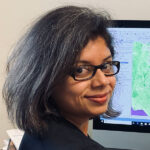 As a child, Pinki Mondal eagerly awaited her father’s arrival home from long trips around the world, working for one of India’s mercantile navy companies. Her earliest geography lessons came in special moments with him: “When he used to come back home, we would sit down with a map like an Atlas, and he would ask me, ‘give me a country name.’ And my job was to point that out on a map.”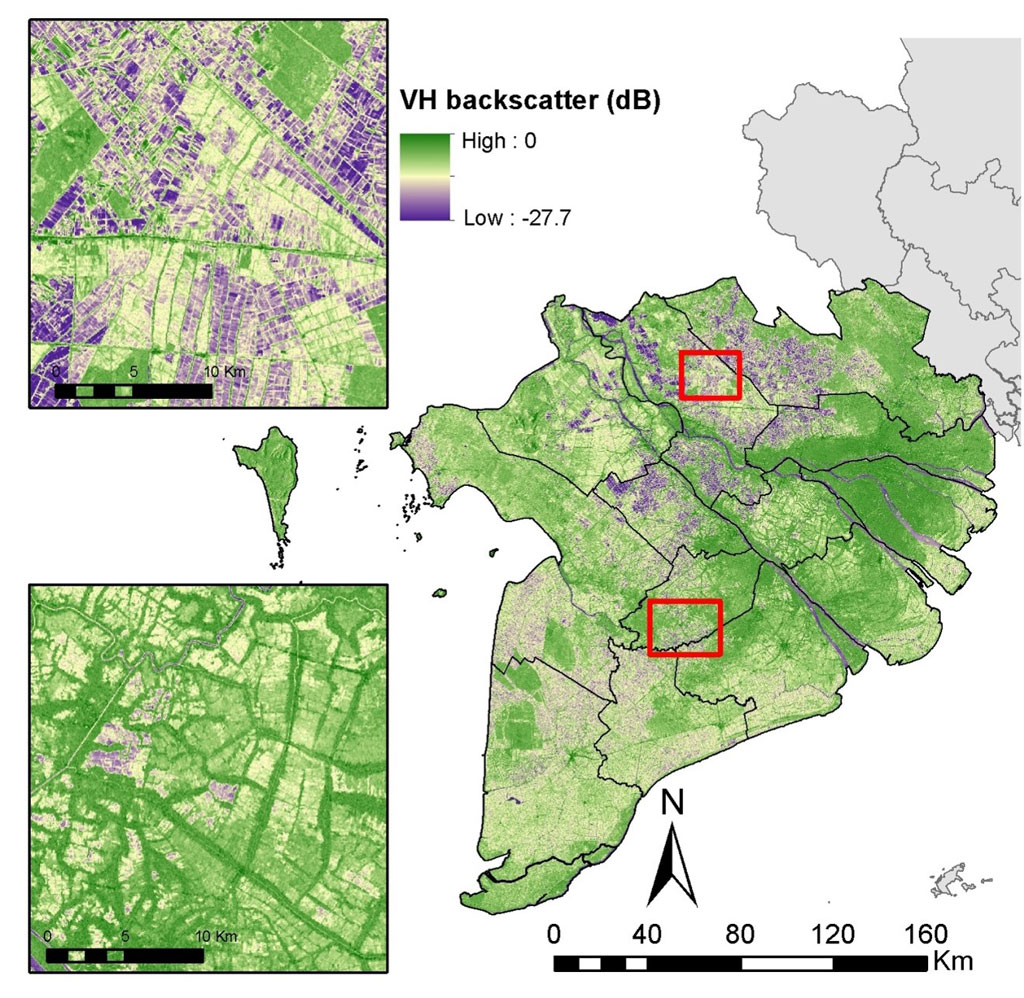

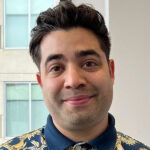 Mark Ortiz was almost finished with his bachelor’s degree at the University of Alabama, doing a self-designed major in environmental studies, when he realized that geography offered him the space to study nature and society in connection with one another. “I started reading work in critical geography and political ecology and felt that it was a natural fit where I could pursue the intersectional questions that interested me,” he says. He went on to earn his master’s and Ph.D. in geography from UNC-Chapel Hill.