Have you ever wondered where things happen? Why do they happen there? How do we find patterns and change them?
That’s where geography comes in—by connecting the where, why, who, and how. These insights are critical keys to healthier communities, a livable climate, and charting a stronger, more equitable future.
With skills in geography, you’ll have tools to work for respected companies, for universities, for nonprofits, and in public service for local, state, or national governments.
In fact, the U.S. Bureau of Labor shows the demand for these skills is expanding rapidly to meet new technological, environmental, and social needs.
There’s a world of possibilities waiting for you. You belong here.
AAG would like to thank AAG members Dr. Debarchana Ghosh, Dr. Deborah Thomas, Dr. Jacqueline Housel, Dr. Jason Post, Dr. Justin Stoler, and Dr. Wan Yu for their roles in helping shape this video and the AAG COVID-19 Response Subcommittee for proposing this project.
Share
Advocacy
AAG Climate Emergency Statement: April 2021
Share
Roger Kasperson
Former Clark Graduate School of Geography faculty member Roger Kasperson, passed away on Saturday, April 10. A major scholar in the fields of risk and environmental sustainability, Professor Kasperson had a nearly lifelong relationship with Clark and the GSG: he earned his B.A. in Geography from Clark in 1959, and returned to Clark as a faculty member in Geography and Government in 1968 after earning his M.A. and Ph.D. in Geography at the University of Chicago and teaching elsewhere for several years. He spent the majority of his career at Clark, in a variety of roles: in addition to being an assistant, associate, and full professor in our department, he headed a number of major centers and initiatives at Clark and served at various points as Acting Director of the GSG, Dean of the College, Provost and Vice President for Academic Affairs, and University Professor. He retained an appointment as a Research Faculty member in our department up until the time of his death.
Professor Kasperson was a major figure in the fields of risk analysis and communication, global environmental change, and vulnerability, sustainability, and resilience. As such, he worked closely with a variety of government agencies and NGOs, including the National Research Council, the International Geographical Union, and the Potsdam Institute for Climate Change. Perhaps most notably, he was the Executive Director of the Stockholm Environment Institute from 2000-2004. He was also an elected member of the National Academy of Sciences, the American Academy of Arts and Sciences, and the American Association for the Advancement of Science, and a recipient of honors from both the AAG and the Society for Risk Analysis.
Thank you to the Graduate School of Geography at Clark University for permission to publish this obituary. Original found here.
Participatory Forum on New Requirements for Ethical Geographic Science in Rapid Research
COVID-19 calls upon researchers to navigate a fast-paced scientific inquiry process under enormous public scrutiny. The rapid funding mechanisms, abundance of geographic data from emerging technologies, and the “real-time” expectations and needs of governments have posed new challenges to traditionally accepted research methods and timelines, collaborative relationships, parameters for data sharing, and public expectations of research outcomes.
All of these challenges carry ethical questions and human rights-related dilemmas. The American Association of Geographers (AAG) as a member of the AAAS Science and Human Rights Coalition is coordinating a “Participatory Forum” on October 1, 2020 at 1:00 PM (ET) that engages both memberships across disciplinary practice to ask, “At what cost are we advancing science when the stakes are high and the pressure on normal timelines is intense?”
What is a Participatory Forum?
It is not always easy to have a true “conversation” when the set-up is a panel of experts accessible through a Q&A chatbox. So instead, the AAG identified three areas of inquiry deserving of focused discussion. With help from moderators for each question, forum participants will be able to contribute their critical thoughts with other participants directly and connect with them on these topics. This forum will explore new virtual spaces for academics to collaborate and participate in the process of scientific inquiry given the “virtual” normal.
Forum participants may choose to join a discussion of questions such as:
Who is considered a human subject in research in a time of automated location tracking and facial recognition, and how do they consent to participate in research? How should scholars safeguard confidentiality of human subjects in research when re-identification of anonymized data becomes possible and when geographic representation (or interpretation) is flawed?
Collective Rights of “places” during fast-paced and global research: How do we foster genuine research and other partnerships so that people impacted by decisions in certain places are part of the conversation and search for solutions?
Who is carrying the burden of rapid COVID-19 science (who are the human subjects or places in research), and who is benefitting from rapid COVID-19 findings? What burdens are added to Human Subjects in Research and to Places when science is not taken into account for important decision making?
The AAG would like to thank the volunteer moderators: Libby Lunstrum (Boise State University), Junghwan Kim (University of Illinois at Urbana-Champaign), Ranu Basu (York University), Sheryl Luzzadder-Beach (University of Texas – Austin), Emily Fekete (AAG), Coline Dony (AAG)
Share
Woody Gagliano
Sherwood M. “Woody” Gagliano, a geologist, geographer and archaeologist who documented Louisiana’s rapidly eroding coastline in the 1970s in a process that alerted the state to the problem, died on July 17, 2020 at the age of 84.
“History has shown that one person can make a difference, and that certainly applies to Woody Gagliano,” said Bren Haase, executive director of the Louisiana Coastal Protection and Restoration Authority. “Louisiana owes him a great debt for not only sounding the alarm in our coastal crisis, but for never giving up when few would listen.” Gagliano advocated tirelessly for a state comprehensive coastal protection program.
Dr. Gagliano;s work marked a turning point in coastal science and in the state’s decision to meet the challenge of coastal erosion at scale. “His vision allowed Louisiana to be years or decades ahead of where we would have been without Woody Gagliano,” said U.S. Rep. Garret Graves, R-Baton Rouge, and former chairman of the CPRA board. “He will be missed, but thank God we can stand upon his shoulders.”
Gagliano received his bachelor’s degree in geography and master’s degree and Ph.D in physical geography from Louisiana State University. He also served a stint in the U.S. Army.
In 1967, Gagliano founded Coastal Environments Inc., the Baton Rouge-based archaeological and applied sciences firm, while still working as a researcher studying river delta processes for the LSU Coastal Studies Institute.
Beginning in 1969, Gagliano was instrumental in documenting and designing solutions for Louisiana’s coastal erosion–a problem unrecognized by state officials before 1970, on the basis of Gagliano’s work. Don Boesch, former director of the University of Maryland Center for Environmental Studies and the Louisiana Universities Marine Consortium, told a local paper that the work was forward-thinking: “Fifty years later, we are still trying to execute his exact concept.” Boesch said. Gagliano assisted state officials in developing Coast 2050 in 1998, the first comprehensive effort to outline steps towards restoring or saving coastal wetlands, and in the aftermath of Hurricane Katrina, the state’s creation of its first formal Coastal Master Plan in 2007.
Gagliano also produced groundbreaking research showing how some wetland loss was caused by slipping blocks of coastal soil along fault lines, and how the faulting could threaten levees, navigation routes, and coastal restoration projects. He and his company also developed new ways to create artificial oyster reefs – called Reef Blk – to assist in coastal restoration efforts.
Gagliano was the founding president of the Louisiana Archaeological Society and vice president of the Intracoastal Seaway Association. The Coalition to Restore Coastal Louisiana honored him with its Coastal Stewardship Award in 1996 and its Lifetime Achievement Award in 2012. He is survived by his wife, Betty Ann (Huxen) Gagliano, son Mark Huxen Gagliano, daughter-in-law Kristie Gagliano, and granddaughter Marguerite Lucy Gagliano.
Ron Johnston, a human geographer who helped shape the discipline and was a winner of a Lifetime Achievement Award from AAG, died on May 29, 2020 at the age of 79. A prolific author and co-author of more than 1,000 publications, including 50 books and 800 articles, he specialized in quantitative and political geography, but also ranged widely in urban and social issues, electoral geographies, and the history of geography.
During his career, Johnston was appointed an officer of the Order of the British Empire for services to scholarship in 2011, He also received the Murchison Award and Victoria Medal from the Royal Geographical Society, and the Prix Vautrin Lud at the International Geography Festival 1999.
Born in 1941, Johnston grew up in Swindon. He attributed his love of geography to studying maps during childhood. Educated at Commonweal School, Swindon, in 1959 he went to study Geography at the University of Manchester, and earned a PhD from Monash University in Melbourne, Australia. He returned to Great Britain in 1974, where he served as a chair and eventually Pro-Vice Chancellor at the University of Sheffield for 18 years, He subsequently moved to Essex as Vice Chancellor, then joined Bristol’s School of Geographical Sciences in 1995.
Of Johnston’s many books, two– the Dictionary of Human Geography and Geography and Geographers – stand out for scores of undergraduate geographers: the latter (jointly authored) is in its seventh edition. Ron’s work on the British electoral system was interdisciplinary long before such research became popular.He advised all three main political parties, civil servants, House of Commons’ Select Committees and the Boundary Commission.
Johnston is survived by his wife Rita, two children, Christopher and Lucy, and by his grandchildren and great grandchildren.
Facing an Existential Crisis or COVID-19 and the Long Term Future of Geography
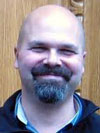
It does not seem so long ago that people were talking about the compression of space and time, about the “ends of history and geography.” How recent events have obliterated this! The pandemic of COVID-19—with its echoes of the 1918 Spanish Flu and the great contagious scourges of the past—demonstrates again that “history doesn’t repeat itself, but it often rhymes.” And how well this pandemic also affirms geography’s significance! The importance of place, of distance, of context, of networks—all show the enduring importance of geography and how central geographical concerns are in understanding the disease.
Yet while the ideas and methods of geography illuminate the transmission and effects of COVID-19, geography departments have been thrust into peril. Those of us who work in universities have likely heard the same dire budgetary forecasts. States are being hit with a double whammy of declining revenues from mandated shutdowns and an increased need for services. New student enrollments are down, sometimes way down from where they were a year ago.
Colleges have already refunded large sums of money to compensate students for room and board. And while none have rebated tuition, many students and their parents are upset with what they perceive as a true loss of educational value. The promise of true community—making friends, connecting with mentors, enjoying independence and the time away from home—no longer holds.
I can see it myself. My daughter had the last chunk of her freshman year at college snatched away from her. As a bassoon and chemistry double major, there was no way that online learning—however gamely proceeded—could replace what she would have received in a classroom, lab, or concert hall. As a professor, I understand just how faculty have struggled to keep classes going in this alternative format. But as a parent, I also empathize with students who see a diminution of their education.
None of us know now whether colleges and universities will be able to return to in-person classes in the fall. There are many possible scenarios. For those who are curious, The Chronicle of Higher Education provides an updated list. While a small number have announced mostly online plans, the majority of institutions have indicated that they “expect,” “plan,” “hope,” or “intend” to return to in-person classes in the fall. Others are taking a wait-and-see approach. As we all realize, higher education will take a huge hit next year; several institutions have already announced major cutbacks in positions and salaries. If in-person classes are not possible, my daughter is considering taking a semester off. This is just the reality and I expect many students would follow suit. Beyond the obstacles in accessing reliable internet connections, those students in less privileged positions may leave and not return—a true tragedy in the loss of human potential.
These are all things out of our control. But Geography departments must also look into doing things that are within our control. In my first presidential column I emphasized just how important the number of majors and enrollments are to our discipline’s health. This year, I have spoken with people whose departments are threatened. There are likely to be many more threats in the new academic year.
Geography departments must figure out the best ways to push against these headwinds. One way is to provide courses that will be most attractive to students. Students will be trying to understand this intrinsically geographical phenomenon, and departments can adjust to make sure that such courses are offered. A second way is to prepare to transition courses to an online or hybrid format if necessary, and make these plans known to administrators. I know that this will compromise a lot of geographical education, as it has already, but our field also enjoys certain strengths that make it more adaptable to a switch. For instance, many of the geospatial courses at Kent State are already taught virtually. If the worst happens and student numbers plummet, university leaders will be grateful for those points of light. The third approach is to ensure geographers are as visible as they can be in the university in responding to this crisis. We already have geographers with direct expertise in the areas of health and disease. We also can muster leadership in the evolving pedagogy, in providing faculty- and student-centered solutions to this urgency.
The way we meet now: AAG Executive Committee Meeting on Zoom (Sheryl L. Beach on IPhone)
As many of you have seen, the AAG decided at the Spring Council meeting (held on Zoom of course) that in these extraordinary times it needed to offer an extraordinary response. We therefore have proceeded to develop a COVID taskforce to develop solutions the AAG can provide to its members. We created five separate committees which will work in parallel through the months of May and early June:
The Departments committee will look at how the AAG might assist departments as they seek to survive—with some targeted investments and/or repurposing some staff time.
The Regions committee will see what we can do now to ensure the health of our nine regional divisions, especially given the uncertainties of next year. The Council just passed a set of proposals from the Regions taskforce intended to strengthen our AAG regions, and this will build on these initiatives.
The Members committee will focus on how best we can help AAG members in difficult situations: international members, members who work outside of academia, and precarious members.
The Students committee will attend to the additional stresses experienced by student members of the AAG, noting things that our association can do to ease their burden.
Finally, the Virtual Connections committee will examine some of the means by which the AAG can help invigorate how we educate, communicate and collaborate outside the physical realm. No matter what happens in the near term, we have crossed the Rubicon into a new world of virtual connections and this committee will suggest how the AAG can be at the forefront.
Once recommendations from the committees are made, a Blue Ribbon panel will be charged with evaluating the proposals and then sending them forward to the Council. At an extraordinary Council meeting, to occur at the end of June, we will come up with a final set of ideas to initiate in July. I will provide all of you with a final report on what we decide.
This has been such a difficult and trying time. It has been positively terrifying for those who have to worry about their health, their finances, their futures, or all of these together. Even those of us who are fortunate thus far have experienced the steady drain of lives lived without the physical contacts we cherish and with a future still so uncertain and bleak. To pretend that all this is not simply awful would be tone deaf and naïve.
But geography is strong. Geographers are resilient. Each and every one of you will do whatever it takes to allow our discipline to thrive. And your association will do everything in its power to help.
Geomorphologist Cuchlaine King died on December 17, 2019 at the age of 97. As a member of the geography department at Nottingham University since 1951, King’s studies addressed many landforms and landscapes, particularly beaches and glaciers.
At a time when scientific expeditions to remote locations were often closed to women, in 1953 she embarked on a university expedition to Iceland to study and survey glaciers. Later in the 1950s,and 1960s, she took part in the Cambridge expeditions on the Austerdalsbreen glacier in Norway and the Baffin Island, in Canada.
Cuchlaine was born in Cambridge,where she later went on to study geography at Newnham College, graduating in 1943. Cuchlaine’s publications include Beaches and Coasts (1959), Techniques in Geomorphology (1966), and Glacial and Periglacial Geomorphology (1968). She was an early proponent of “quantitative geography”, the use of numerical and statistical techniques to describe and explain landform development. In 1961, Cuchlaine became one of only two women in the founding group of academics that became the British Society for Geomorphology. In 1981 she was awarded the Linton prize from the BSG for her contributions to the subject.
Cuchlaine is survived by a niece, Jane, and three nephews, Nicholas, Timothy and John.
AAG Resolution on Climate Change: April 2006 and 2019
Share
Post
Deoxygenation of the Ocean Affects Everyone, So Act Now
By Dawn J. Wright, Esri, and Sylvia A. Earle, National Geographic Explorer-in-Residence
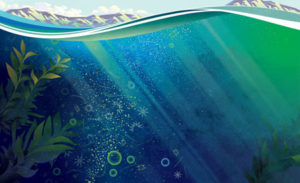
Did you know that more than half of the oxygen we breathe comes from the ocean? This oxygen is produced in large part by the photosynthesis of billions and trillions of small plants in the ocean called phytoplankton, as well as the blending of seawater with the atmosphere right at the ocean’s surface.
But the ocean is facing unprecedented pressures that are causing massive disruptions in the ecosystem and nutrient cycle of phytoplankton and countless other species—the result of an extensive, commercially driven depletion of ocean wildlife; industrial-scale pollution; and other human activities. This oceanic turmoil occurs on the seafloor via trawling, dredging, drilling, and mining. It also happens in the water column with nets, long lines, fish-aggregating devices, and other techniques.
Fishing methods like these were introduced over the last few decades to extract marine life with unprecedented speed and scale from ecosystems that were hundreds of millions of years in the making. As a result, they are contributing to the accelerated reduction of oxygen levels in the ocean, as well as in the air and on land all around it.
Indeed, overfishing of the ocean biomass has tremendous effects on the earth’s climate and carbon cycle. Restoring marine life, then, could have a huge impact not just on ocean health but on life on land as well. That is why the decline of oxygen in the ocean concerns absolutely everyone, no matter where we live.
Raising Awareness
There is comprehensive evidence that oxygen levels in open ocean and coastal waters have declined precipitously over the last half-century. According to a recent review article in Science entitled “Declining oxygen in the global ocean and coastal waters,” by Breitburg et al., oxygen in the ocean is currently dropping faster than can be accounted for by physics. This suggests that respiration—the intake of oxygen followed by the release of carbon dioxide—must be increasing. However, a good portion of this decline in oxygen may, in fact, be due to the disruption or destruction of tiny microbes in the ocean.
Scientists definitely need new insight into how changes in oxygen within the ocean are affecting the pathways and processes of these microbes at all depths. The extent to which the system is out of balance is becoming clear, and the pace of this change—as well as how widespread the impacts are—is alarming. We humans cannot afford to wait to take action.
Fortunately, ocean science has many integrated frameworks that combine observations, experiments, modeling, and GIS mapping from scientists, local governments, intergovernmental bodies, and business sectors. These are raising people’s awareness of the pervasiveness of issues such as ocean warming and acidification, as well as the ever-increasing presence of microplastics in the water.
Now, scientists need to raise awareness about how quickly the oxygen is dissipating. But such awareness must spread beyond the pages of scientific journals so it permeates all facets of society. Web maps and visualizations that are intuitive, interactive, and dynamic have the power to do this, driving the point home to a variety of audiences.
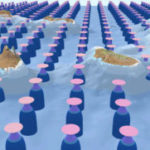
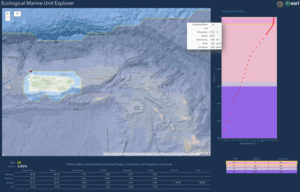
The Ecological Marine Units (EMUs) digital ocean project, for example, gives anyone access to millions of observations of the oxygen dissolved in water all over the ocean. Accessible at esri.com/ecological-marine-units, the EMUs also show each body of water’s temperature; salinity; and nitrate, silicate, and phosphate concentrations—the likely drivers of many marine ecosystem changes. Some major goals of this project are to support marine biodiversity conservation assessments; aid in research about the economic valuation of marine ecosystem goods and services; and contribute to studies on ocean deoxygenation, acidification, and other environmental impacts.
Another great resource for raising awareness is the Marine Conservation Institute’s interactive Atlas of Marine Protection, also known as the MPAtlas, available at mpatlas.org/map/mpas. Momentum is accelerating to designate very large marine protected areas (MPAs) throughout the ocean, and research suggests that sizable MPAs are much more cost-effective to implement and manage compared to smaller ones. Furthermore, larger MPAs generally provide better protection from activities that occur outside of them, since, even though they safeguard a great number of organisms, so many marine animals—especially fish—are constantly on the move across large sections of the ocean. If those organisms can find shelter and stability within large MPAs, they stand a better chance of enduring once they leave them.
These online resources will be key to generating the societal and political will to effectively manage marine habitats in ways that will ultimately reverse the declining levels of oxygen in the ocean and mitigate the serious consequences this has for ocean life and ecosystems. Additionally, the International Union for Conservation of Nature (IUCN), in collaboration with world experts, is coordinating the production of a comprehensive report called Ocean Deoxygenation—Everyone’s Problem: Causes, Impacts, Consequences and Solutions that will further summarize the challenges and implications we face. The IUCN plans to distribute this report far and wide—to government agencies, conservation organizations, citizen groups, and universities.
We must connect important discoveries about the nature of the world with public perception and current policies that shape the habitability of the earth. The global trend by countries all over the world to secure large areas of the ocean within national exclusive economic zones (EEZs) and create “blue parks” as safe havens for ocean life are also reasons to be optimistic, since protecting nature protects human existence.
What to Do Now
So what can you do to stem the tide of ocean deoxygenation? How can you connect the dots and take action to reverse some of the present destructive trends? Consider some of the following options:
This summer, visit a blue park in person to gain a fuller appreciation of the life-giving resources the ocean provides—including oxygen!
Join forces with the Sylvia Earle Alliance’s Mission Blue movement and other similar causes that showcase many of these blue parks. With Mission Blue, anyone can nominate a section of the ocean to become a blue park, also known as a Hope Spot, for protection and preservation. Soon, GIS content, such as the EMUs, will be included in this process.
Use the EMU Explorer apps, accessible at esriurl.com/emuapps, to study oxygen levels and other parameters throughout the ocean.
Use the MPAtlas to see other current areas of protection.
Watch episodes of the BBC’s Blue Planet II series, which wonderfully educates viewers about the nature of the ocean, including scientific evidence of the many ways our ocean is declining due to human activity.
Take simple steps to recycle or greatly reduce plastic use—especially straws; this affects the ocean no matter where you live because it all starts upstream with wind and water flows. Plastic pollution of waterways is intimately connected to declining oxygen levels in the ocean. Organizations such as Algalita Marine Research & Education, the Save the Albatross Coalition, the Aquarium of the Pacific, and the Marine Conservation Institute all provide excellent tips and resources.
There’s plenty to do to assist with marine conservation and help reverse the deoxygenation of our ocean. But we need to act now—because if there’s no blue, there’s no green, which means there will eventually be no humans. No kidding!
Editor’s note: This article is based on a letter published in the March issue of Science called “Ocean deoxygenation: Time for action,” by Sylvia A. Earle, Dawn J. Wright, Samantha Joye, Dan Laffoley, John Baxter, Carl Safina, and Patricia J. Elkus.
About the Authors
Dawn J. Wright is the chief scientist at Esri and a full professor of geography and oceanography at Oregon State University. Sylvia A. Earle is a National Geographic Explorer-in-Residence and the founder of the Sylvia Earle Alliance, an organization dedicated to safeguarding the ocean, and Deep Ocean Exploration and Research, which builds remotely operated vehicles used in ocean exploration.
Share
Register for Free
Create an account to get free access to exclusive AAG content.
AAG Members get exclusive access to publications, prominent journals, unique advocacy, grant, scholarship and professional opportunities with access to industry focus communities, and event discounts, including our annual meeting.
Some content may only be accessible if you belong to specific Specialty or Affinity Groups. You can still update your membership below. You will need to go through the Join flow, but you do not need to repurchase your membership unless it is expired or about to expire.
To provide the best experiences, we use technologies like cookies to store and/or access device information. Consenting to these technologies will allow us to process data such as browsing behavior or unique IDs on this site. Not consenting or withdrawing consent, may adversely affect certain features and functions.
Functional
Always active
The technical storage or access is strictly necessary for the legitimate purpose of enabling the use of a specific service explicitly requested by the subscriber or user, or for the sole purpose of carrying out the transmission of a communication over an electronic communications network.
Preferences
The technical storage or access is necessary for the legitimate purpose of storing preferences that are not requested by the subscriber or user.
Statistics
The technical storage or access that is used exclusively for statistical purposes.The technical storage or access that is used exclusively for anonymous statistical purposes. Without a subpoena, voluntary compliance on the part of your Internet Service Provider, or additional records from a third party, information stored or retrieved for this purpose alone cannot usually be used to identify you.
Marketing
The technical storage or access is required to create user profiles to send advertising, or to track the user on a website or across several websites for similar marketing purposes.
To provide the best experiences, we use technologies like cookies to store and/or access device information. Consenting to these technologies will allow us to process data such as browsing behavior or unique IDs on this site. Not consenting or withdrawing consent, may adversely affect certain features and functions.
Functional
Always active
The technical storage or access is strictly necessary for the legitimate purpose of enabling the use of a specific service explicitly requested by the subscriber or user, or for the sole purpose of carrying out the transmission of a communication over an electronic communications network.
Preferences
The technical storage or access is necessary for the legitimate purpose of storing preferences that are not requested by the subscriber or user.
Statistics
The technical storage or access that is used exclusively for statistical purposes.The technical storage or access that is used exclusively for anonymous statistical purposes. Without a subpoena, voluntary compliance on the part of your Internet Service Provider, or additional records from a third party, information stored or retrieved for this purpose alone cannot usually be used to identify you.
Marketing
The technical storage or access is required to create user profiles to send advertising, or to track the user on a website or across several websites for similar marketing purposes.

 It does not seem so long ago that people were talking about the compression of space and time, about the “ends of
 Did you know that more than half of the oxygen we breathe comes from the ocean? This oxygen is produced in large part by the photosynthesis of billions and trillions of small plants in the ocean called phytoplankton, as well as the blending of seawater with the atmosphere right at the ocean’s surface.