Every month the AAG compiles a list of newly-published books in geography and related areas. Some are selected for review in the AAG Review of Books.
Publishers are welcome to send new volumes to the Editor-in-Chief (Kent Mathewson, Editor-in-Chief, AAG Review of Books, Department of Geography and Anthropology, Louisiana State University, Baton Rouge, LA 70803).
Anyone interested in reviewing these or other titles should also contact the Editor-in-Chief.
This past month the Oxford Dictionary named “post-truth” as its 2016 Word-of-the-Year. The word was chosen because it has seen a “spike in frequency this year in the context of the European Union referendum in the United Kingdom and the presidential election in the United States” and “has gone from being a peripheral term to being a mainstay in political commentary.” For scholars and educators the idea that being truthful is now optional should be deeply troubling, as it undermines the ethical and operational foundations upon which we function. In this column I want to explore the turn towards a post-truth world.
Two other similar descriptors have become more widespread in recent years — post-factual and post-rational. I believe that these terms are all part of the same sociological and political trend, but have important differences.
The AAG has announced the selection of seven Honorees who will receive the 2017 AAG Honors in one of four categories. Recipients to be honored at an annual awards luncheon during the AAG Annual Meeting are:
Ruth Fincher, University of Melbourne, AAG Lifetime Achievement Honors
David Robinson, Rutgers University, AAG Lifetime Achievement Honors
Michael Storper, University of California Los Angeles, AAG Distinguished Scholarship Honors
Patrick Bartlein, University of Oregon, AAG Distinguished Scholarship Honors
Julie Winkler, Michigan State University, AAG Ronald F. Abler Distinguished Service Honors
Kent Mathewson, Louisiana State University, AAG Ronald F. Abler Distinguished Service Honors
Michael Pretes, University of North Alabama, AAG Distinguished Teaching Honors
All AAG awards will be presented at the upcoming AAG Annual Meeting in Boston, during a special awards luncheon on Sunday, April 9, 2017.
ANNUAL MEETING
Celebrate the International Encyclopedia of Geography in Boston
Attend the editor’s panel and reception
Join us in celebrating the official launch of the International Encyclopedia of Geography: People, the Earth, Environment, and Technologies in Boston! There will be a brief overview of the Encyclopedia from its general editors, followed by a Q&A session with the general and section editors of this great work. Mark your calendars for 5:20-7:00 p.m. on Friday, April 7, 2017.
Following this session will be the AAG International Reception: A Celebration of the International Encyclopedia of Geography, an event with food, drinks, music, and interaction with the editors. All attendees are invited to attend.
Posters are exhibited for informal browsing with opportunities for individual discussion with poster authors. The AAG will host all themed poster sessions in the Exhibit Hall. Please note that the AAG will add your poster to the session which most closely aligns to your poster’s theme, however if you have a strong preference you may indicate in which poster session you would like to participate in in the “Special Requests” field of the abstract submission console. All abstracts must be submitted by Feb. 23, 2017.
The New England town and its town meeting form of government invoke images of roadside town line signs and real democracy playing out on the floor of a wood stove heated frame town house in a small town somewhere in Boston’s hinterlands. The New England town is a municipality that encompasses an expanse of land and usually includes compact settlements (villages/hamlets) and rural areas. These political units evolved from the seventeenth century needs of people transplanting themselves from England to the shores of Massachusetts Bay. Demands of church and civic governance resulted in a blending of religious and town government affairs in early Massachusetts.
John Winthrop, first governor of the Massachusetts Bay settlements that would develop in and around the Boston locale was a principal player in both Congregationalism and establishing the underpinnings of New England town formation and administration (Rudman 1965). Towns were charged with providing local services: laying out roads and maintaining them, education, police and fire protection, overseeing the poor, passage of ordinances to protect public health and promote the general welfare of the population.
Each year many AAG Specialty and Affinity Groups confer travel grants, hold paper competitions, and bestow honors and awards to their faculty and student members at the AAG Annual Meeting. Notices for these competitions may appear on the relevant specialty group’s website or listserve, or on the AAG News site.
Important Election Information: Update Your Email Address with AAG
The AAG election will be conducted online again, and will take place Jan. 11-Feb. 2, 2017. Each member who has an email address on record with the AAG will receive a special email with a code that will allow them to sign in to our AAG SimplyVoting website and vote. It’s important to update your email address to make sure you will be able to vote. If you know your email address is up to date with us, there’s no need to do anything further.
The AAG’s proposal for a new Advanced Placement course in Geographic Information Science and Technology (AP GIS&T) continues to receive strong interest from high schools, colleges, and universities across the U.S. However, in order to complete the proposal package for the College Board, the AAG needs to collect attestations of interest from at least 250 high schools.
So far 114 high schools have registered their interest in the AP GIS&T course. The AAG invites all members to share the AP GIS&T proposal with high schools in their local community.
Join the #AAGChat on Careers in Geography, Jan. 12, 2017
Mark your calendars and be sure to join us for an #AAGChat on careers in geography. The chat will address the many diverse career opportunities for geographers in a variety of industries and employment sectors and how geography students, graduates and early-career professionals can identify appropriate job openings. We will also discuss the many career resources available through the AAG, including our Jobs in Geography Center, Student Opportunities website, and more!
The chat will occur on Thursday, Jan. 12, 2017, from 3-4 p.m. EST. To participate in the chat, please use the hashtag, #AAGChat. Make sure to follow us on Twitter by searching for our handle, @TheAAG!
Also, be sure to visit our updated social media page to view our previous Twitter Chat held during Geography Awareness Week and learn more about our social media channels and events.
Invest in Geography’s Future with a Tax-Deductible Gift
Tax-deductible donations to AAG Advancing Geography Funds will help the association to generate new geographic knowledge, strengthen geographic education, increase the involvement and raise the visibility of geography in science and policy making settings, and increase geographic knowledge around the world.
Gifts to AAG Advancing Geography Funds may be designated to support specific projects and initiatives or to support the areas of greatest need. A list of AAG Advancing Geography Funds is available at www.aag.org/donate.
To fulfill your pledge by cash, check or other method, please download and complete a pledge form.
AAG has a variety of opportunities for students, un-/underemployed geographers, and scholars outside the discipline to attend and participate in the Annual Meeting.
The Nancy Weiss Malkiel Scholars Award Program is now accepting applications
through December 15, 2016. This opportunity is for tenure-track faculty who are committed not only to research and teaching but also to building a more inclusive scholarly community. Applicants may not be going up for tenure during the award year (2017–18).
David Slater, Emeritus Professor of Political Geography at Loughborough University, UK, who was a leading critical development geographer and known for his work on Latin America, passed away on October 20, 2016.
Slater studied for a bachelor’s degree in geography at Durham University in the mid-1960s which was when he first became interested in geopolitics, seeking to understand international relations in a spatial context. He went on to the London School of Economics, where he completed a doctorate in geography in 1972.
Geographer Michelle Behr Named Chancellor of University of Minnesota at Morris
Michelle Behr, Ph.D., has been named chancellor of the University of Minnesota, Morris. Dr. Behr’s appointment is effective February 6, 2017, pending approval by the Board of Regents.
Dr. Behr is currently the Provost, Senior Vice President for Academic Affairs, and Dean of the College at Birmingham-Southern College (BSC) in Birmingham, AL. Prior to her arrival at BSC, she served variously as a faculty member, department chair, university assessment coordinator, and college dean at several public institutions of higher education.
Dr. Lesley-Ann Dupigny-Giroux Featured in Direction’s Magazine
AAG member Dr. Lesley-Ann Dupigny-Giroux, professor at the University of Vermont, is featured in Direction’s Magazine’s GeoInspirations series. Guest columnist Dr. Joseph Kerski interviewed her and asked her about how she was introduced to geography and her efforts to promote climate literacy and the use of geotechnologies with K-12 teachers and students, and more.
AAG Member Bailey Anderson Wins 2017 British Marshall Scholarship
Bailey Anderson, a Liberal Arts Honors/Geography, and International Relations and Global Studi
es major, at the University of Texas at Austin, has been awarded a 2017 British Marshall Scholarship. As a Marshall Scholar, Bailey will pursue a Master of Philosophy Degree at Oxford University in Geography and The Environment: Water Science, Policy and Management.
Pre-order ‘The International Encyclopedia of Geography’
The AAG and an international team of distinguished editors and authors are in the final stages of preparing a new major reference work for Geography: The International Encyclopedia of Geography: People, the Earth, Environment, and Technology.
This 15-volume work, published by Wiley both in hard copy and online, will be an invaluable resource for libraries, geographers, GIScientists, students and academic departments around the globe. Updated annually, this Encyclopedia will be the authoritative reference work in the field of geography for decades to come.
January 2017 Issue of the ‘Annals of the AAG’ Now Available
The AAG is pleased to announce that Volume 107, Issue 1 (January 2017) of the Annals of the American Association of Geographers is now available.
The Annals contains original, timely, and innovative articles that advance knowledge in all facets of the discipline. Articles are divided into four major areas: Environmental Sciences; Methods, Models, and Geographic Information Science; Nature and Society; and People, Place, and Region.
This issue also contains a special forum on Radical Intradisciplinarity edited by AAG past President, Mona Domosh, featuring 6 articles. It is available for free for the next two months.
February 2017 Issue of ‘The Professional Geographer’ Now Available
The AAG is pleased to announce that Volume 69, Issue 1 (February 2017) of The Professional Geographer is now available.
The focus of The Professional Geographer is on short articles in academic or applied geography, emphasizing empirical studies and methodologies. These features may range in content and approach from rigorously analytic to broadly philosophical or prescriptive. The journal provides a forum for new ideas and alternative viewpoints.
Each issue, the Editor chooses one article to make freely available. In this issue you can read Re
naming and Rebranding within U.S. and Canadian Geography Departments, 1990–2014 by Amy E. Frazier and Thomas A. Wikle for free for the next 3 months.
December 2016 Issue of the ‘African Geographical Review’ Now Available
The AAG is pleased to announce that Volume 35, Issue 3 (December 2016) of the African Geographical Review is now available.
The African Geographical Review is the journal of the Africa Specialty Group of the American Association of Geographers. It provides a medium for the publication of geographical material relating to Africa, seeks to enhance the standing of African regional geography, and to promote a better representation of African scholarship. Articles cover all sub-fields of geography, and can be theoretical, empirical or applied in nature.
This past month the Oxford Dictionary named “post-truth” as its 2016 Word-of-the-Year. The word was chosen because it has seen a “spike in frequency this year in the context of the European Union referendum in the United Kingdom and the presidential election in the United States” and “has gone from being a peripheral term to being a mainstay in political commentary.” For scholars and educators the idea that being truthful is now optional should be deeply troubling, as it undermines the ethical and operational foundations upon which we function. In this column I want to explore the turn towards a post-truth world.
Two other similar descriptors have become more widespread in recent years — post-factual and post-rational. I believe that these terms are all part of the same sociological and political trend, but have important differences. Post-factual does not necessarily mean being untruthful, it may represent situations in which pertinent factual information is either not sought, not considered, not valued, or is simply reviled. The term post-truth implies deliberate provision or knowing acceptance of information that is known to be untruthful. I would suggest the deliberate suppression of factual information would also fall under this rubric. Post-rational suggests situations in which facts, reasoning and logic are deemed unnecessary or even loathed when decisions are taken. The term post-truth is widely used in a sense that captures all three of these issues. In the context of western philosophy and history, an increasingly post-truth world can be seen as a rejection of 300 years of scientific, socioeconomic and political development that was initiated by the Age of Enlightenment in the 18th century.
At the moment post-truth phenomenon is sending shockwaves through the body politic and causing concern about the future of democracy. As political economy professor William Davies pointed out this August in The New York Times, “Facts hold a sacred place in Western liberal democracies. Whenever democracy seems to be going awry, when voters are manipulated or politicians are ducking questions, we turn to facts for salvation. But they seem to be losing their ability to support consensus.” The Brexit referendum and U.S. Presidential election offered political pundits much evidence of a turn towards post-truth. For example, a centerpiece of the Brexit Leave campaign was the claim that the EU is taking £350 million a week from the U.K. and that this money could be spent on the National Health System. This figure was so misleading that it drew an official rebuke by the U.K. Statistics Office and yet the Leave campaign continued to cite it. After the election the figure and promise to give those funds to the National Health System was then disavowed by one of the leaders of the Leave campaign, Nigel Farage. Yet due to this post-truth campaigning, some 47 percent of British voters surveyed accepted the figure and an additional 14 percent were uncertain of its legitimacy. Immediately following the vote some 6 percent of the Leave supporters stated they wished they had voted to remain in the EU. Either they did not understand their “protest” vote would count in such a tight election or they did not fully reason the consequences of a vote to leave the EU. This seems to me an example of the post-factual, post-truth and post-rational.
Turning to the U.S. — according the Pulitzer-Prize-winning site Politifact, some 51 percent of the checked statements made by Donald Trump and 12 percent of those by Hillary Clinton were deemed false or worse. Although both candidates appear to have made false statements, the large difference in the proportion of such statements between the eventual President Elect and Hillary Clinton indicates that facts and demonstrable truthfulness were not deciding factors in the election. In some cases the dismissal of facts and truthfulness may be an informed and deliberate choice on the part of the voter. As Salena Zito famously wrote about Donald Trump in The Atlantic, “the press takes him literally, but not seriously; his supporters take him seriously, but not literally.”
Donald Trump’s capacity to win voters’ trust in him as a leader despite a lack of veracity in many of his statements was no doubt honed by his experience in modern broadcast and digital media. It cannot be assumed though that the public recognize political statements as false in all cases. The recent U.S. election was marked by an incredible amount of “fake news” containing lies and outrageous speculations. The fake news problem has become viral due to the ability of its practitioners to use the web to reach huge and widely dispersed audiences. It would be wrong to think that the turn to a post-truth world, fueled in part by a changing media, is a new phenomenon created by these recent elections. Almost two decades ago, Carl Bybee wrote in Journalism & Communication Monographs, “we appear to have moved into a post-factual age where the border between fact and fiction, news and entertainment, information and advertisements has increasingly blurred.”
So, what does this evolving and potentially post-truth word mean for scholarship and geography? Let’s tackle the sciences, as that is the realm I know best. Scientists often decry the divergent views on what is factual or true between themselves and the public. According to a 2015 study by the Pew Research Center, despite the scientific evidence to the contrary and large consensus amongst scientists, 32 percent of the adult U.S. public do not believe in the value of mandatory childhood vaccinations, 63 percent do not feel it is safe to eat genetically engineered foods, 50 percent do not believe in anthropogenic climate change and 35 percent do not believe humans evolved over time. Scientists often lament and ponder why the facts or consensus opinions from our hard work is so widely dismissed, even in instances when there are measurable and repeatable observations (“facts”) to back it up. In some cases, such as the anti-vaccine movement, the contra-factual trend is more or less grass-roots in nature, fueled by personal fears, religious beliefs, political ideologies or misinformation. In other cases, however, public skepticism and dismissal of scientific results arise from sophisticated and large-scale media campaigns and political lobbying by special interests, such as the tobacco or fossil fuel industries. As described in Naomi Oreskes and Erik Conway’s book, Merchants of Doubt, such campaigns, often co-opting scientists, have suppressed facts or spread false information. Healthy skepticism and inquiry is good, deliberate sowing of misinformation is not. In either case, the powerful tool of the Internet now allows the unprecedented spread of both valid factual information and misinformation alike.
Perhaps more troubling in the context of creating a post-truth world are governmental attempts to suppress facts and research. This both denies factual information to the public and policy, but also reinforces messages that facts do not matter and those facts that you do not like can simply be suppressed. For example, as reported in Science, in 2012 the North Carolina legislature passed HB 819, a measure that initially banned the use of scientific sea-level rise projections in coastal planning. This was a response to a scientific study that outlined the dire impacts or projected sea-level rise on the state’s coastline. In Canada, the government of Prime Minister Stephen Harper placed severe restrictions on the public communication of science by Federal scientists. As reported in Nature, The Professional Institute of the Public Service of Canada summed up the situation this way, “Here’s how we do things in the Harper government” — “We muzzle scientists, we cut research and we ignore anyone who doesn’t tell us what we want to hear.” Looking at the recent U.S. election, the The Guardian newspaper interviewed Trump science advisor, Bob Walker, and concluded, “Donald Trump is poised to eliminate all climate-change research conducted by NASA as part of a crackdown on “politicized science.” It remains to be seen if this is an overstatement by the Guardian or an accurate take on the situation ahead.
The issues and concerns outlined above extend beyond the natural sciences. In Canada, the former government of Prime Minister Stephen Harper did away with the mandatory long-form census, a tool vital to collecting social sciences data. A Conservative Party advisor summed up the reasoning succinctly in The National Post newspaper, “If it can’t be measured, future governments can’t pander. I imagine that [in] Stephen Harper’s view, Canada should be a country of individual initiative, not one of collective dependence ‘justified’ through the collection of data.” I am not sure I know of a clearer statement of the cynicism and unethical quest for political expediency that is fueling the march towards a post-truth world.
The healthy and vital debates which we have as scientists and scholars about our research and how we go about it have also been cited as helping drive the movement towards a post-truth world. Andrew Calcutt’s op-ed, entitled “Forget Brexit and Trump, “post-truth” was spawned by the liberal left long ago,” provides a particularly strong take on the role of academic concepts of social constructionism in the current turn towards a post-truth world. Geographer David Demeritt has long worked on social constructionism in the sciences, and in a 2001 paper in the Annals he points out that “This political strategy of social construction as refutation has been pursued by the so-called climate skeptics and other opponents of the Kyoto Protocol.”
So, where does this leave us as individual geographers and the AAG? Because our discipline deals with so many socially, economically, culturally and environmentally relevant issues, we have a particular need to be concerned about this turn towards the post-truth. For example, many of our members work with earth-surface data and support provided by NASA. Defunding those programs would disrupt our work, and also decrease our ability to help inform the public and policy makers about important issues. I can envision many other areas of physical and human geography where the embrace of post-truth policies and public perceptions will be deeply felt by geographers and limit our efforts to contribute geographical knowledge to the public and policy makers.
However, to address these challenges we must move beyond past standard responses. I believe that, as scholars, we must understand that for many people the facts do not “speak for themselves” and that lines on graphs and numbers in tables do not carry the persuasive weight we might think they do. Neither can we assume that somehow our presumed academic authority on a topic translates to public trust. As scholars we progress in part through our skepticism of orthodoxies — why should we expect others, including the public, not to do the same? In his Annals article David Demerritt urges the scientific community to recognize “Science does not offer the final word, and its public authority should not be based on the myth that it does, because such an understanding of science ignores the ongoing process of organized skepticism that is, in fact, the secret of its epistemic success. Instead scientific knowledge should be presented more conditionally as the best that we can do for the moment. Though perhaps less authoritative, such a reflexive understanding of science in the making provides an answer to the climate skeptics and their attempts to refute global warming as merely a social construction.” I quote this passage at length because I believe it pertains not just to scientists and the issue of climate change, but to every sphere in which we, as scholars and teachers of geography, operate and wish to effectively counter the post-truth world. It is important to understand that these efforts demand truthfulness, self-examination and full-disclosure on our part. If recent political events and the rise of the post-truth world tell us anything, it is that facts in-and-of-themselves are not enough, we must also engender trust if we want our messages heard and valued.
As an association the AAG will continue to do what it has long done to monitor and respond to efforts to stifle or censure geographic research, education or the dissemination of geographic knowledge. We will work to make sure that the public and public policy makers have access to, and are informed by, geographic knowledge. We will work to make sure that such efforts support geographers and their work regardless of race, national origin, religion, sexual orientation or disabilities. When appropriate we will join with other scholarly associations in these actions. In these efforts we need the aid of our members in bringing the problems engendered by the post-truth world to the attention of the association and in helping to tackle them. In pursuit of a world that is truthful and rational we have our work to do — both individually and collectively.
Fig.1. Town Line, Shelburne, New Hampshire. Photo and permission by Betty Austin.
The New England town and its town meeting form of government invoke images of roadside town line signs and real democracy playing out on the floor of a wood stove heated frame town house in a small town somewhere in Boston’s hinterlands (fig.1). The New England town is a municipality that encompasses an expanse of land and usually includes compact settlements (villages /hamlets) and rural areas. These political units evolved from the seventeenth century needs of people transplanting themselves from England to the shores of Massachusetts Bay. Demands of church and civic governance resulted in a blending of religious and town government affairs in early Massachusetts. John Winthrop, first governor of the Massachusetts Bay settlements that would develop in and around the Boston locale was a principal player in both Congregationalism and establishing the underpinnings of New England town formation and administration (Rudman 1965). Towns were charged with providing local services: laying out roads and maintaining them, education, police and fire protection, overseeing the poor, passage of ordinances to protect public health and promote the general welfare of the population. These municipalities were also authorized to raise taxes to support their functions. New England colonies established policies that encouraged contiguous settlement as the frontier advanced. This provided for better safety from both external and internal dangers. Indians and foreign powers presented threats from time to time. On the domestic front church and community leaders wanted to watch over their people to ensure no citizen strayed from social norms. Hester Prynne with her scarlet letter and the banishing of Roger Williams from Massachusetts are examples of the latter (Hawthorne 1850; Barry 2012). As time passed villages within the towns became the visual icon of much of the region (Wood 1997). However, even with villages, some quite large, the town continued to be the government (Murphy 1964). If growth or political pressure resulted in city status the city line conformed to the pre-existing town line. Colonies and later states made provisions for town lines to change as development and population patterns evolved. In some situations towns reverted to unorganized townships if loss of population dictated.
Towns in New England range in geographic area from a few hundred acers in the case of some island communities and compact urban areas to a more typical size of six miles by six miles or thirty-six square miles. This larger size represents the approximate service area of a colonial church or seat of town government. Most traffic was by foot or animal. Topography and barriers to travel were often considered in laying out town lines. Towns were created from unincorporated land by colonial and later state governments. As land came under private ownership and underwent settlement, towns were incorporated upon petition of the owners and residents. In some situations plantations (planting a settlement) were formed by the colonial or state government. Plantations have fewer home rule powers then towns and are an intermediate step to becoming a town. The official name of the State of Rhode Island is Rhode Island and Providence Plantations. Our smallest state has the longest name. With population growth most plantations eventually became towns. Maine still has a few dozen of them. Many towns skipped ever being a plantation. Maine plantations have the powers of towns except they cannot enact land use ordinances without permission of the state. Most of New England is divided into towns. Larger places and some mid-sized municipalities have become cities. Cities have more complex governments than towns and this varies among states. Nearly half of Maine (most of its north and northwest) is comprised of surveyed but unincorporated townships. All have either small populations or no people.
Fig.2. Freedom of speech at a recent open town meeting in Maine. Source: Waterville (ME) Morning Sentinel.
Towns that arose in the six New England states were governed by the open town meeting where a legislative body comprised of all voting citizens of the town gathered at annual or special meetings to transact the legal affairs of the town. Many small and mid-sized towns continue to conduct their business through open town meetings with each citizen representing himself/herself on the floor. Larger towns and cities have councils or town meetings made up of representatives elected from the general population. Selectmen, usually three or five, are elected by the voters and serve as the executive branch of the town. They are charged with carrying out the wishes of the majority of people voting at town meetings (Zimmermann, 1999; Bryan, 2004). These open meetings are at the forefront of the region’s political image. Franklin D. Roosevelt’s 1941 “Four Freedoms” speech (freedom of speech, freedom of worship, freedom from want and freedom from fear) was followed in 1943 by Norman Rockwell’s image of a citizen speaking at a classic open Vermont town meeting (Guptill 1946). That “Freedom of Speech” setting is often repeated in New England open town meetings today (Fig.2). Historically annual town meetings were held in March or April, after the hard part of winter and before planting season, a good window for farmers. As local governance became more complicated some towns moved their annual meetings to summer in order to better coordinate fiscal years with other property tax supported enterprises, such as consolidated school districts. In Maine school budgets are often voted on in June near the end of their fiscal year.
Open town meetings can be traced to the ancient Greek forum and provide an environment for citizens to vent, legislate and solve community problems. Debates involve roads, local welfare for the poor, schools, fire and police protection, etc. Each warrant article is acted upon and all citizens with voting power can participate. My six decades of attending open town meetings has resulted in a patchwork of memories encompassing thousands of discussions ,some friendly, others not. The amount of money involved may not have much to do with how heated an argument becomes. Sometimes $50 to repair the cemetery fence will generate more anger and stress than buying a $150,000 snowplow.
Fig.3. Town House, Vienna, Maine. Photo by author
During the first decades of New England settlement town and religious meeting were often held in the same building, the meeting house. In the early stages of a town’s planting both kinds of gatherings were sometimes held in private homes or barns. With the passage of time and the growing demands of both church and town a separate structure, a town house, would be constructed to provide a place for town meetings and storage of government records. The raising of money to construct a town house represented a significant step in a town’s progress. Sometimes a wealthy citizen would donate funds for building the town house. This occurred in Vienna, Maine in 1854-55 when Joseph Whitter, a successful Boston merchant and child of Vienna, provided funds for a small Italianate style town house that continues to host town meeting (Fig.3). The structure is listed on the National Register of Historic Places (Vienna 2008). Vienna Town House is near the town’s geographic center on Town House Road and not at the village, ¾ of a mile to the southeast (fig.4).
Fig.4. Vienna, Maine ( pop.570). Town House is near geographic center of town, ¾ mile northwest of village where most community services are located. Source: Vienna (Maine) Comprehensive Plan Committee. 2008. Town of Vienna Comprehensive Plan. Vienna, ME: Plan Committee.
As the frontier swept west the New England town meeting was left behind. Settlers from the Mid-Atlantic and Southern regions defended strong county government and it prevailed as new land came under organizer local rule. Counties are weak in New England where most small towns and rural places are controlled by town administration. The one aspect of the New England town that did go west is the 36 square mile township that we recognize on land surveyed under the United States Northwest Ordinance of 1785.
This year’s AAG meeting in Boston is during traditional town meeting season. If you can find an open format one to attend consider making the effort. Small towns in Maine, New Hampshire and Vermont are the best bet. Its real democracy in action and it will demonstrate to all that a New England town is not a village.
Paul B. Frederic is Professor of Geography Emeritus at University of Maine-Farmington and past Director of the Maine Land Use Regulation Commission. Email: frederic [at] myfairpoint [dot] net. He is in his eleventh year as a selectman in the Town of Starks, Maine. His research is on rural issues.
Los Angeles’s Hollywood Bowl Overlook (Beau Rogers via Compfight)
On October 21, 2016, the Los Angeles Museum of Geography opened its first exhibition, “The Homeless Amongst Us,” in its temporary home at 2426 SET in the West Adams district of L.A. The exhibit, designed by John May and Zeina Koreitem of Millions Architecture, consists of three videotaped interviews with formerly homeless people projected onto the sides of levitating tents and a slide show of photographs of a homeless encampment, all of it undergirded by a haunting synthesizer score composed by former Mothers of Invention keyboard player, Don Preston. The exhibition intends to provoke discussion and incite thought about the condition of the homeless in this city.
That’s all very fine and good, and perhaps even noble and praiseworthy, but what is this about a museum of geography? Who ever heard of such a thing? What could it consist of? What possible void does it fill?
First, as we all know, there is no geography without history and no history without geography. This means that every museum of history that has ever graced the Earth, from the most venerable to the most humble, is also a geography museum. Otherwise, none of that history would have a place to take place in. So, by the route of default, there have been scores of geography museums without the benefit of naming rights. Next, as geography, in its broadest sense, is the study of that which is on the Earth, there is certainly plenty of allowance for bestowing upon the discipline the privilege of having its own museums. Certainly the possible subject matters are exceedingly ample, from the changing demographics of the urban mileau to the current state of global warming to economic change in Southeast Asia to the inevitable environmental and economic degradations of neoliberalism.
In Los Angeles, there are two specific reasons for opening a museum of geography. First, there is no history museum here. Though the snide may claim that’s because there is no history in the City of the Angels, I would suggest they dig a little deeper into the archive and study the record. Though this is a relatively young city, its history is rich and deeply textured. The very layout of the city reflects this, with the downtown core based on the Plan of the Indies, imposed by the Spanish during their rule, and the remainder of the city based on the Jeffersonian grid, imposed after the “Americans” took power. Still, despite this, there is no history museum, which leaves a yawning gap in the cultural landscape of the city, as most cities and many towns do have historical museums. So there is a void here that needs to be filled.
Secondly, Los Angeles, being a center of innovation and a hub of all that is new, novel, and even kooky, is the perfect city in the world to have its own geography museum. L.A. has been the birthplace, among others, of the Self Realization Fellowship and the Ham and Eggs movement, as well as the more infamous Church of Scientology and the International Church of the FourSquare Gospel, so why not a museum of geography? We also have a museum dedicated to Jurassic technology and a Death Museum, as well as the more famous but just as singular CityWalk and Knott’s Berry Farm: the region being a site of many wonders, one more wonder won’t seem all that weird.
Yet the Los Angeles Museum of Geography isn’t dedicated to the furtherance of kookiness. Its ambit is large, its range vast, its intentions serious. Though we debuted with an exhibit on the homeless and have another coming up on gentrification, certainly a pressing topic in this city, we are not confining ourselves to issue-oriented exhibitions. Our next show, for instance, will focus on everyday Los Angeles and will consist of a collection of ephemera reflecting the quotidian reality of the city. Bus passes and grocery store receipts will be featured as well as a selection of paintings and photographs reflecting the everyday nature of L.A. In the future, we will mount exhibitions detailing the various diasporas of ethnic groups and races who ended up planting their roots in Los Angeles, from Koreans to Mexicans to African-Americans to Iranians to Thais to Armenians. L.A. is a polyglot city, with more than 125 languages spoken by the students of Hollywood High School and a stunning array of ethnic and racial enclaves including a Thai Town, a Little Tokyo, a Koreatown, a Little Cambodia, a Chinatown, a Little Armenia, a Tehranangeles, a Little Bangladesh, a Little Ethiopia, and a Historic Filipinotown, not to mention the Crenshaw District, one of the largest African-American urban neighborhoods in the United States, and East L.A. and Boyle Heights, two of the largest concentrations of Mexican-Americans in the country. A series of exhibits will highlight these and other populations who have settled here.
However, we won’t ignore physical geography. The museum will host a show on earthquakes, certainly a topical subject in Los Angeles, and another on the subject of water in Los Angeles, an issue fraught with drama in this region, as anyone who has ever seen the film Chinatown will testify to. We will also focus on the economic geography of the region, with exhibitions on the motion picture business (AKA The Industry) and another on the former glory days of L.A.’s industrial past, when steel plants and car factories dotted the landscape of Southeast Los Angeles.
The museum also hopes to be an educational resource center for the community, offering free cultural geography and GIS courses to underserved K-12 students. It will also host conferences, colloquiums, and lectures about the geo-history of the region, and will present a series of films which use L.A. as its setting, from noir classic Double Indemnity to Oscar-winner Crash to academic favorite Blade Runner to the drama-documentary Exiles to cult film The Big Lebowski. A literary series featuring Los Angeles fiction will also be mounted, including tributes to If He Hollers Let Him Go by Chester Himes, Play It As It Lays by Joan Didion, and Inherent Vice by Thomas Pynchon, among others.
There is no reason why geography cannot take a central position in the cultural ambience of any big city. Pressing social issues are in our ambit, from the aforementioned homelessness and gentrification to economic dislocation and demographic transformations. There are anthropological museums, archeological museums, and of course history museums, not to mention sports museums, musical instrument museums and farm implement museums; I see no reason why there shouldn’t be geographical museums.
However, there is one obstacle and it may be an overwhelming one. It requires that geographers leave the academic grove, at least on a part-time basis, and engage with the wider community. This not only requires considerable time, often without immediate remuneration, but may also require a more generalized approach to the discipline, one that allows folks other than academics into the fold. A style is needed that is suited to a broad swath of the public, one that doesn’t dumb down complex ideas yet is accessible to all and sundry, from garage mechanics to nuclear physicists. A capacity to navigate through institutional terrain while simultaneously performing banal tasks, such as raising money and keeping to a budget, are also required. Many academics will throw up their hands at such a prospect: isn’t there enough bureaucratic balderdash in a typical geography department without ranging into the civic mileau and opening a damn museum?
That is a sentiment I readily understand, as I am facing many of these tedious mundane tasks as I launch the Los Angeles Museum of Geography. However, the opportunity of placing geography where it belongs – right in the center of things, in my estimation – is too tempting to bypass. So the next time you’re in L.A., look us up. Perhaps we’ll be exhibiting our upcoming show on the haunted geographies of L.A. or one on civic unrest in the city, certainly a subject writhing with promise, or the show on food in L.A. A geography museum does make sense as it can provide a wonderful avenue for geographers to present their ideas and research to an audience. May there be a thousand such museums in a thousand cities, from London to Dakar and Shanghai to Bogotá.
Every month the AAG compiles a list of newly-published books in geography and related areas. Some are selected for review in the AAG Review of Books.
Publishers are welcome to send new volumes to the Editor-in-Chief (Kent Mathewson, Editor-in-Chief, AAG Review of Books, Department of Geography and Anthropology, Louisiana State University, Baton Rouge, LA 70803).
Anyone interested in reviewing these or other titles should also contact the Editor-in-Chief.
Geography, Institutions and the Fate of People and Planet in the 21st Century
By Glen M. MacDonald
MacDonald
Let’s talks about Geographical Determinism. Got your attention? I thought so. The term, along with its cousin, Environmental Determinism, has long been disdained and pejorative amongst geographers, anthropologists and other disciplines. There is a rightful rejection of determinism’s racist connotations and applications in the 19th and early 20th centuries.
There is also good cause to question explanations of complex societal attributes and histories that are based on selected geographic/environmental conditions alone. To even utter the terms Geographical Determinism here in the Newsletter of the American Association of Geographers, much less start a column this way, might well be considered a step into dangerous waters!
AAG to Collaborate on an International Geography Assessment
The AAG is participating in an international effort to design and develop a geography assessment based on the successful model used by the International Association for the Evaluation of Educational Achievement (IEA) for the Trends in International Mathematics and Science Study (TIMSS).
Major collaborating organizations include the International Geographical Union Commission on Geographical Education (IGU-CGE) and the IEA/TIMSS. The initial funding for this project is being provided by the Geography Education National Implementation Project and the U.S. National Center for Research in Geography Education.
‘Locating Geography Education’ — Sarah Bednarz’s Past President’s Address
AAG Past President Sarah Witham Bednarz will explore the evolving role, nature, and relevance of geography education as viewed by former presidents of the AAG from 1910 to the present. AAG presidential addresses have, at times, commented directly on education issues; at other times the topic has been avoided, if not ignored.
What changes have occurred over time in how geography education is perceived and valued? What persistent educational concerns has the discipline wrestled with? How has the discipline, represented by its leaders, addressed broader social, cultural, and political factors that affect the production of new geographic knowledge and the reproduction of geographers?
Roger Downs To Receive the 2017 AAG Presidential Achievement Award
The AAG has proposed a new Advanced Placement course in Geographic Information Science and Technology (AP GIS&T) designed to introduce high school students to the fundamentals of geographic information science and applications of geospatial technologies for spatial analysis and problem solving.
For AP GIS&T to become a reality, the AAG needs 250 U.S. high schools to attest to their interest and capacity to offer the course. Similarly, 100 colleges and universities need to declare their willingness to offer credit to students who demonstrate a proficiency on the AP GIS&T exam.
Each year many AAG Specialty and Affinity Groups confer travel grants, hold paper competitions, and bestow honors and awards to their faculty and student members at the AAG Annual Meeting. Notices for these competitions may appear on the relevant specialty group’s website or listserve, or on the AAG News site.
Due to a high volume of submissions, the abstract deadline has been extended for the AAG Annual Meeting in Boston. AAG will continue to accept abstracts for papers and posters, sessions, workshops, and field trips through Nov. 17. Researchers, scholars, professionals, and students are welcome to present papers, posters, and panel discussions on all topics relevant to geography.
Papers from all disciplines, subfields, and perspectives are welcome to participate in the Featured Themes. Abstracts and sessions are due by November 17.
The AAG receives numerous requests for data related to geography and geographers. Often such requests come from members who are doing research on the discipline, or who are interested in knowing, for example, the proportion of women who hold the rank of associate professor or the average value of a graduate student assistantship.
The AAG has been able to respond to these many requests for data thanks to its multiple ongoing data collection efforts involving members, departments, and special research surveys. Over the past decade this work has generated a considerable amount of data and content across the entire AAG website. In an effort to consolidate and facilitate access to all of the disciplinary data collected by the AAG, a new AAG Disciplinary Data Dashboard was created on the AAG website.
The AAG’s proposal for a new Advanced Placement course in Geographic Information Science and Technology (AP GIS&T) continues to receive strong interest from high schools, colleges, and universities across the U.S. However, in order to complete the proposal package for the College Board, the AAG needs to collect attestations of interest from at least 250 high schools.
So far 86 high schools have registered their interest in the AP GIS&T course. The AAG invites all members to share the AP GIS&T proposal with high schools in their local community.
GeoCapabilities StoryMap Illustrates the ‘Power’ of Geographical Knowledge
Since 2012 the AAG has been participating in an international effort, known as GeoCapabilities, to support new approaches in geography teacher education. As previously reported earlier this year, the GeoCapabilities project launched a new website that includes four training modules. Collectively, the modules are designed to promote a “curriculum of engagement” based on an appreciation of the significance of geographical knowledge in the education of young people.
Although there are many ways to express this significance, the project emphasizes the concept of capability and how powerful disciplinary knowledge (PDK) develops capability by enabling people to think in specialized ways. This leads to better knowledge, stronger arguments, and more sound judgments about information and facts.
Celebrate Geography Awareness Week with AAG Nov. 13-19
AAG To Host Twitter Chat on Nov. 17
Connect with AAG on social media during Geography Awareness Week (GAW), Nov. 13-19, to help celebrate and raise awareness about geography. AAG will post educational and outreach resources to its social media channels throughout the week.
Also, be sure to join AAG for a Twitter Chat on Thursday, Nov. 17, 2016, from 3-4 p.m. EDT. To participate in the discussion, please use the hashtag, #GAWChat. Make sure to follow us on Twitter by searching for our handle, @TheAAG!
Geography Awareness Week is an annual celebration of geography and the important role it plays in our lives. It was founded by presidential proclamation in 1987; this year GAW will be observed from Nov. 13-19, 2016.
David Lowenthal was awarded the 2016 British Academy medal for The Past Is a Foreign Country—Revisited (Cambridge University Press, 2015). The medal honors ‘a landmark academic achievement which has transformed understanding in the humanities and social sciences’ in a book that explores ‘the manifold ways in which history engages, illuminates and deceives us in the here and now’.
Lowenthal, emeritus professor of geography and honorary research fellow at University College London, was invited to the 2016 AAG Annual Meeting in San Francisco for a special “Author Meets Critics” session.
AAG Honors its First Archivist, the Library of Congress’ Ralph Ehrenberg
The AAG honored Ralph Ehrenberg, Chief of the Library of Congress Geography and Map Division, during his retirement from the Library of Congress on October 13, 2016. The AAG’s Executive Director Doug Richardson presented him with a certificate of appreciation for his many years of service to the Association as the first AAG Archivist and in his distinguished role at the Library of Congress.
AAG has a variety of opportunities for students, un-/underemployed geographers, and scholars outside the discipline to attend and participate in the Annual Meeting.
Applications for Pruitt Graduate Fellowships Are Open
The Society of Women Geographers is inviting applications from women doctoral students in the US and Canada for doctoral dissertation fellowship research awards of up to $12,000 and for fellowships for minority women in masters programs up to $4,000 each. Full details about this program and many other student opportunities are available on the AAG Student Internship, Graduate Assistantship, and Postdoc Opportunities page on the AAG website.
The AAG is currently seeking interns for the spring semester, although the organization offers opportunities on a year-round basis for the spring, summer and fall semesters. Interns participate in most AAG programs and projects such as education, outreach, research, website, publications, or the Annual Meeting. The AAG also arranges for interns to accompany different AAG staff on visits to related organizations or events of interest during the course of their internship.
Pre-order ‘The International Encyclopedia of Geography’
The AAG and an international team of distinguished editors and authors are in the final stages of preparing a new major reference work for Geography: The International Encyclopedia of Geography: People, the Earth, Environment, and Technology.
This 15-volume work, published by Wiley both in hard copy and online, will be an invaluable resource for libraries, geographers, GIScientists, students and academic departments around the globe. Updated annually, this Encyclopedia will be the authoritative reference work in the field of geography for decades to come.
November 2016 Issue of the ‘Annals of the AAG’ Now Available
The AAG is pleased to announce that Volume 106, Issue 6 (November 2016) of the Annals of the American Association of Geographers is now available.
The Annals contains original, timely, and innovative articles that advance knowledge in all facets of the discipline. Articles are divided into four major areas: Environmental Sciences; Methods, Models, and Geographic Information Science; Nature and Society; and People, Place, and Region.
This issue contains the Presidential Address delivered by Julie Winkler at the AAG Annual Meeting in Chicago in 2015 entitled Embracing Complexity and Uncertainty. It is available for free for the next two months.
November 2016 Issue of ‘The Professional Geographer’ Now Available
The AAG is pleased to announce that Volume 68, Issue 4 (November 2016) of The Professional Geographer is now available.
The focus of The Professional Geographer is on short articles in academic or applied geography, emphasizing empirical studies and methodologies. These features may range in content and approach from rigorously analytic to broadly philosophical or prescriptive. The journal provides a forum for new ideas and alternative viewpoints.
Each issue, the Editor chooses one article to make freely available. In this issue you can read Change in the World City Network, 2000-2012 by Ben Derudder and Peter Taylor for free for the next 3 months.
Sally Eden, professor of Human Geography at the University of Hull, UK, whose research explored issues of environmental perception, and sustainable food production and consumption, passed away in September 2016 after a period of illness.
Eden was born in 1967. She studied for a bachelor’s degree at the University of Durham followed by a doctorate at the University of Leeds. Her first academic posts were at the University of Bristol and Middlesex University where she taught geography and environmental studies before joining the Department of Geography at the University of Hull in 1998 where she served for the last 18 years.
Larry Hamilton, emeritus professor of natural resources at Cornell University, who played a leading role in the worldwide conservation of mountain areas, passed away on October 6, 2016, at the age of 91.
Lawrence Stanley Hamilton was born in Toronto in 1925. He couldn’t wait to get out of the city and started working in logging camps in the North Woods during the summers while he was still a teenager. During the Second World War he served in the Royal Navy Fleet Air Arm as a pilot. Both his early connection to forests and his exposure to the horrors of war went on to shape the rest of his life.
Geography, Institutions and the Fate of People and Planet in the 21st Century
Let’s talks about Geographical Determinism. Got your attention? I thought so. The term, along with its cousin, Environmental Determinism, has long been disdained and pejorative amongst geographers, anthropologists and other disciplines. There is a rightful rejection of determinism’s racist connotations and applications in the 19th and early 20th centuries. There is also good cause to question explanations of complex societal attributes and histories that are based on selected geographic/environmental conditions alone. To even utter the terms Geographical Determinism here in the Newsletter of the American Association of Geographers, much less start a column this way, might well be considered a step into dangerous waters!
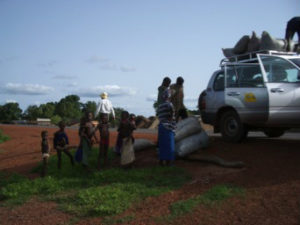
Loading charcoal produced at a rural Malian village for use in the city of Bamako (Courtesy of Glen MacDonald)
My reasons are not, however, to delve into the darker corners of our discipline’s history or weigh the value of examining humankind’s past through an environmental lens. Rather my focus is on the present-day and the future. My purpose being to examine some current academic and policy debates that could shape the fates of people and the planet over the 21st century. These are debates that geographers should be front and center in, because they are explicitly concerned with the role of geography in determining that future.
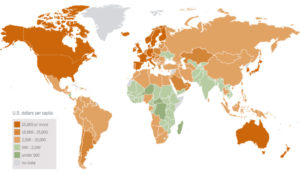
To illustrate the currency of this topic let’s consider the depressingly low per-capita gross domestic product of much of sub-Saharan Africa. This past month there was an interesting article in Business Daily entitled How economic geography has conspired to keep Africa down. By the term “economic geography” the article was not referring to the sub-discipline of economic geography or its academic practitioners, but rather the economic argument that “the underdevelopment of the continent is a case of “bad latitude” and that income disparities within and between regions can be explained by erratic climate, poor soil, low agricultural productivity and infectious disease.” Might this argument not be called geographic determinism? Let’s look at the context from which this article in Business Daily arose in terms of the current debate over geographical determinism and what is at stake.
2015 Per-capita gross domestic product (Courtesy of the International Monetary Fund)
Debates about regional differences in economic growth and development have a history as long as economics itself, Adam Smith being one notable proponent of the importance of geography in such variations. Some of the stimulus for the current debate on the economic roles of geography and environment can be traced to 1997 and the impact of Jared Diamond’s book Guns, Germs and Steel along with Jeffrey Sachs’ writings such as Nature, nurture and growth, which appeared in the Economist. Diamond was then a professor in Physiology at UCLA, but would soon join the Department of Geography, and Sachs was director of the Harvard Institute for International Development, and would subsequently become director of The Earth Institute at Columbia. The arguments that Diamond puts forward about geographical configurations and environmental conditions contributing to the economic ascendency of Europe and the West are well known to geographers. It is worth noting however, that Diamond, in contrast to the geographical determinism of the 19th and early 20th century, is explicit that he pursued this work as an argument against racism and racist interpretations of history. In his articles Sachs argues that tropical countries, particularly those with high reliance on the agricultural sector, suffer from economic growth penalties related to geography due to “disease, poor soil, unreliable rainfall, pests, and other tropical ills.” Sachs pays particular attention to the high human and economic costs of tropical diseases. Sachs’ 2006 book; TheEnd of Poverty provides a strong articulation of his arguments in favor of geography being a key economic determinant. In the 1997 Economist article he concludes that geographical conditions may pose “insurmountable barriers to higher incomes” in many tropical regions. In reviewing Guns, Germs and Steel and drawing parallels with Nature, nurture and growth, the Economist headlined their piece with the title “Geographical determinism.” This is the sense in which many people outside geography understand the term today.
Now, criticisms about the role of geography and environment in determining the human condition can be launched from many perspectives. One example of this is the plethora of views expressed on Guns, Germs and Steel in a special section of Antipode published in 2003. However, the questions I am focusing on concern the role of institutions versus geography/environment in determining inequalities in economic development. Institutions in this circumstance could be defined as: The humanly devised constraints that structure social, political and economic exchanges in human societies. Economists might cite things such as property rights and the existence of functional markets as important attributes — although a neoclassical economist would have a very different take on the positive values of these than a Marxist. Perhaps the most well-known proponents of the institutionalist view on regional economic development inequalities are Daron Acemoglu, an economist at MIT, and James Robinson, a political scientist and economist in the Harris School of Public Policy at the University of Chicago. Their views, that institutions trump geography and environment in determining regional economic inequalities, were developed in a number of publications starting with a series of papers in the early 2000s and resulted in the book Why Nations Fail published in 2012. They take direct aim at a number of the geographical arguments posited by Diamond and Sachs. For their empirical arguments they use examples such as the economic underdevelopment of North Korea versus South Korea or the divergence in economic status between European colonies originally dominated by Spain versus those dominated by England. They argue that it is not geography, nor is it culture or race, but economic institutions facilitating stable property rights and robust markets that are the most important determinants of economic prosperity. The responses and counter responses between Diamond, Sachs, Acemoglu and Robinson in the New York Review of Books and in Foreign Affairs illuminate the differences of opinion and arguments related to each side.
Now, given its dark history, many geographers have been reluctant, and even vehemently hostile, to discussing anything that can be remotely considered geographical or environmental determinism. Some of the responses to Guns, Germs and Steel that were published in Antipode provide evidence of this. I suppose that ignoring the debate over geography versus institutions and leaving it to economists and others to argue would be ok if this was merely an academic question. However, that is not the case. For example, Jeffrey Sachs’ 1997 piece in the Economist arose from research he conducted for the Asian Development Bank’s “Emerging Asia” report. The purpose was to forecast and help plan for economic development in Asia. He has been an active policy advisor to governments, including presidents in Africa and Asia and many international organizations. Speaking at a U.N. conference in 2000, U.S. Treasury Secretary Lawrence Summers seemed to echo Sachs when he warned against thinking that “the economic failures of isolated, tropical nations with poor soil, an erratic climate and vulnerability to infectious disease can be traced simply to the failure of governments.” The question of geography versus institutions in terms of economic development is one that transcends the confines of the academy and has real world implications.
People in developing nations, particularly those in the tropics, are facing challenges of providing food, water and economic opportunity for burgeoning populations. In addition, climate change will exacerbate environmental threats from drought, flooding, heatwaves, agricultural pests and human disease in many of these countries. In such a world, we desperately need the right paradigms and strategies for economic development. In this we face two types of error. If we assume that geography and environment are the overwhelming determinants of economic disparity we may well throw resources at infrastructure or other geography/environment focused growth strategies while ignoring socioeconomic issues, which will confound such efforts. On the other hand, to assume that simply providing economic tutelage and some start-up capital here and there will be sufficient in countries which faces real geographic and environmental challenges can be equally ineffective.
What about the planet? It is not just people who pay the price if we cannot get the development balance right. There is a strong correspondence between the locations of the world’s biodiversity hotspots and global poverty. A 2004 paper in Science, led by geographer Bill Adams from Oxford, illustrated the critical linkages between alleviating poverty in the developing world and improving biodiversity conservation there. In Mali, where I have worked, supplying charcoal for domestic use in urban areas such as Bamako leads not only to increased rates of deforestation and associated biodiversity threats, but also contributes to greater greenhouse gas emissions then use of LPG or electricity which are economically unattainable for most people. When economic resources are in short supply, it is difficult to impossible for national environmental conservation efforts to be developed and implemented. At the same time, it does not seem right for international groups to focus funding on endangered species or other environmental concerns alone and ignore the plight of the people in those nations. People and planet must, and can, be considered in unison.
In reading the writings of Diamond, Sachs, Acemoglu, Robinson and others involved in this debate, it is clear that they recognize the balance between the importance of geography versus institutions is not immutable, but can change over space and through time. It seems to me there is much work for geographers from every corner of our discipline to engage with this. Fundamental questions of economic geography, political geography, development geography and political ecology are clearly in play here. Our experience and insights, both in terms of on the ground work and theory, are of obvious value. Geographers such as Michael Watts at Berkeley and Marcus Powers writing articles in the Singapore Journal of Tropical Geography in 2003 and 2009 and Eric Sheppard writing on “Geography, nature, and the question of development” in 2011 in Dialogues in Human Geography are examples of those who have taken up these issues. Indeed, the exciting and developing field of ‘environmental economic geography’ tackles the relationship between environment and economics and the feedback between these realms head on. A 2010 article by Julie Silva, Siri Eriksen, and Zacarias Ombe in the Geographical Journal uses this approach to look at this “double exposure” effects of environment and socioeconomic institutions on farming communities in Mozambique. In addition, the arguments that are posited in some economics articles from both sides of the debate clearly are naive in terms of climate, hydrology, soils, vegetation, crops, etc. There is plenty of scope for work by physical geographers to challenge and refine some of these suppositions.
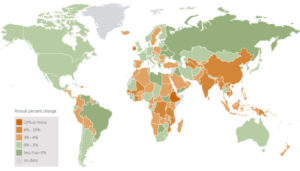
2015 Annual percent change in per-capita gross domestic product (Courtesy of the International Monetary Fund)
Where do I stand on all this? I clearly think understanding the relative importance of geography and institutions in determining economic development is a core concern with huge societal and environmental implications. While I take some hope from the fact that in recent years the annual economic growth in sub-Saharan Africa has outstripped the pace in many other parts of the world, I wonder how do we fuel economic growth while also promoting equity in the distribution of these gains and aiding the environment? Geographers cannot shirk from this question. In terms of choosing a side in the debate over geography versus institutions I think I would like to leave the last word to the writer of the Business Daily article, the Kenyan development economist Anzetse Were. As she puts it, “there is an interface between geography and human behaviour. Political instability, the chronic mismanagement of funds by some African governments coupled with Africa’s position in the international division of labour also explain the continent’s limited growth and development, not just its geography. None the less, economic geography provides a perspective of analysis which Kenya could make great use of.” As geographers, let’s help as best we can.
David Slater, Emeritus Professor of Political Geography at Loughborough University, UK, who was a leading critical development geographer and known for his work on Latin America, passed away on October 20, 2016.
Slater studied for a bachelor’s degree in geography at Durham University in the mid-1960s which was when he first became interested in geopolitics, seeking to understand international relations in a spatial context. He went on to the London School of Economics, where he completed a doctorate in geography in 1972.
His long career saw him teach at universities in Africa, Asia, Latin America, North American and Europe. He was based at CEDLA (the Interuniversity Centre for Latin American Research and Documentation) in The Netherlands for a number of years before moving to the Department of Geography at Loughborough University as Professor of Political Geography from 1994 to 2011. During that time he also served as the editor of Political Geography (1999-2004). In 2011 he became Emeritus Professor at Loughborough University and was also an Associate Fellow at the Institute for the Study of the Americas, University of London.
During the 1970s Slater emerged as a distinctive voice in radical development geography, critiquing mainstream development concepts, models and theories. He used a Marxist framework to explain the spatial characteristics of development, specifically how underdevelopment in the ‘Third World’ was shaped and perpetuated by relationships with the West. His pair of papers published in Antipode on “Geography and Underdevelopment” (1973 and 1977) were particularly influential and remain widely cited to this day. He wrote them while working in Tanzania at the University of Dar Es Salaam, during which time he was inspired by scholars from Africa, Asia and Latin America who were explaining inequality and underdevelopment in terms of colonial exploitation, political domination and dependency.
During the 1980s, Slater focused much of his attention on Latin America. Among his significant publications during that period was the book Territory and State Power in Latin America: The Peruvian Case (Palgrave Macmillan 1989) which examined the central spatial tendencies of capitalist development and state-society relations in Peru between 1914 and 1984, but with wider applicability to other countries in the region. He also edited Social Movements and Political Change in Latin America (CEDLA 1985), a compilation of papers from a CEDLA workshop held in 1983 on the topic of new social movements and the state in Latin America.
It is difficult to select examples from someone who had such a prolific writing output and published consistently in leading journals of geography, development studies, and political science. Certainly worthy of mention and exemplifying one of the major themes in his work is the article “On the borders of social theory: learning from other regions” (Environment and Planning D 1992) which was a criticism of Western ethnocentrism. He argued that ‘First World’ geographers should examine the West’s relationship with the ‘Third World’ in order to appreciate their own societies. His argument about ‘learning from other regions’ was quite influential as human geography began to grapple with postcolonial thought and remains very relevant today.
A number of Slater’s publications examined US power. The American Century: Consensus and Coercion in the Projection of American Power (Wiley-Blackwell 1999), jointly edited with Loughborough University colleague Peter Taylor, brought together studies of Americanization and American imperialism to assess how far the twentieth century can be seen as the ‘American Century.’ Following this, his much lauded book, entitled Geopolitics and the Post-Colonial: Rethinking North-South Relations (Wiley-Blackwell 2004), focused onUS-Latin American encounters and theorized an alternative postcolonial perspective for understanding contemporary political and economic globalization.
Over many decades, Slater’s work consistently challenged Western hegemony. His critical analyses of North-South relations exposed long-standing, ongoing and acute asymmetries of power and geopolitical injustice. While he was a provocative voice, he was also very highly regarded as a scholar. His complex theoretical work was deftly written and grounded in real examples. He was an inspiration to many students who were drawn to his critical perspectives on development studies and political geography. He will be fondly remembered by many colleagues at Loughborough University and beyond.
NSF to Host Webinar on Smart & Connected Communities Solicitation
The National Science Foundation would like to make the geography and spatial science communities aware of the Smart and Connected Communities (S&CC) solicitation (NSF 16-610). The competition expects a significant social and behavioral component to be contained in the proposals and will likely be of interest to many geographers.
There will be a webinar about this new S&CC solicitation on October 20, 2016 from 2:30 to 3:30 pm eastern time. The direct link to the event page for the S&CC webinar is as follows: https://www.nsf.gov/events/event_summ.jsp?cntn_id=190025&org=CISE. It is currently on the CISE homepage under Popular links, Webcasts/Webinars.
Some key components of the solicitation:
Due Dates
Preliminary Proposal Due Date(s) (required) (due by 5 p.m. submitter’s local time): November 30, 2016
Full Proposal Deadline(s) (due by 5 p.m. submitter’s local time): February 16, 2017
Proposal Categories
This S&CC solicitation will support research projects in four categories:
S&CC Integrative Research Grants (IRGs) Track 1. Awards in this category will support the conduct of fundamental, multidisciplinary, integrative research and the building of research capacity. Track 1 awards will provide three to five years of support for projects at a level not to exceed $5,000,000 for the total budget.
S&CC Integrative Research Grants Track 2. Awards in this category will support the conduct of fundamental, multidisciplinary, integrative research and the building of research capacity. Track 2 awards will provide three or four years of support for projects at a level not to exceed $1,000,000 for the total budget. It is anticipated that Track 1 and 2 proposals will be distinguished by the sizes of the teams, as well as, the scope and duration of the proposed activities.
S&CC Research Coordination Networks (RCNs). Awards in this category support the establishment of a network of multidisciplinary researchers and others who will collectively and significantly advance S&CC research through active exchange of ideas, development of fundamental research directions, and other approaches. Each of these awards will provide four or five years of support for projects at a level not to exceed $500,000 for the total budget.
S&CC Planning Grants. Awards in this category will provide one year of support to stimulate research capacity through multidisciplinary team-building and the development of high-impact, fundamental research concepts. Each of these awards will be at a level not to exceed $100,000 for the total budget.
Limit on Number of Proposals per PI or Co-PI: 4
The limit on number of proposals per PI, Co-PI, or other Senior Personnel is defined by award category as follows:
Integrative Research Grants Track 1 or Track 2: 1;
Research Coordination Networks: 2; and
Planning Grants: 1.
An individual may appear as a PI, Co-PI, or other Senior Personnel on only one proposal submitted to either S&CC IRG Track 1 or Track 2 (not both), only two proposals submitted to the S&CC RCN category, and only one proposal submitted to S&CC Planning Grant category. This limitation includes proposals submitted by a lead organization and any sub-awards included as part of a collaborative proposal involving multiple institutions.
Preliminary proposals are requiredonly for S&CCIntegrative Research Grants (IRG) Tracks 1 and 2 and must be submitted in accordance with the instructions below. The NSF decision made on the preliminary proposal is advisory only and may include feedback on proposed activities, including anticipated budgets. Submission of a Preliminary Proposal is required in order to be eligible to submit a Full S&CC IRG Proposal.
Please refer to the solicitation for further details. For questions about the solicitation please contact Sunil Narumalani, a program director in the Geography & Spatial Sciences Program and also a managing program director for this new opportunity, snarumal [at] nsf [dot] gov.
AAG Members get exclusive access to publications, prominent journals, unique advocacy, grant, scholarship and professional opportunities with access to industry focus communities, and event discounts, including our annual meeting.
Some content may only be accessible if you belong to specific Specialty or Affinity Groups. You can still update your membership below. You will need to go through the Join flow, but you do not need to repurchase your membership unless it is expired or about to expire.
To provide the best experiences, we use technologies like cookies to store and/or access device information. Consenting to these technologies will allow us to process data such as browsing behavior or unique IDs on this site. Not consenting or withdrawing consent, may adversely affect certain features and functions.
Functional
Always active
The technical storage or access is strictly necessary for the legitimate purpose of enabling the use of a specific service explicitly requested by the subscriber or user, or for the sole purpose of carrying out the transmission of a communication over an electronic communications network.
Preferences
The technical storage or access is necessary for the legitimate purpose of storing preferences that are not requested by the subscriber or user.
Statistics
The technical storage or access that is used exclusively for statistical purposes.The technical storage or access that is used exclusively for anonymous statistical purposes. Without a subpoena, voluntary compliance on the part of your Internet Service Provider, or additional records from a third party, information stored or retrieved for this purpose alone cannot usually be used to identify you.
Marketing
The technical storage or access is required to create user profiles to send advertising, or to track the user on a website or across several websites for similar marketing purposes.
To provide the best experiences, we use technologies like cookies to store and/or access device information. Consenting to these technologies will allow us to process data such as browsing behavior or unique IDs on this site. Not consenting or withdrawing consent, may adversely affect certain features and functions.
Functional
Always active
The technical storage or access is strictly necessary for the legitimate purpose of enabling the use of a specific service explicitly requested by the subscriber or user, or for the sole purpose of carrying out the transmission of a communication over an electronic communications network.
Preferences
The technical storage or access is necessary for the legitimate purpose of storing preferences that are not requested by the subscriber or user.
Statistics
The technical storage or access that is used exclusively for statistical purposes.The technical storage or access that is used exclusively for anonymous statistical purposes. Without a subpoena, voluntary compliance on the part of your Internet Service Provider, or additional records from a third party, information stored or retrieved for this purpose alone cannot usually be used to identify you.
Marketing
The technical storage or access is required to create user profiles to send advertising, or to track the user on a website or across several websites for similar marketing purposes.

 The AAG has announced the selection of seven Honorees who will receive the 2017 AAG Honors in one of four categories. Recipients to be honored at an annual awards luncheon during the AAG Annual Meeting are:
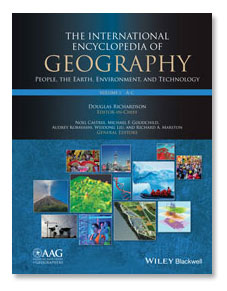 Join us in celebrating the official launch of the International Encyclopedia of Geography: People, the Earth, Environment, and Technologies in Boston! There will be a brief overview of the Encyclopedia from its general editors, followed by a Q&A session with the general and section editors of this great work. Mark your calendars for 5:20-7:00 p.m. on Friday, April 7, 2017.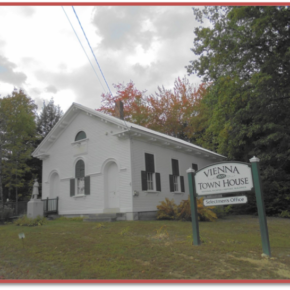
 The AAG election will be conducted online again, and will take place Jan. 11-Feb. 2, 2017. Each member who has an email address on record with the AAG will receive a special email with a code that will allow them to sign in to our AAG SimplyVoting website and vote. It’s important to update your email address to make sure you will be able to vote. If you know your email address is up to date with us, there’s no need to do anything further.
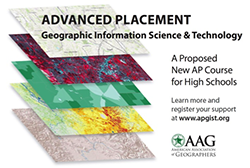 The AAG’s proposal for a new Advanced Placement course in Geographic Information Science and Technology (AP GIS&T) continues to receive strong interest from high schools, colleges, and universities across the U.S. However, in order to complete the proposal package for the College Board, the AAG needs to collect attestations of interest from at least 250 high schools.
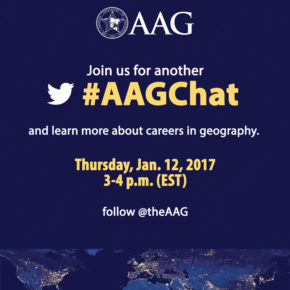 Mark your calendars and be sure to join us for an #AAGChat on careers in geography. The chat will address the many diverse career opportunities for geographers in a variety of industries and employment sectors and how geography students, graduates and early-career professionals can identify appropriate job openings. We will also discuss the many career resources available through the AAG, including our Jobs in Geography Center, Student Opportunities website, and more!
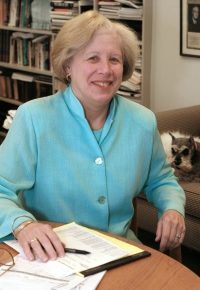 The Nancy Weiss Malkiel Scholars Award Program is now accepting applications
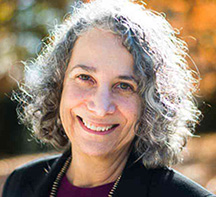 Michelle Behr, Ph.D., has been named chancellor of the University of Minnesota, Morris. Dr. Behr’s appointment is effective February 6, 2017, pending approval by the Board of Regents.
 Bailey Anderson, a Liberal Arts Honors/Geography, and International Relations and Global Studi
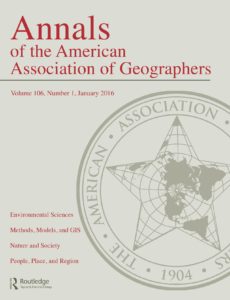 The AAG is pleased to announce that Volume 107, Issue 1 (January 2017) of the Annals of the American Association of Geographers is now available.
 The AAG is pleased to announce that Volume 69, Issue 1 (February 2017) of The Professional Geographer is now available.
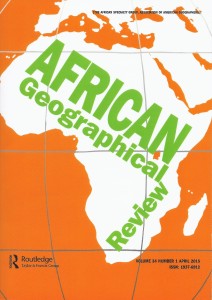 The AAG is pleased to announce that Volume 35, Issue 3 (December 2016) of the African Geographical Review is now available.
 This past month the
 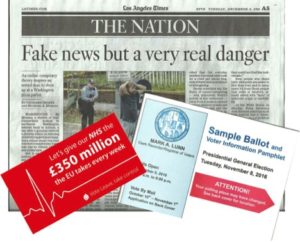 Two other similar descriptors have become more widespread in recent years — post-factual and post-rational. I believe that these terms are all part of the same sociological and political trend, but have important differences. Post-factual does not necessarily mean being untruthful, it may represent situations in which pertinent factual information is either not sought, not considered, not valued, or is simply reviled. The term post-truth implies deliberate provision or knowing acceptance of information that is known to be untruthful. I would suggest the deliberate suppression of factual information would also fall under this rubric. Post-rational suggests situations in which facts, reasoning and logic are deemed unnecessary or even loathed when decisions are taken. The term post-truth is widely used in a sense that captures all three of these issues. In the context of western philosophy and history, an increasingly post-truth world can be seen as a rejection of 300 years of scientific, socioeconomic and political development that was initiated by the Age of Enlightenment in the 18th century.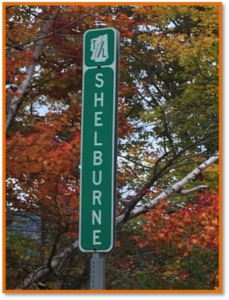

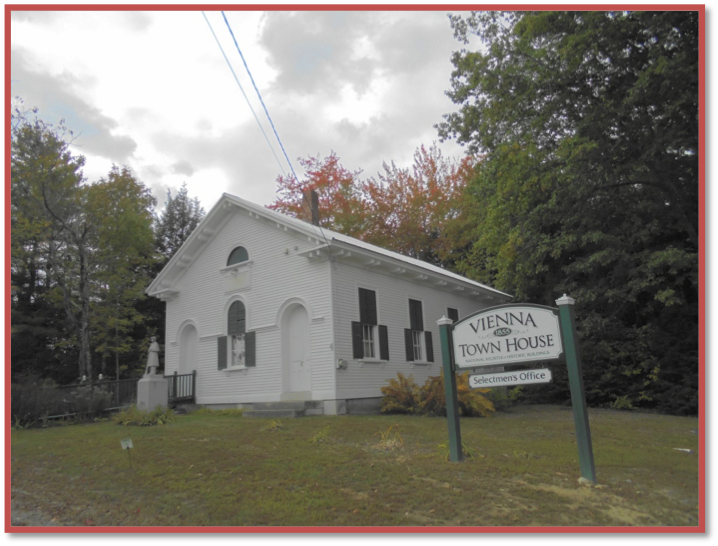
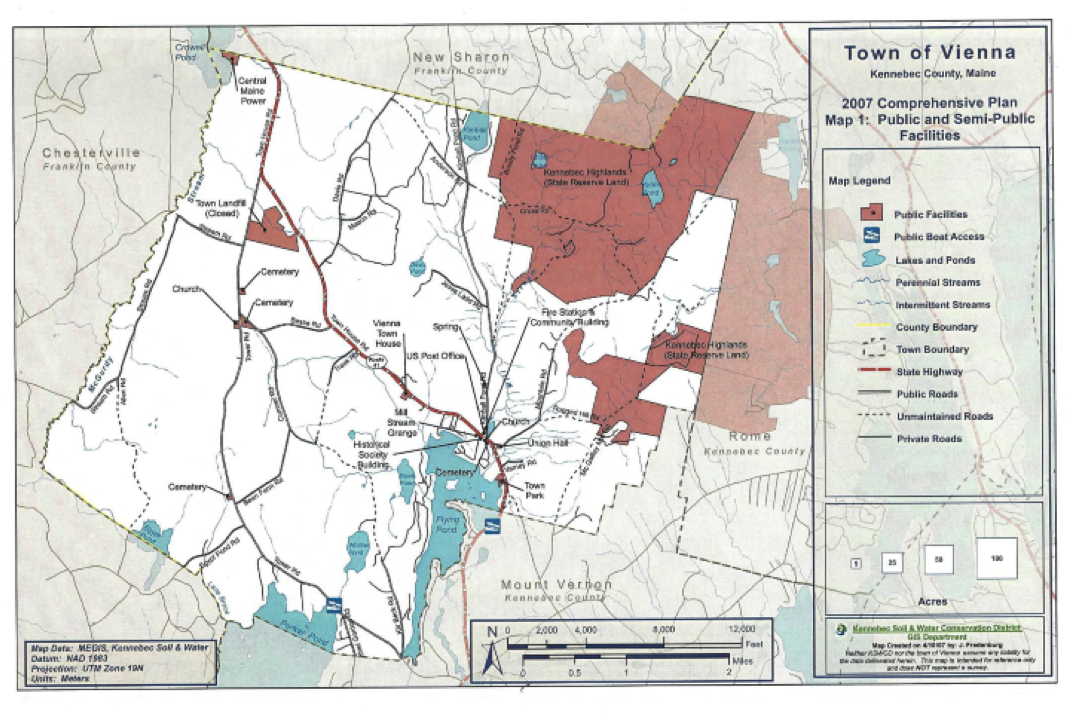

 The AAG is participating in an international effort to design and develop a geography assessment based on the successful model used by the International Association for the Evaluation of Educational Achievement (IEA) for the Trends in International Mathematics and Science Study (TIMSS).
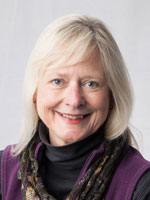 AAG Past President Sarah Witham Bednarz will explore the evolving role, nature, and relevance of geography education as viewed by former presidents of the AAG from 1910 to the present. AAG presidential addresses have, at times, commented directly on education issues; at other times the topic has been avoided, if not ignored.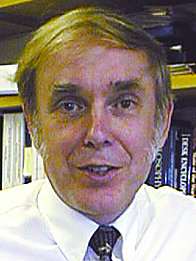
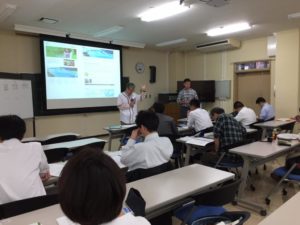 Since 2012 the AAG has been participating in an international effort, known as GeoCapabilities, to support new approaches in geography teacher education. As previously reported earlier this year, the GeoCapabilities project launched a new website that includes four training modules. Collectively, the modules are designed to promote a “curriculum of engagement” based on an appreciation of the significance of geographical knowledge in the education of young people.
 AAG To Host Twitter Chat on Nov. 17
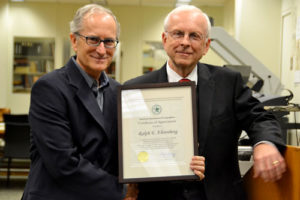 The AAG honored Ralph Ehrenberg, Chief of the Library of Congress Geography and Map Division, during his retirement from the Library of Congress on October 13, 2016. The AAG’s Executive Director Doug Richardson presented him with a certificate of appreciation for his many years of service to the Association as the first AAG Archivist and in his distinguished role at the Library of Congress.
 The AAG is currently seeking interns for the spring semester, although the organization offers opportunities on a year-round basis for the spring, summer and fall semesters. Interns participate in most AAG programs and projects such as education, outreach, research, website, publications, or the Annual Meeting. The AAG also arranges for interns to accompany different AAG staff on visits to related organizations or events of interest during the course of their internship.
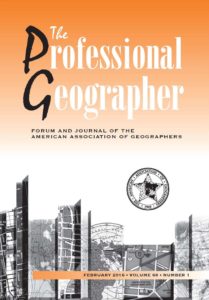 The AAG is pleased to announce that Volume 68, Issue 4 (November 2016) of The Professional Geographer is now available.
 Sally Eden, professor of Human Geography at the University of Hull, UK, whose research explored issues of environmental perception, and sustainable food production and consumption, passed away in September 2016 after a period of illness.
 Larry Hamilton, emeritus professor of natural resources at Cornell University, who played a leading role in the worldwide conservation of mountain areas, passed away on October 6, 2016, at the age of 91.
 Let’s talks about Geographical Determinism. Got your attention? I thought so. The term, along with its cousin, Environmental Determinism, has long been disdained and pejorative amongst geographers, anthropologists and other disciplines. There is a rightful rejection of determinism’s racist connotations and applications in the 19th and early 20th centuries. There is also good cause to question explanations of complex societal attributes and histories that are based on selected geographic/environmental conditions alone. To even utter the terms Geographical Determinism here in the Newsletter of the American Association of Geographers, much less start a column this way, might well be considered a step into dangerous waters!