Margaret FitzSimmons

Margaret I. FitzSimmons, a respected geographer in the field of urban planning and environmental studies, died April 3, 2023, in Santa Cruz surrounded by family and friends. She was 76.

Born into a lineage of esteemed geographers, she carried forward the legacy and passion for the environment. Her grandfather, Carl Sauer, a prominent figure in the field, influenced her interest in human-environment interactions. Margaret’s academic journey included undergraduate studies in psychology at Stanford, a master’s degree in geography from California State University, Northridge and a Ph.D. in geography from UCLA.

Her scholarly contributions were both profound and practical, Her dissertation examined the relationship between nature, labor, and capital in California’s agricultural heartlands. Her insights into the political ecologies and environmental history of the Salinas Valley was innovative theoretically but also relevant to understanding and solving real-world problems. She received the Nystrom award from the American Association of Geographers for her dissertation work. Her publications in journals such as Economic Geography and Antipode have been widely cited and respected, especially her Antipode paper on “The matter of nature.” Her book, Thirst for Growth: Water Agencies as Hidden Government in California, co-written with Robert Gottlieb, remains a seminal work in the field, highlighting issues of public accountability and water policy innovation.

In 1980, Margaret was appointed assistant professor in urban planning in UCLA’s Graduate School of Architecture and Urban Planning, where she was instrumental in developing the Environmental Analysis and Policy concentration. In 1994, she moved to UC Santa Cruz’s Environmental Studies program, retiring in 2015.

Margaret’s teaching was characterized by its breadth and depth, reflecting her belief in the power of interdisciplinary approaches to understanding complex environmental issues.  She was a devoted mentor to graduate students and colleagues and a thoughtful and inspiring teacher. In 1991, FitzSimmons received UCLA’s Distinguished Teaching Award and in 2016, her former Ph.D. students organized a gathering and dinner at the AAG annual conference as a tribute to their mentor.

Margaret was a longstanding AAG member who made significant contributions to understanding the geographies of agriculture and water, political economy of environment, and nature-society theory. In 2024, the AAG received initial funding from her trust for an award in her name, administered by the Cultural and Political Ecology Specialty Group. The endowed Margaret Irene Fitzsimmons Early Career Award recognizes the innovative work of an early career scholar in nature-society relations, including research, teaching, and outreach.

Her loss is deeply felt by all who knew her. Margaret’s legacy is one of intellectual curiosity, rigorous scholarship, and a deep commitment to the principles of social and environmental justice.

    Share

Ken Hammond

Kenneth “Ken” Hammond, 90, a beloved faculty member at Central Washington University, passed-away on Tuesday, May 21, 2024.

Ken was born in 1934 along the Columbia River in northeastern Washington. Raised on a farm near Lake Ellen in the Sherman Creek area of Ferry County, he graduated as valedictorian from Marcus High School in 1951, earning a scholarship to Eastern Washington College of Education.

In 1956, Ken earned two Bachelor of Arts degrees from Eastern, one in Geography and one in Education. He taught high school biology for two years in Camas, Washington, before pursuing a Master of Science in Natural Resources at Oregon State College in Corvallis, Oregon. After completing his Master’s degree, he returned to Eastern Washington State College to teach in the Geography Department.

In 1962, Ken joined Central Washington State College in Ellensburg, Washington, teaching in the Geography Department. A year later, he became the Director of Extension and Correspondence for two years. In 1965, he began a doctoral program at the University of Michigan’s Rackham Graduate School, receiving his Ph.D. in Conservation in 1969.

Ken rejoined the Geography Department at Central Washington University in 1967. He taught a wide range of courses from Introductory Physical Geography to graduate-level Policy and Planning. Working with students was his life passion, and he considered effective teaching the most fundamental part of his job. His goal was to help students prepare for employment, citizenship, and graduate school. Ken mentored many graduate students and cherished the ongoing relationships he maintained with them. After 30 years of teaching, he retired in December 1997.

Ken co-edited a book on environmental literature titled “The Sourcebook on the Environment,” funded by the American Association of Geographers and published in 1978.

In 1981, he received the CWU Distinguished University Professor Teaching award. In 1993, the CWU chapter of Phi Kappa Phi named him Scholar of the Year. In 1997, he was granted an Honorary Life Membership by the Northwest Scientific Association in recognition of his outstanding service. In 2001, he received a Distinguished Alumnus Award from Eastern Washington University for his exceptional service.

In retirement, Ken continued to lend his expertise in Conservation and Water Resources Policy. Planning, and Sustainability. He was an early proponent for new and refreshed policies that promoted environmental sustainability. Ken’s attachment to the land began early in life and continued throughout his life.

Ken enjoyed gardening and cultivated a large vegetable garden at his home near the Manastash Ridge trailhead. He happily answered questions and provided advice to visitors and enjoyed encouraging children to grow their own food. He shared his garden’s abundance, regularly stocking a small table outside with a “Fresh Veggies – Free” sign.

Ken is survived by his wife of 70 years, Britta Jo (Torrance) Hammond, and their three children.

    Share

Susan Mary Berta

Dr. Susan Mary Berta passed away Wednesday May 22, 2024, at her residence in Terre Haute, Indiana. She was a professor at Indiana State University’s (ISU) Department of Earth and Environmental Systems, where she retired in 2021. She started her career at ISU in 1986, later serving as the department chairperson from 2002-2009.  She was also the Interim Coordinator of the Science Education Program from 2005-2007. She published over 25 journal articles and reports, with specializations in physical geography, geomorphology, and remote sensing, in addition to supervising the research of and mentoring 13 graduate students.

Born July 29, 1957, in Flint, Michigan, she received a B.A. degree in Physical Geography from the University of Michigan-Flint and graduate degrees in Geography: M.S. from Oklahoma State University and Ph.D. from the University of Oklahoma. Her master’s degree research involved using remote sensing technology and GIS, as well as field verification, to identify prospective locations of “natural areas” throughout Oklahoma for “wilderness” status consideration. Ph.D. work involved using aerial and satellite data to map periglacial landscapes in the Sangre de Cristo Mountains of Colorado. As a graduate student, she assisted in three-week wilderness “research adventures” and later offered field camp at ISU for undergraduate and graduate students for 10 summers. Her favorite part of her professional career was always the research, field trips, and friendships accumulated throughout the years.

Berta’s heart belonged to the Terre Haute Humane Society, where she volunteered for over 30 years and served as a member of their Board of Directors. She also served as a Director on the Board at the Ouabache Land Conservancy, partaking as a member since 2013.

    Share

Program Profile: University of Hawaiʻi, Mānoa

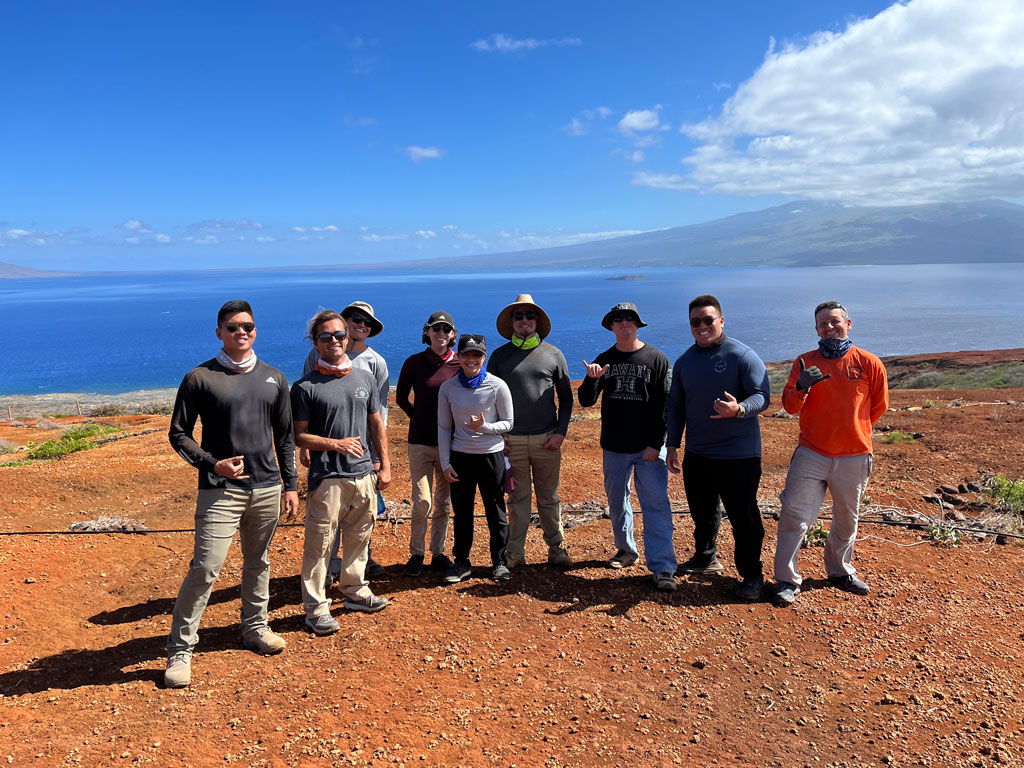
University of Hawai‘i Manoa GEO department students and faculty pose for a photo in the field on Kaho'olawe (Courtesy David Beilman)
University of Hawai‘i Manoa GEO department students and faculty pose for a photo in the field on Kaho'olawe. (Courtesy David Beilman)

During the 2024 Annual Meeting, AAG staff sat down for an interview with Reece Jones, professor and chair of the Department of Geography and Environment in University of Hawaiʻi at Mānoa’s College of Social Sciences. The Department of Geography and Environment (GEO) is a vibrant academic community that focuses on global change and its local impacts on humans and the environment. Faculty and students pursue work that is inherently interdisciplinary, making various connections through other departments and units on campus. Many of GEO’s student and faculty research centers around Asia and the Pacific.

From political geographers to GIS specialists and environmental scientists, the breadth of faculty and course work offers undergraduates the chance to gain a holistic understanding of the discipline and do the necessary fieldwork or research to pursue career opportunities. GEO also offers world-class coursework and applied geographic research under two advanced degrees, a Master of Arts and a Doctor of Philosophy. Students of all levels engage in research on topics ranging from agriculture and food, climate change, and environmental conservation to geopolitics, geospatial sciences and data analytics, and tourism.  The department also offers a popular new certificate in GIS for undergraduate students in any program.

GEO partners with departments across the university to offer an accelerated, interdisciplinary online degree in Social Sciences of Oceans, with applications for resource management, city planning, community organizing, environmental consulting, and policy analysis. Similarly, a flexible Graduate Ocean Policy Certificate is available for students or working professionals through the department to broaden their understanding of the legal, political, economic, and social forces that affect ocean development activities.

Collaboration and Community

UH-Mānoa strives to create a community-minded environment: “We try to do our best to have kind of a collaborative relationship between graduate students and faculty so that they feel like they’re colleagues in a way [and] part of this kind of endeavor to do their research and carry out their projects.”

Jones offers the example of GEO professor Camilo Mora, whose graduate seminar is far from a typical semester seminar experience. Students collaboratively brainstorm a major question they want to answer at the beginning of the semester, then do the research and analysis together that results in a joint publication with Dr. Mora. “Major publications have come out of that class,” Jones states. “Camilo has done a really good job of bringing students into this research project and work together with them to produce very significant articles.”

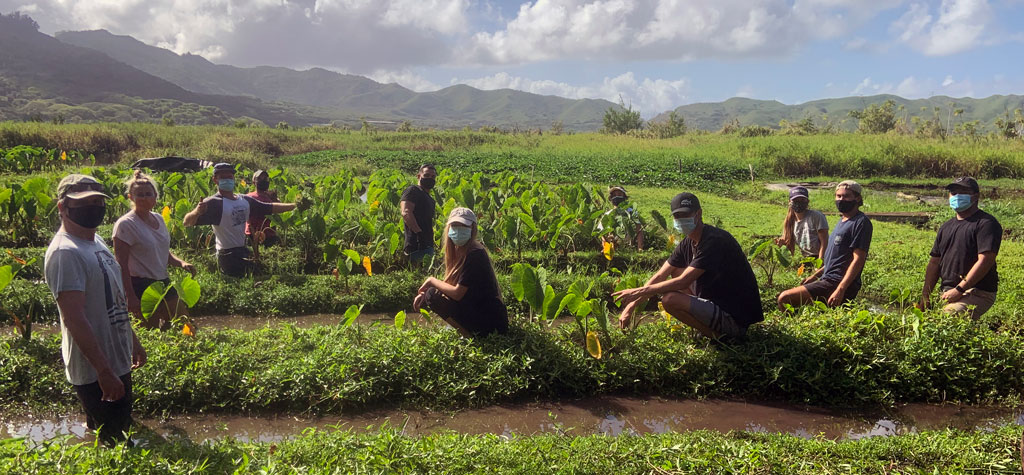
University of Hawai‘i Manoa GEO department students and faculty participate in community work day in a lo'i. (Courtesy David Beilman)
University of Hawai‘i Manoa GEO department students and faculty participate in community work day in a lo’i. (Courtesy David Beilman)

Program faculty incorporate professional development skills directly into coursework. Incoming graduate students participate in a mentoring program to prepare for developing and maintaining crucial professional development skills in hopes of answering questions such as “How do you go to a conference? How do you present a paper at a conference? How do you publish a journal article? How does the academic job market work? How do you get a non-academic job?”


Care for the Land

The University of Hawai‘i has a focus on being a Native Hawaiian (Kānaka Maoli) place of learning, “bringing in Native Hawaiian thought, indigenous thought and experiences into the way that we do things,” says Jones. GEO faculty work to integrate Native Hawaiian thought and knowledge into teaching, even if that’s not central to their research focus.

In Hawai‘i, Native Hawaiian concepts are important to the way that people see the world. One often integrated into education programs is “Mālama ʻĀina,” or to care for and honor the land. “For Native Hawaiians, the land is an ancestor. That way of seeing the world is to recognize the relationship between people and the environment, and not to think of them as separate, but rather as integrated and dependent upon each other,” Jones states. “And geography as a discipline, that’s exactly what it aspires to do.”

Taken together, the educational experiences made possible by GEO at UH-Mānoa have prepared graduates for careers in academia, government service, NGOs, and the private sector in Hawaiʻi and worldwide. GEO has provided alumni with the skills to shape new (and traditional) ways of caring for the earth and human societies. For example, several graduates are now faculty in the Hawai‘inuiākea School of Hawaiian Knowledge, the only college of Indigenous knowledge in a Research I institution in the United States.

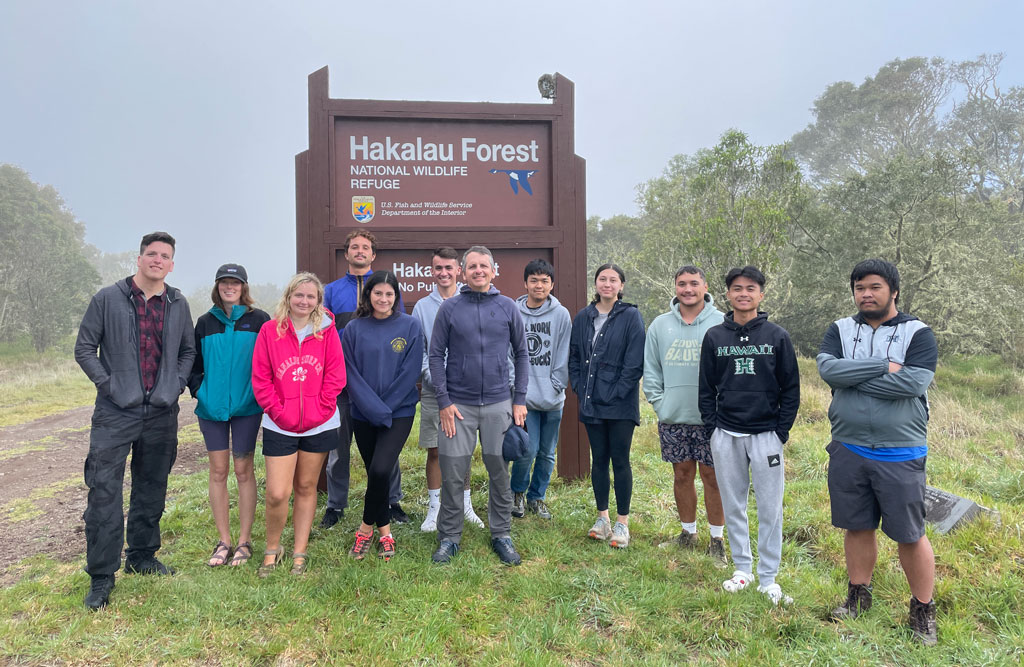
University of Hawai‘i Manoa GEO department students and faculty stop to pose for a photo at at Hakalau Forest National Wildlife Refuge, near Hilo, Hawai'i. (Courtesy David Beilman)
University of Hawai‘i Manoa GEO department students and faculty stop to pose for a photo at at Hakalau Forest National Wildlife Refuge, near Hilo, Hawai’i. (Courtesy David Beilman)


    Share

Michael Libbee

Dr. Michael James Libbee, born on December 9, 1945, passed away on January 28, 2024, after a brief illness.

A graduate of West Genesee High School in Camillus, New York in 1963, Michael Libbee received his bachelor’s degree from the University of Oklahoma in 1967, and his master’s degree and Ph.D. in Geography from Syracuse University. From 1982-2020, he was Professor of Geography at Central Michigan University, spearheading the creation of four endowments and generating over $8 million in grants for the furtherance of geographic education.

Various research interests spanned environmental studies and geospatial technologies, but Dr. Libbee was specifically passionate about advancing geographic literacy and promoting the use of technology in geographical research and teaching. He published numerous articles and book chapters ranging from geographical education in North America to geographic professional development in journals such as The Professional Geographer and the Journal of Geography. In 1989 he co-founded the Michigan Geographic Alliance, with the goal of strengthening geography and environmental education in Michigan. To this day, the organization provides networking and professional development events for teachers and educational materials to classrooms across the state. His passion for education and geography was one of his trademark characteristics, and his infectious enthusiasm inspired countless students and teachers.

Michael Libbee and his wifeDr. Michael Libbee was the beloved husband of Kristin Sheridan, whom he married in 1971. Throughout their 53-year marriage, they shared numerous adventures together, and were often seen biking or walking their loyal canine companion, PJ. Dr. Libbee will forever be remembered for his generosity, love for his family, and dedication to his students. His legacy will continue in the lives of those he has touched.
    Share

Grant Rodriguez Almani

By Emily Frisan

Meet Grant Rodriguez Amlani, a dedicated advocate for environmental justice and a strategic recruitment coordinator who has honed his expertise in environmental issues, waste management, and the pursuit of a circular economy.

Education: M.A. in Sustainability & Development (Southern Methodist University), B.S. in geography with minors in mathematics and Spanish (University of North Texas), A.A. in general studies (University of Arkansas at Little Rock).

Professional accolades include Circularity23 Emerging Leader, a 2022 Clinton Global Initiative University Fellow, and an Envision Sustainability Professional (ENV SP).

Describe your career path up to your current position, including the range of tasks and responsibilities you oversee.  

I graduated in May 2020, which is one of the worst times to graduate, regardless of what your major was. I’d always known I wanted to go into an environmental or sustainability kind of field. Those opportunities got lost, and there were hiring freezes. I went to interviews and then everything fizzled out, which was not unique to environmental work. Everybody kind of dealt with that.

I found my current job by nature of putting myself out there and networking in Dallas. The sustainability circles are close-knit, so once you start going out there and meeting people, it lends itself well to networking and whatnot.

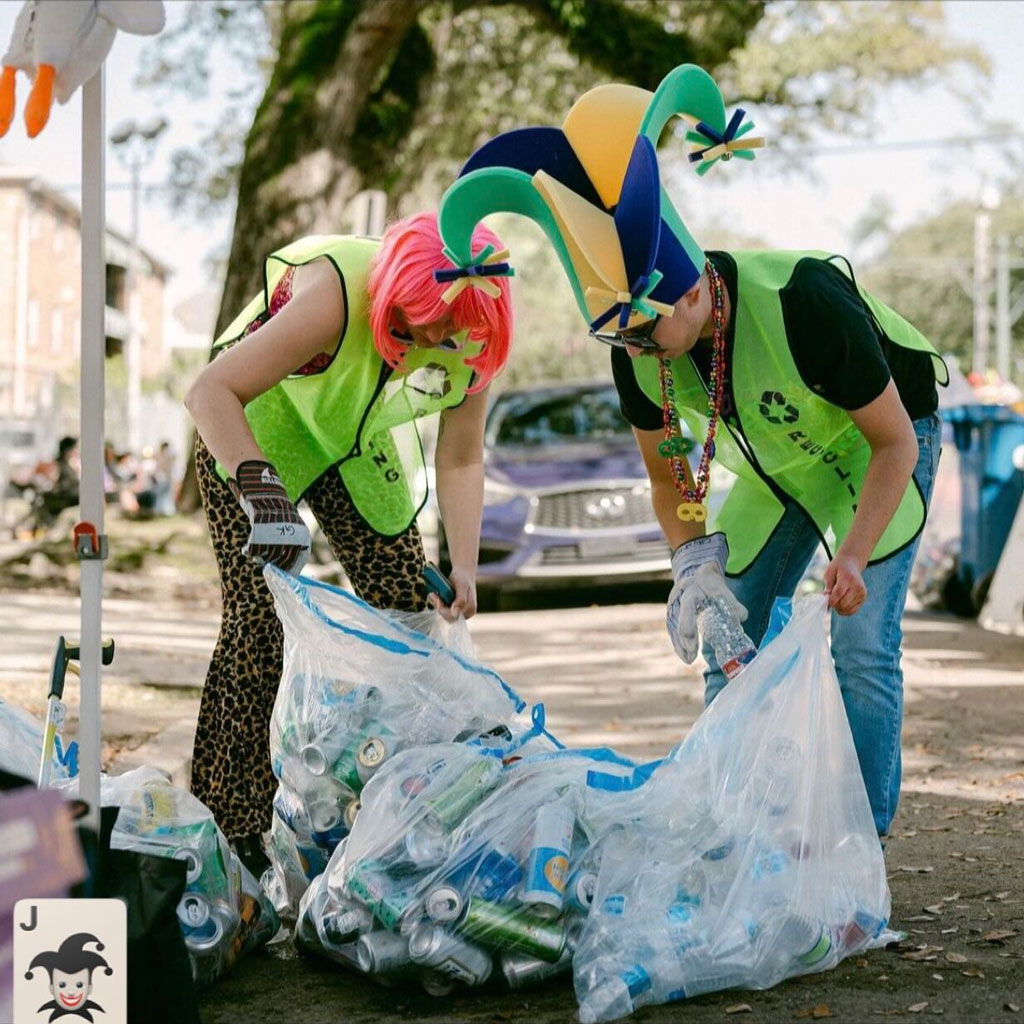
Grant Rodriguez Almani and a colleague participate in a recycling cleanup while dressed in humorous costumes. Credit: Katie Sikora
Grant Rodriguez Almani and a colleague participate in a recycling cleanup. Credit: Katie Sikora

Now, I’m the environmental justice and recruitment coordinator of the U.S. Plastics Pact. Most of my focus is on sustainability, such as waste and recycling. The way it works is we have over 130 member organizations — we call them Activators. These range from cities like the City of Austin or Seattle, to Fortune 500 companies like Walmart, or L’Oreal, or ALDI, or Target, and everybody in between. Anybody that touches plastic packaging in the chain, whether they sell it, make it, or collect it at the end of its life, as well as other nonprofits, also engage.

My role is twofold. The recruitment piece is talking to potential organizations about participating in our work, and then the environmental justice piece is figuring out where environmental justice fits into a just transition to a circular economy for plastics packaging. In the work of sustainability and the circular economy, the justice and equity pieces tend to have been kind of shoehorned in at the end or after the fact. I’m really trying to challenge people to think about that in the design process: the products, the systems, the collection, and what kind of jobs are available.

What geographic knowledge is important and most useful for you in this position?

Something interesting that I’ve seen is that in the corporate sustainability world not everybody has a strong science or geography background. It might be somebody with a business or English degree, which is fine, but it [a degree in geography] helps to have that environmental understanding of how things like climate or ecosystems work and breaking those things down for society and communities.

Separately too are the human-environment interactions. Geography helps us to talk about how people interact to the environment, how people value things. For me, it’s translating that to say, ‘How are people approaching recycling’, ‘How do they think about reuse systems.’ I’m kind of allowing that geography foundation to level up.

When you look back at your education trajectory, how did you discover geography? How did you realize that it connects with your aspirations and your goals in life, maybe as an individual but also as a professional?

I had a winding path in undergrad. I started in construction engineering, then civil engineering, and then kind of just bounced around. I also transferred schools three times. I was at the University of Arkansas and then I was at the University of Arkansas at Little Rock. It was there that, well, I was kind of like, ‘OK, I want to do environmental science.’

It took me five years to graduate and in my fourth year, I took my first geography class with Jess Porter, professor of geography at UA, Little Rock. Unfortunately, they [UA, Little Rock] didn’t have a full program, they just had the minor, so I ended up transferring back home to the Dallas-Fort Worth area, went to the University of North Texas, and finished out my geography major there.

Geography was never on my radar at all. I thought, ‘OK, it’s just maps and GIS’ and then realized, ‘oh, there’s actually a lot more to it.’ It was the perfect fit for what I needed.”


Are there any skills or information that you use for your work that you didn’t obtain through your academic training? If so, how and where did you obtain that?

I feel like there’s a lot that you learn on the job. Even though my first job wasn’t necessarily geography or sustainability focused, there are lots of skills that transfer like emailing, etiquette, and this whole world of virtual work, you know, in a COVID world, learning all of that. You just have to learn by doing.

The other essential thing was not boxing myself in. A lot of geography majors sometimes get this idea of, ‘I only took these classes, so I can only go do this job,’ when in reality, there’s so much you can do and so much you can learn. Even though you didn’t maybe learn it in a classroom, you can still put yourself out there and try to learn it now.

There’s like a lot of different pathways you can go, and the world is your oyster.”


What advice do you have for geography students and other early career professionals interested in a job like yours?

For this job, I probably wouldn’t have been aware of it. I put myself out there and networked with people, connected with them on LinkedIn, and then they happened to post about this job. So don’t be afraid to go talk to people, even if you may not know them. You should still talk to people with a genuine approach and friendliness, not just because they’re going to help you level up in your career.

Don’t be afraid to apply to jobs that don’t explicitly call out geography. If you’re scared about the experience and those types of things, I never had an internship. It’s doable without one. You can supplement that with the kind of story that you can tell about your journey and how you had your experience. Trying to go for volunteering, engaging on campus and organizations, or leading efforts in your community to gain leadership skills is also great. Just put yourself out there.

Learn more about what a degree in geography can do for you by reading more AAG Career Profiles and discover the resources we offer for your professional development journey.

    Share

Richard L. Morrill

Professor Emeritus Richard L. Morrill passed away on March 28, 2024. He had been ill for several years and passed away with his wife and best friend at his bedside.

Dick was born in Los Angeles California in 1935. He received his B.A. in Geography from Dartmouth in 1955. He moved to the University of Washington in Seattle that year to pursue a master’s degree under Edward Ullman. Ullman was about to undertake fieldwork in Italy, however, so he moved to work with William Garrison, who was a pioneer in statistical methods and analysis. Dick and his cohort became known as the “Space Cadets.” During the Quantitative Revolution, Dick was part of a group of geographers who sought to transform the discipline from an idiographic regional tradition to a modern, mature spatial science.

After receiving his Ph.D. from Washington in 1959 (on the effects of the U.S interstate highway system on the use of medical services) he became an assistant professor of Geography at Northwestern University. In 1961 he became a post-doctoral researcher at the University of Lund, Sweden. That year he returned to the University of Washington in Seattle as an assistant professor. He would spend the rest of his career there, retiring in 1997. He was a founder of the Institute of Environmental Studies at UW and the first director of the Ph.D. program in Urban Design and Planning. He held appointments in Health Sciences, the Center for Demography and Ecology, and the Graduate School of Public Affairs.

Across his vast career, Dick published eight monographs, over 80 journal articles, as well as 54 chapters in books and proceedings. His books include The Geography of Poverty in the United States (1971), The Spatial Organization of Society (1972), and Political Redistricting and Geographic Theory (1981). He received eight NSF grants, a Guggenheim fellowship (1983-1984), and the University of Washington Distinguished Retiree Excellence in Community Service Award in 2014, amongst many other awards and recognition.

Dick chaired the Washington Geography Department from 1973 to 1983. He was president of the Western Regional Science Association (1992-1994). He served as AAG President in 1983. His presidential address “The Responsibility of Geography” was published in the Annals in 1984, volume 74, issue 1.

Dick’s interests were wide ranging. He was an economic geographer interested in location theory, transportation, regional planning and development. He was a socio-political geographer interested in inequality, segregation, health services, redistricting and local government reform. He was an urban geographer interested in population and migration, growth management, and regional planning. He was a methodologist interested in quantitative and spatial analysis, location and movement models. Finally, Dick was a geographer with regional expertise in the United States, the Pacific Northwest, and the Seattle metropolitan area. He taught in all these areas. He supervised 22 M.A. students and 30 Ph.D. students.

He was appointed as Special Master to the Federal District Court in Seattle to redraw Washington state legislative and congressional electoral districts in 1972. This led to work in major Supreme Court cases on political gerrymandering, and with the U.S. Justice Department on redistricting in Mississippi. Other professional service included serving on the Hanford Environmental Dose Reconstruction Project (1986-1996), drawing maps for the Seattle School District to desegregate schools (1987-1989), conducting a Branch Campus Demographic Analysis for the State of Washington (1988-1989), and drawing proposed City Council districts for a (successful) ballot initiative to shift the City of Seattle from an all at-large Council to a mostly district-based one (2012-2013). He did numerous demographic and spatial analyses including issues of Native fishing rights (the Boldt decision), and the gentrification and African-American displacement of Seattle’s Central District neighborhood.

Dick always melded his political activism with his teaching and scholarship. Besides teaching Garrison’s Geography 426 Quantitative Methods in Geography, Dick created Geography 342 Geography and Inequality (both of which are still on the books in the department!).

Dick was a member of Students for a Democratic Society, and the UW Student Peace Union. He refused to sign the anti-Communist loyalty oath at UW in the early 1960s, and was part of a court case to abolish it. He was the first single man in Washington to be allowed to adopt a child. He worked over three years with the Congress of Racial Equality (CORE) from 1960 to 1964 doing research, legal, and street action. His chapter of CORE chartered a bus to the Student Non-violent Coordinating Committee (SNCC) for the 1964 March on Washington. He worked with the American Friends Service Committee on peace issues and reform of mental institutions. He was also a member of the North Cascades Conservation council.

Amidst all this, Dick was a kind, compassionate, caring, and upbeat person. In a 1998 talk he referred to himself as a “uncurable idealist.”  He is survived by his wife Joanne, sons Lee and Andrew, and his daughter Jean and her husband Dave.

    Share

Brooke Hatcher

By Emily Frisan

Since childhood, Brooke Hatcher has been fascinated with climatology. Growing up on a horse farm in the Blue Ridge Mountains shaped her love for earth, nature, and weather. Now as a geospatial/remote sensing lead, she measures changes on Earth and brings visualizations from data to life. From her job as a senior geospatial analyst at New Light Technologies to her volunteer storytelling work with URISA as vice chair of outreach, or her recognition by Geospatial World as a Young Geospatial Professional to Watch in 2024, Hatcher credits her positive experience in the industry to the examples of powerful women in the field, including her first professional mentors at MAXAR Catherine Ipsan and Amanda Monse, who showed her that she, too, can “become a master in this field.”

Hatcher discovered her passion for geospatial information systems in an undergraduate geography course. “Being able to visualize patterns and spatial analysis, like seeing the charts over time of rain gauges, was seeing nature in a new way,” she says.


Educational journey in and beyond the classroom

Hatcher received her undergraduate degree in geography from the University of Mary Washington. Like many geographers, she stumbled upon the discipline almost by coincidence. She excelled in history during high school but hesitated to pursue a career in the subject because she was unsure about potential job prospects. She began her undergraduate degree as a biology major but soon realized a career in the lab wasn’t suitable, either.

Hatcher began her professional career creating digital nautical charts for Leidos, which opened the world to features humans can’t see with our eyes, like hydrolines and ocean depth. Following her experience at Leidos, an opportunity opened at MAXAR where Hatcher would go on to create global products for clients, such as the National Geospatial Intelligence Agency. This was the first time she began to gain experience in Landsat and Sentinel 2.

“You’re seeing the ocean in a whole new way,” Hatcher explained. “It was really beautiful to have my first job working on digital nautical charts, then working at MAXAR with land cover and creating remote sensing products with five-meter resolution.”

After gaining a few years of professional experience, Hatcher decided to pursue her master’s degree in geography. After considering her options, she got her degree online at North Carolina State.

As a geospatial engineering consultant, Hatcher continues to learn and keeps up with the latest news and information in the industry. In her professional career, she continues to read peer-reviewed papers and professional blogs and consult tutorials on platforms like YouTube and Udemy.

From Local to Global: How Geography and Opportunities Expands Horizons

Hatcher’s career is focused on developing geospatial solutions and products for disaster response with FEMA and World Bank, working on predictive damage assessments, assessing the potential impact on communities and critical infrastructure, and sharing disaster geospatial data through interagency communication efforts. As a geospatial analyst and a geographer, Hatcher’s jobs involve collaborating with other experts in many other areas, including glaciology, meteorology, paleotempestology (the study of hurricanes), and specialization in biohazards.

The resulting collaborations are mutually beneficial. Geographers “need to know that information… [and] we help work with them to make their vision come to life. We’re translating for them by creating maps,” Hatcher states.

Specifically, FEMA hired Hatcher for remote sensing and image processing, creating products to assist during disasters. Remote sensing techniques can penetrate hurricanes or wildfire smoke to extract information about structures that have been damaged.

“It was so rad,” Hatcher recalls. “It reflects geography in a beautiful way.”

In her latest role at New Light Technologies, Hatcher frequently works with user interfaces (UI) and user experience (UX) to build web applications that help clients understand the community’s profile, such as which areas are going to be most vulnerable, and who are at the most risk of disasters. She explains, “We need to really make sure that the final product is visualized to a specific community, playing into the history and culture, so that it respects the community, and they understand it enough to feel comfortable giving feedback.”

Beyond the Map: Community Impact

Beyond technical skills, important geographic skills include being able to conduct and analyze qualitative and quantitative data. “We don’t always need maps,” she states. “The reason why we need some maps is because we can’t see anything when people are dying, or buildings are being destroyed.”

Therefore, even when making predictive risk products, qualitative skills are important to understand the ability to organize various types of data, understand the importance of scales, whether there are invisible boundaries, which ones take priority, and how this affects the results of the map or product. It’s essential to have a deep understanding of community demographics and vulnerability.

“After doing this for five or six years, I am convinced more than ever, the most effective data is at the community level. We can work globally, but it just strips so much quality and quantity of data. Also, when reporting or responding to a disaster at the community level, there is passion associated with it because that’s your home.”

Being a geographer, Hatcher finds it fascinating to understand why certain geographies are so unique in the world, and how they have shaped rare communities throughout history. “It is important to preserve these unique geographic properties, even outside of my job. I am passionate about creative traveling and exploring these unique places.”

From the Pacific Northwest, Cascades, or the nation’s capital, Hatcher hopes to use her geospatial and web design skills to inspire women to take risks, explore the world, and “make geography hip.” Although her goals are constantly changing, she is dedicated to finding her purpose, and path, and is passionate about capturing the stories, art, culture, problems, and risks of the small and unique communities.

Learn more about what a degree in geography can do for you by reading more AAG Career Profiles and discover the resources we offer for your professional development journey.

    Share

Gary Manson

Dr. Gary Manson, age 86, of Haslett, Michigan, passed away peacefully on Thursday, December 14, 2023.

Gary received his undergraduate degrees from the University of Montana and his master’s degree and Ph.D. from the University of Washington in 1969. Upon graduation, Gary spent 36 years teaching and holding several academic leadership positions at Michigan State University’s Department of Geography, including chairing the Department during most of the 1980s. In the 1990s, he held various leadership roles, including director of the Landscape Architecture Program, and in 2000, was appointed associate dean for academic and student affairs at the College of Social Science.

Later in his career, his research focused on internal migration within the United States. He explored patterns, causes, and consequences of population movement within the country, publishing in journals such as The Professional Geographer, the Journal of Geography, and The Social Science Journal. Among his academic accolades, he received numerous awards for his contributions and mentorship, including MSU’s William J. Beal Outstanding Faculty Award, Teacher-Scholar Award, and Distinguished Academic Staff Award. Dr. Manson retired in 2006 as the acting dean of Social Science after a distinguished career at MSU.

Gary Manson was born on August 5, 1937, in Monona, Iowa. At the age of 19, he married his high school sweetheart, Patrosenia (Pat) Nonog, and they were happily married for 62 years until her death in 2018. They enjoyed each other’s company while traveling, fishing, cooking, entertaining friends, and loved MSU football and basketball.

    Share

Joseph L. Scarpaci

Joseph L. Scarpaci, professor emeritus at Virginia Tech, died December 30, 2023 after a brief illness. A Pittsburgh native and longtime AAG member, Scarpaci was honored in 2020 with the AAG Kauffman Award for Best Paper in Geography & Entrepreneurship.

At Virginia Tech, he taught in a remarkable range of fields, including geography, urban planning, historic preservation, landscape architecture, and Latin American studies. He was also the Executive Director of the Center for the Study of Cuban Culture + Economy.

Scarpaci earned his bachelor’s degree at Rutgers, a master’s degree from Penn State, and his Ph.D. from The University of Florida. His colleague and former student Sara Beth Keough remembered him this way in a tribute in The Geographical Review: “Joe was a prolific writer and speaker. He published numerous books and was one of those academics who had to include only ‘selected articles and presentations’ on his website because the entire list was so long.” He was a repeat recipient of Fulbright Fellowships, and his work was recognized by organizations such as the AAG, the Conference of Latin American Geography, and the Library of Congress.

Scarpaci’s research focused on the urban and social geographies of international development in Latin America, with a specialization in Cuba. Among his publications is Havana: Two Faces of the Antillean Metropolis, to which the American Library Association awarded the Choice Outstanding Book Award. Scarpaci also opened up new horizons of understanding for students through his 20-year career at Virginia Tech, taking them abroad and introducing many of them to Cuba and Latin America over the years.

Scarpaci also represented the discipline closer to home in the United States: In 2008, the Virginia Social Science Association named him their Geography-Scholar. He was also elected the vice chair of the AAG Latin American Specialty Group from 2008-2011.

He was an enthusiastic traveler and also “curated a milieu of passions and hobbies,” according to the Pittsburgh Post-Gazette, “including cycling, yoga, tennis, bird watching, ESL and Spanish instruction, [and] conservation.” Even after moving to Blacksburg, he remained faithful to his Pittsburgh roots, helping to organize high school class reunions and fundraising for the Pittsburgh-based women’s health research, in memory of his mother Josephine. He was devoted to his family, and doted on his first grandchild, Josephine “Josie” Collier.

Scarpaci is survived by his wife of 47 years, Gilda Machin-Scarpaci; children Cristina Scarpaci (Christopher Collier), Michael Scarpaci (Katie Scarpaci); granddaughters Josephine Collier and Remy Collier (who was born only a month after he passed); and siblings, Darlene Violetta (Bradley Violetta), Josette Scarpaci and Sam Scarpaci.

Sources:

Fleming, Virginia Tech News, 11 Jan. 2024; Obituary, Pittsburgh Post-Gazette, 7 Jan. 2024

Keogh, S. Geographical Review 114, 2.

    Share