

For many visitors, San Francisco Chinatown first appears through a tourist lens of iconic food, bright lanterns, and stylized architecture. This virtual webinar is designed as a pre-conference primer that helps participants move beyond that veneer before arriving in the city. The session offers historical grounding and political economic context that make Chinatown legible as a lived community shaped by struggle, organizing, and place-based survival within larger systems of capital, labor, and migration.
As the oldest Chinatown in the United States, the neighborhood has been a vital site of power building for more than a century. Using archival images, maps, and contemporary examples, we will trace how Chinatown merchants, residents, and workers have collectively transformed the area through rent strikes, labor movements, tenant organizing, small business advocacy, community stabilization efforts, and COVID 19 mutual aid and mobilizations. Participants will come away with a deeper understanding of how global economic forces and local organizing intersect in shaping the neighborhood’s built environment, public spaces, and everyday life.
The webinar also situates Chinatown within broader Bay Area geographies, including its relationships to ethnoburbs, its proximity to the Financial District, and the ongoing tensions between community rooted planning and external development pressures. By foregrounding Chinatown’s internal economic and political dynamics and its long history of community led urban planning in relation to regional and global systems, this session equips AAG participants with critical frameworks for engaging the neighborhood respectfully and insightfully during the Annual Meeting.
 Dr. Deland Chan (she/her) is the Director of Research at Chinatown Community Development Center. Her scholarly and professional work focuses on infrastructure, environmental justice, and green gentrification, with particular attention to how local, place based dynamics shape community responses to development and infrastructure. She brings an applied research lens grounded in ongoing organizing and land use advocacy, and has extensive experience partnering with universities and community stakeholders to produce public facing tools and knowledge assessments that strengthen community power.
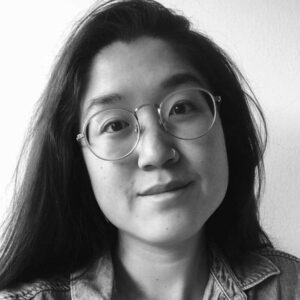
Amy Zhou (they/she) is an urban planner, writer, researcher, organizer and former Senior Planner at Chinatown Community Development Center (CCDC). At CCDC, they supported community-led planning and policy efforts that advance tenant protections, equitable development, and neighborhood stability. Their research and public scholarship trace how Chinatown has been shaped by resident and worker power building. In addition to their work with CCDC, they are a Committee Co-Chair for Chinatown Community for Equitable Development’s Research Committee, and were a founding Board Member of the LA Chinatown Community Land Trust. They have a Masters of Urban & Regional Planning from UCLA.