

Julian Wolpert
1932 - 2025
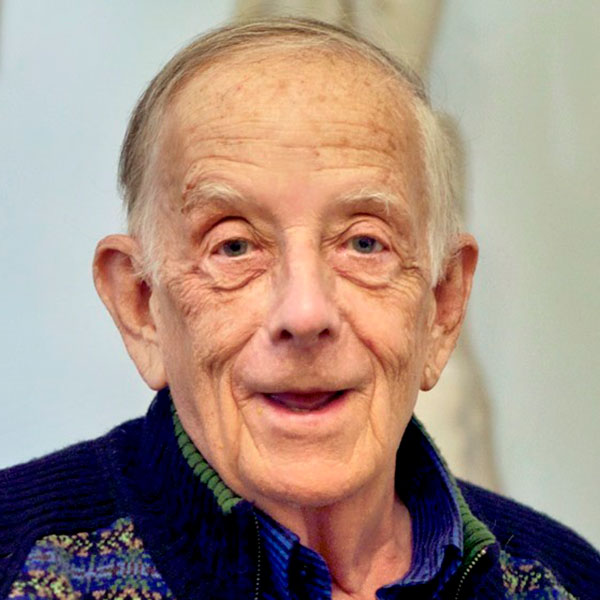
Julian Wolpert was born on December 26, 1932, to Rose and Harry (Hillel) in Brooklyn, New York. After attending Yeshiva for elementary school, Julian attended Erasmus Hall High School, where he met his future wife Eileen Selig, and graduated at the age of 16 in 1949.
Upon graduation, he enrolled at City College in New York and later transferred to Columbia University, where he received a degree in Economics in 1953. He and Eileen married in 1955, and the following year he entered Officer Training School for the U.S. Navy, as a Navigator at the rank of Lieutenant Junior Grade.
Upon separating from the Navy in 1959, Julian entered the graduate program in Geography at the University of Wisconsin in Madison, completing his Ph.D. in 1963. He then joined the faculty at Michigan State University, transferring to the University of Pennsylvania in 1965. There, he rose to the rank of full professor. In 1973, he spent a sabbatical year at the Center for Advanced Studies in the Behavioral Sciences in Palo Alto, California. The following year, he became the Bryant Professor of Geography, Public Affairs, and Urban Planning in an endowed chair at Princeton University’s School of Architecture and Urban Planning, and later was a Guggenheim Fellow at Princeton’s Woodrow Wilson School of Public and International Affairs. He retired in 2005 and remained Professor Emeritus.
Over his career studying location theory, the provision of public and nonprofit services, urban development, and environmental policy, he received numerous distinctions. He was the first Geographer elected to the National Academy of Sciences (1977), became a Fellow of the Center for Advanced Study in the Behavioral Sciences, a Guggenheim Fellow, a Russell Sage Fellow, and a member of the American Association for the Advancement of Science. He was also past Vice President and President of the Association of American Geographers, Vice President of the Regional Science Association, and was elected to the American Institute of Certified Planners. He testified before Congress and worked with various federal agencies, including the National Science Foundation, the U.S. State Department, and the National Institute of Mental Health.
He is the author of more than 100 highly significant books, journal articles, and reports. He was a pioneer in the use of computers and multivariate analysis of large data sets.
“His research and teaching always revolved around the underserved and the mobilization of resources and policies to better serve them,” recalled colleague John Seley, professor emeritus, of Earth and Environmental Sciences, Psychology, at CUNY Graduate Center.
Julian Wolpert is survived by a sister, Judith, children Seth, Jesse, Joshua, and Rebekah, and grandchildren Geoffrey, David, Jake, Samuel, Benjamin, Isabel, Lily, and Ida.