
Carmen Leedham

Education: B.A. in Geography (San Diego State University)

The following profile was compiled by Jessica Embury (San Diego State University) for the Encoding Geography initiative. To learn more, visit: https://www.ncrge.org/encoding-geography/


Please describe your job, employer, and the primary tasks you perform in your position. 

I work for the County of San Diego, Health and Human Services Agency in the Office of Business Intelligence. The office I work for is a support department that works with other offices within the Health and Human Services Agency, such as Aging and Independent Services and Public Health Services. The primary tasks I perform revolve around GIS. I create static maps, web maps, and perform geospatial analysis to answer questions posed by leadership and my coworkers. For example, I performed geospatial analysis to convert tabular data into spatial data to answer, “How many CalFresh recipients live in each district in the County of San Diego?”  

What is your educational background? How did you initially discover geocomputation and why did you ultimately choose a career that uses geography and computer science? 

The people I met during my education have been instrumental in the trajectory of my career and have been very important to me. I first came into contact with geocomputation after completing a cultural geography course at Grossmont College with Professor Mark Goodman. He told me what a career in geography might look like and he encouraged me to enroll in an “Intro to GIS” course. At first, I did not understand anything, but the professors were so helpful and they made time for their students. I never had any computer classes in high school or middle school so learning how to work with a computer was very new to me. 

About a year later, I applied for an internship with the County of San Diego, Health and Human Services Agency in GIS. From there, I started to learn important skills, like how to work in a professional office, how to email people, and how to communicate with people in a professional setting. I started to really like it and see a life for myself working in GIS for a local government.   

At the time, I was 18 or 19 and I was going through a lot – I had unstable housing and food insecurity. I wasn’t sure how I was going to make it day-to-day or month-to-month. I saw GIS as a path to achieve the things I wanted: stable housing and a little bit of fun money. From that point forward, I started thinking about how to get a career in GIS as quickly as possible. In May 2019, I completed the GIS technician certificate of achievement at Mesa College – the requirement to get an entry level job in GIS with the County of San Diego. In September 2019, I got a full-time job with the County of San Diego in the Land Use and Environment Group. Since then, I’ve been with the County of San Diego, moving up and honing my skills in GIS.  

When thinking about geography, what specific background knowledge and conceptual ideas are important and useful to know? 

I feel like geography – both physical and cultural geography – cannot be separated from GIS or geocomputation. The foundation of geospatial analysis builds upon cultural and human relation to place and space throughout time. Likewise, GIS builds upon physical geography and knowledge of our surroundings.  

I mainly focus on cultural geography and the socioeconomic conditions of people within the Health and Human Services Agency of the County of San Diego. So, with geocomputation, we run the risk of turning people, plants, and places into numbers or into commodities and binaries. Through geography, we can return people from numbers and binaries back into real life things that have special life circumstances and value to one another.  

Conceptually, an understanding of sustainability should be gathered prior to working in geocomputation. Our actions have consequences, both positive and adverse, and this is something we should take into consideration in our day-to-day interactions. Our work always revolves around the three pillars of sustainability: people, profit, and planet.  

When thinking about computer science, what specific background knowledge and conceptual ideas do you think are important and useful to know? 

I recommend starting with the basics like: What are hard drives? What are the different types of hard drives and what do they do? What is the central processing unit of a computer? What’s a good one or a bad one? How much memory does the computer or device have?   

Then, you need to understand different types of software. Think about your needs and what software can meet the questions posed by your research. From there, you have to learn how to use the software. What file type does the software use? How are these files opened in the software? How are they saved on your computer?   

When I started GIS, I went to buy a laptop and I thought, “Okay, I need something that can handle the amount of data I’m going to be running and the strain I’m going to be putting on my computer.” I had to look at things like core memory and plan accordingly, because there are times that your computer will be overworked.  

What procedural knowledge is important to know, from either geography or computer science, in your work? 

It is important to know how to isolate your question, so things like the scientific method can be helpful. You don’t need to follow it exactly, but it can help you identify methodology to solve the question. What information do I need to solve this problem? Does this information exist in the format I need and, if not, can I create this information or do I know someone that can assist me in gathering this information? 

From there, test your methodology. Be flexible because a lot of things aren’t going to work and you need a plan B, C, D, and so on. It’s very helpful to know people within your line of work so you can ask questions and be nudged along in the direction you need.  

Can you share a specific example of how you apply geography and computer science to analyze and solve problems related to important issues?  

Since March 2020, when the novel coronavirus entered the United States, the County of San Diego tried to get ahead of it. We had public health scares in the past, like the Hepatitis A outbreak, so we had a little bit of a framework. 

My office develops and maintains a publicly available web map application for locations with publicly funded hand washing stations and public restrooms targeted for use by individuals experiencing homelessness. The County of San Diego hoped to prevent the spread of COVID-19 by placing hand washing stations and portable restrooms in locations that have known homeless encampment sites.  

What kind of geographic questions did you ask and think about during this project?  

The Office of Business Intelligence did not have to decide where the washing stations would go, but we relied on spatial data about homeless encampments to show hotspots and clusters of people experiencing homelessness.  

Someone else using this data would say, “Let’s place a hand washing station on this street where there are a lot of people experiencing homelessness,” and from there, I would receive the name of the street that this hand washing station is on and other internal information, such as how long it will be serviced or problems with the station itself. I would then convert this tabular data into spatial data. Addresses are not spatial data because there are no latitude or longitude coordinates connected to them. These coordinates are necessary to perform geocomputation, otherwise, it’s just data on your computer.  

We ended up creating a public web map application. I published the data as a hosted feature service on ArcGIS Online and I update it every so often. I had to think about possible problems with sharing this data with a large audience. We didn’t know how many people from the public would be looking at this map and a lot of pings could cause the map to be slow or stop working. I had to think of these problems ahead of time because if this map were to go down then the public would ask questions.   

In doing this project, I had to understand the software I was working with and the data formats. I had to think about whether the public would have problems viewing the map, and whether the data was understandable and digestible to the audience.  

What types of data did you acquire to support your project? Please identify up to three data sets that you utilize the most. 

I frequently perform geocoding to assign latitude and longitude to an address using an address locator. An address locator consists of different road networks of polylines within an area. For example, SANDAG publishes a dataset called “roads_all” that contains road types, road names, and address ranges. The address locator matches the tabular address data to spatial data in the road network and then converts the tabular data into spatial data. 

Since we have so many geocoding requests, we work on building the best address locator to match with the most addresses in the least amount of time and with the highest accuracy. We use “roads_all” from SANDAG as well as a road network from ESRI. We also use TIGER/Line shapefiles from the US Census Bureau because sometimes people have mailing addresses outside of the County of San Diego. I combined these road network datasets to produce a composite address locator that I worked with daily for this project. I also used the point in time homeless count from the San Diego Regional Task Force on Homelessness as well as internal data sent by my coworkers in neighboring offices. 

What types of content, knowledge, and skills did you use to evaluate the project and analyze the data gathered for your project? 

Something I wasn’t prepared for was the amount of general skills, like Excel and Word, needed to perform day-to-day tasks. Communication is another huge part of my job, so I have to understand the needs of the project, the questions answered by the project, and how to provide deliverables to the customer. The customer could be one of my coworkers in an office or it can be the public. 

With the hand washing stations and portable restrooms web map, I needed to make sure that the data was always up to date and that the data could handle being updated frequently. I needed a huge understanding of ArcGIS Online and that suite of products. Another aspect was working with firewalls. I work in a secure network that the public cannot access, so I needed to get private data to the public and ensure that it met requirements to share with the public.   

More specific skills I used are geocoding, creating an address locator, creating web maps, and creating web applications. 

How did you apply geography and computer science to communicate the results of your project? Do you have a recent product or publication that you could share with us as an example? 

https://211sandiego.org/covid19/covid-19-information/ 

The web map of hand washing stations and portable restrooms is on 211 San Diego and contains hand washing station icons and portable restroom icons. Using this map, you can enter an address to see where the nearest hand washing station or portable restroom is. You can click on an icon and get additional pop-up information.   

To create this map, I had to use Excel, bring the Excel spreadsheet into ArcGIS Pro, geocode the data set with my composite address locator, create a feature class in my geodatabase, and publish it online for the public to view. Once published on ArcGIS Online, the data is stored in the cloud and is referred to as a hosted feature service. I had to ensure the sharing capabilities were correct so other people – like students – can bring this data into their own maps. Then, I had to make sure that there were no technical problems on the backend which would make the map stop working.  

When reflecting on your work, how does it align with your personal values and your community/civic interests? 

I used to be a customer of the County of San Diego and I used to receive CalFresh. I saw how the County of San Diego helped me, I see how it helps other people who are in that situation, and I know that some good is being done. That is rewarding to me. The things that I care about are making sure that people are able to live well and thrive, rather than just survive and get by. It’s nice to know that there is a group of people working to make sure that the basic needs of our community are met, and that resources are available. 

For me, public web maps are key because we can show the public that there are resources available. People don’t always know what’s available to them and we need to share the work that we’re doing and what the County of San Diego provides. I like working for an organization that is helping people and making sure that things are working as they should be. It makes me feel good — like harm reduction is occurring.   


This material is based upon work supported by the National Science Foundation under Grants No. 2031418, 2031407, and 2031380 (Collaborative Research: Encoding Geography – Scaling up an RPP to achieve inclusive geocomputational education). Any opinions, findings, and conclusions or recommendations expressed in this material are those of the author(s) and do not necessarily reflect the views of the National Science Foundation 
 

    Share

Member Profile: Phoebe Lind

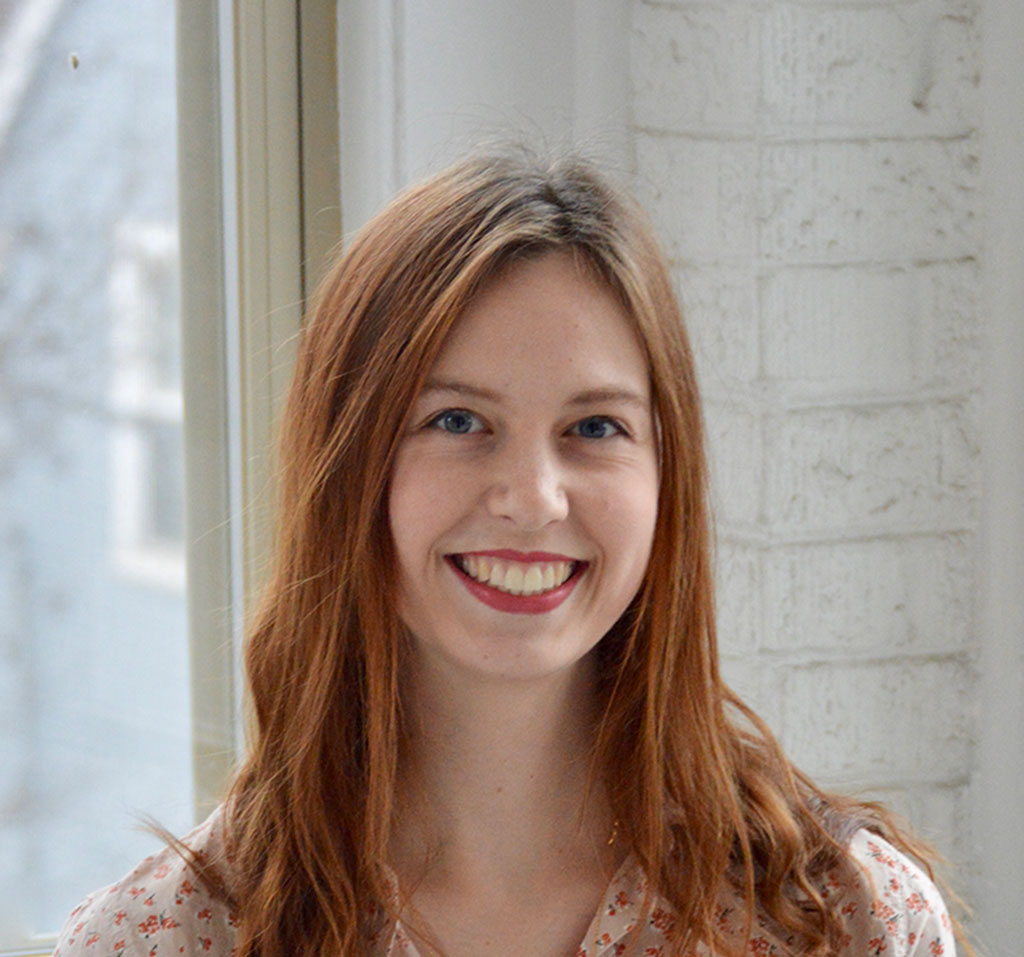
Photo of Phoebe Lind

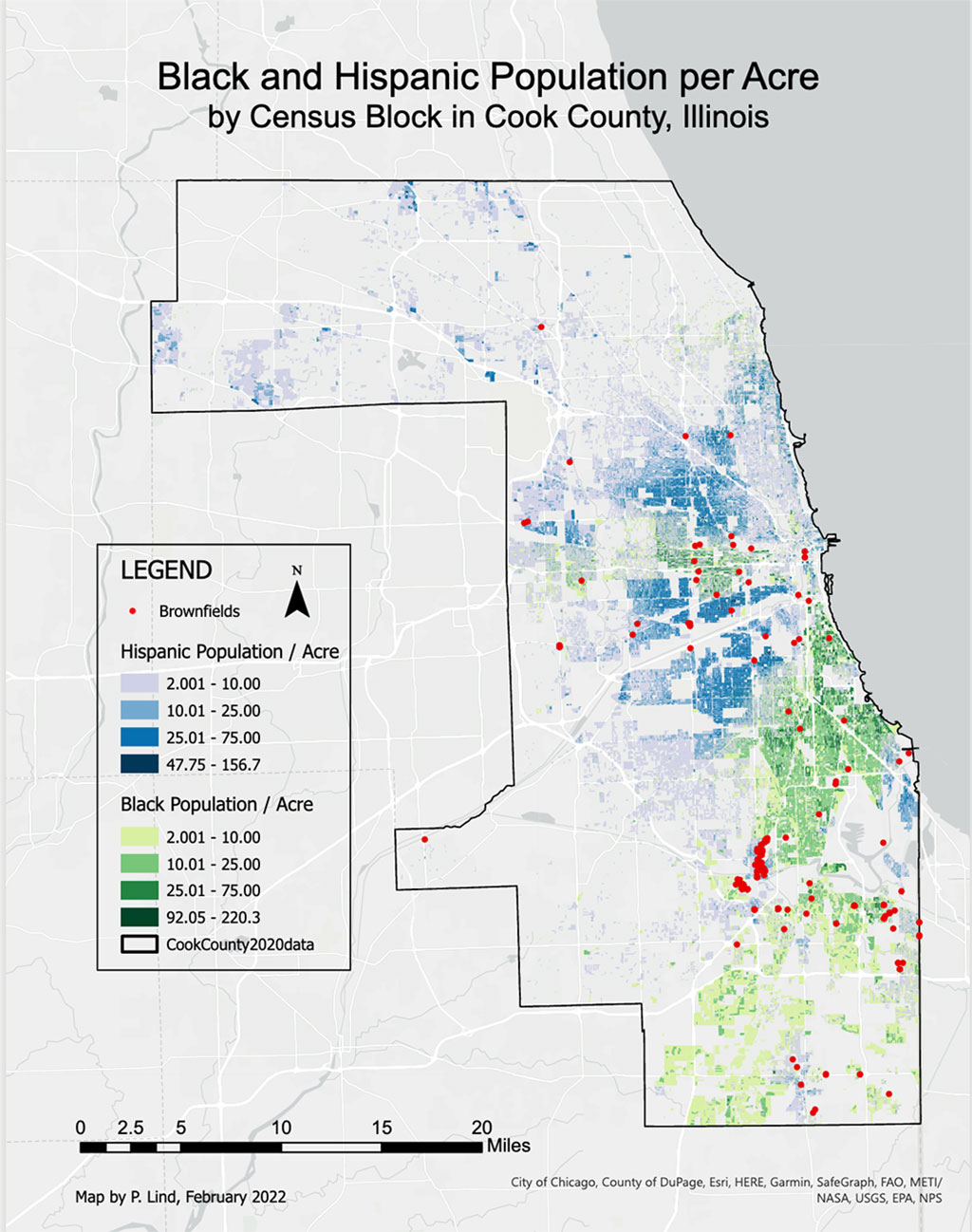
As a dancer and a geographer, Phoebe Lind’s career has been shaped by space and place. Most recently, her work as an enumerator for the U.S. Census Bureau, as a redistricting consultant for the Cook County Board, and as a recent graduate with a Masters degree in Geography and Environmental Sciences from Northeastern Illinois University, Lind has investigated the spatial relationship between environmental hazards and minority communities, and how they collectively inform the redistricting process.  

I‘ve always really enjoyed the science behind maps: how they’re made, how projections work, the way that they can be incredibly insightful to spatial trends of where problems exist in the world.

“I think I changed career paths because the world really needs people studying environmental issues, learning how to sufficiently use this amazing GIS technology that we have today, to start to fix all kinds of complicated problems that we are dealing with.” Lind earned her bachelor’s degree in Dance before deciding to pursue a Masters at NEIU. 

Lind’s academic research was inspired by a nationwide study that correlates the locations and traits of congressional districts relative to minority populations and Superfund sites. She decided to try to replicate the study herself, “or maybe develop a modified set of methods that could allow for this same study to be done on a county wide or similar scale, like a state or a city,” Lind explains, emphasizing the importance of scale. Lind’s own connection to the space she was studying—Cook County, where she lives—became clear as she moved through her research. “The reality for me is that I just have so much information on Cook County. And so much expertise on this redistricting process, because I did it. I did the redistricting process for this round of redistricting. I was an enumerator. I got to collect the data.” 

Phoebe Lind's map showing Black and Latino population locations in Cook County, Illinois

Working on the ground as an enumerator in Cook County during the beleaguered 2020 census did a great deal to inform how she carried out her research. “I had no idea what that job would be like, and it felt like a historic opportunity to kind of jump in and see how the process went. I feel really lucky to have been the one helping. This is important demographic and population data for the country…and then being able to see the other side of that and having input on the redistricting process…it felt like a very important job.”  

Are enough geographers in the room during the redistricting process? Lind thinks not. While processes differ from state to state, more geographers are needed everywhere to discuss the factors at play and help drive insights.  “I think the redistricting process would benefit from more GIS data analysts, and geographers. Politicians may be great at what they do, but they could be missing a lot of things that matter in the redistricting process. GIS is great at pointing those things that seem invisible until you put the table of data on a map and point it out to them saying, ‘this is the data and this is what it looks like spatially.’” 

When asked what she’ll do now that she has received her masters degree, she smiles. “I have a very nice problem where I’m interested in lots of different ways that I can use GIS…but since working with Cook County data, election data and election mapping have also been super interesting…I’m thinking I might want to go a little further with the study [I initiated], to see what I can change, what methods I can tweak. Maybe I can add onto it…because I think it has potential to grow a lot. But that’ll probably serve as kind of a side project to whatever job I end up doing, so the future is a little bit unknown. I’m pretty much just excited about GIS.” 

Find out more about AAG’s initiatives toward Geography for Inclusion 

Learn about AAG’s advocacy for Geography for Inclusion

    Share

Rebecca Grover

Education: M.A. in Geography (San Diego State University) B.A. in Geography, English (University of Vermont)

The following profile was compiled by Brendan Vander Weil (Texas State University) for the Encoding Geography initiative. To learn more, visit: https://www.ncrge.org/encoding-geography/


Please describe your job, employer, and the primary tasks you perform in your position.  

I am self-employed as a GIS analyst and consultant. In this position, I perform a wide variety of tasks to solve analytical problems and provide GIS solutions to clients. Most recently, I provided GIS support for a renewable energy development company. In this role, I ran and maintained a customized tool to extract land that would be suitable for solar energy development. I also provided customized GIS analyses, including a process for displaying areas of neighboring landowners with large acreages of land for potential solar development outreach. I also spent much time searching for and compiling data, such as parcels and endangered species and maintaining a variety of geodatabases for running tools and processes.   

What geographic knowledge, such as terminology and concepts, is important and useful to know in your line of work?   

For a recent client, it was beneficial to know basic physical geography concepts such as the definition of a 100-year flood zone, and knowledge of other FEMA-related data and concepts. In addition, understanding how parcel data is assessed and attributed was important to know as well as basic knowledge of environmental geography, such as state-listed versus federally-listed endangered species.   

What conceptual geographic knowledge is important and useful to know?   

For one renewable energy client, there was a significant element of interconnection and the importance of place as it related to the natural environment. Many different factors – such as the location of land, any constraints on the land, ownership of neighboring land, and governance of land – contributed to identifying potential sites for developing solar energy. Both general knowledge of how location is important to this work, as well as knowledge of environmental considerations, were useful to know.   

What procedural geographic knowledge is important and use to know?  

Knowing GIS and spatial analysis methods was crucial to performing this work as a GIS Analyst. Also, understanding where to look for downloadable spatial data and managing and interpreting said data was key to this role. Having a solid grasp of geoprocessing methods and procedures was also essential, as well as quality-checking and analyzing the results.    

What areas of computer science are important and useful to know?  

Definitely basic computer programming — such as Python (which is used with GIS).   

Can you provide an example of a project where you apply geography and computer science to analyze and solve problems related to important issues? 

For my most recent client, we were constantly looking for new land on which to develop solar energy. Therefore, one of my most common tasks was to run and maintain a customized tool in GIS to extract this developable land – the first step in assessing where to build solar and promote the advancement of renewables.   

What types of geographic questions did you ask and think about in your project?  

Before running the tool, I needed to ensure that the databases that the tool would connect to and iterate through were in the right location with the right datasets. The first question was, are the databases ready, and is all my data there? Next, if there was an error with the tool, I had to discover where the issue was and ask myself whether it was a data issue, a server connection issue, or something else. And when the tool finished running, I needed to examine the output and ask myself if the results made sense – did the flood zone and wetland layers appear to show correctly? Did the developable land align in a sensical way and did not overlap with the constraints layers? Were any data layers missing?   

What types of data did you acquire to support your project?  

I acquired many types of data for my project, with the following being the most critical: 

  • DEM tiles from USGS 
  • 100-year flood zone FEMA data 
  • Wetlands data from FWS 

What types of knowledge and skills, both geographic and general, do you use to evaluate, process, and analyze the data you gather for your work? 

I used my prior knowledge of working with DEMs and the Spatial Analyst extension to effectively download and organize DEM tiles from the USGS site and analyze the resulting slope data. For the 100-year flood zone data from FEMA, I used geoprocessing skills such as extracting data by attribute and exporting data between databases to process and organize the data to be ready for use in the tool. I used similar techniques to prepare the wetlands data. To analyze the output of the tool, I used a variety of content knowledge/skills like interpreting aerial imagery, quality checking spatial and attribute data for accuracy, and problem-solving/error tracking if something did not look right.   

How did you apply geography to communicate the results of your project? Do you have a recent product or publication to share with us as an example?  

The output results of the tool were needed by the client in KMZ (Google Earth) format, so I used skills in spatial analysis and QA/QC to ensure the KMZ file was spatially accurate and displayed properly. If the output KMZ did not look right, I used GIS/spatial analysis skills to correct the data that was input into the tool, or manually alter the tool’s output layers in GIS and re-convert to KMZ.   

Reflecting on your work, how does it align with your aspirations from when you were a student?  

Being able to contribute to advancing the field of renewable energy by working with my most recent client was certainly a step in the right direction for me — ever since I was a student I have aspired to address important social and environmental issues. I hope to take on more clients with this goal in mind, particularly for social causes as I was more human geography focused when I was in graduate school.  


This material is based upon work supported by the National Science Foundation under Grants No. 2031418, 2031407, and 2031380 (Collaborative Research: Encoding Geography – Scaling up an RPP to achieve inclusive geocomputational education). Any opinions, findings, and conclusions or recommendations expressed in this material are those of the author(s) and do not necessarily reflect the views of the National Science Foundation 
 

    Share

Nikolas Smilovsky

Education: Ph.D. focus on Behavioral Geography and Environmental Perception (Grand Canyon University) M.S. in Geographic Information Systems (Arizona State University), B.A. in History (University of Florida) 

The following profile was compiled by Brendan Vander Weil (Texas State University) for the Encoding Geography initiative. To learn more, visit: https://www.ncrge.org/encoding-geography/


Please describe your job, employer, and the primary tasks you perform in your position.  

I work for a technology company that primarily produces integrated global navigation satellite system (GNSS) solutions for organizations around the world. Bad Elf, LLC is a leader in the global positioning market, being one of the first companies to productize GPS devices that plug into smart devices, a new type of technology referred to as the “bring your own device” market.  As the Director of Geospatial Solutions, I specifically work with customers that have field data collection needs. I help put together best practice training sessions and solutions for their organization based on specific needs. Working with various stakeholders, I ensure success whether that is profitability, time savings, or other more altruistic goals.  

What geographic knowledge, such as terminology and concepts, is important and useful to know in your line of work?  

Having a general understanding of geographic concepts is important, because all of my customers, clients, and partners are involved with something geospatial. It is also important to understand the technology associated with geography. For example, understanding geographic information systems (GIS), computer-aided drafting and design (CADD) software, light detection and ranging (LiDAR) hardware, or unmanned aerial vehicles (UAVs) aka drones have more applicability for Bad Elf. Additionally, understanding the science and math aka geodesy, underneath the geographic concept is paramount.  

What procedural geographic knowledge, such as spatial analysis using GIS or collecting spatial data, is important for you to know?  

Being able to leverage Bad Elf data collection devices to populate geodata repositories is what we do daily. One of my roles is to support customers that have goals of collecting high fidelity field data. This data is often used in analysis and or geographic inquiry. For example, I work with universities, government agencies, national laboratories, engineering firms, environmental consultants, land surveyors, biologists, planners, arborists, and architects who all do some type of procedural geographic tasks.   

Can you provide an example of a project where you apply geography and computer science to analyze and solve problems related to important issues? 

While I don’t often directly deal with solving important end-game issues, I do help the people that are breaking industry chains and are doing significant research/application. In a sense, I get to support the efforts intrinsically through my support. What is also extremely important to me, is that I get to help a wide plethora of people do better geography. Every day I get to help a different industry, organization, or even country tackle their specific geospatial conundrums.   

What types of geographic questions do you ask and think about in your work? 

I deal with every type of individual, organization, or entity that completes geospatial field data collection. The amount of technology and science that we work with and integrate is expansive. If you don’t have good geospatial data, you won’t complete good work. Thus, I ensure my customers can collect amazing, authoritative data so that they can perform their downstream tasks more efficiently and confidently. I may not get all the glory for completing these projects, but that is not important. What is important is being able to collect good data!  

What types of data did you acquire to support your work?  

Our GPS devices natively collect latitudinal, longitudinal, and elevational values, along with geodetic metadata associated with the acquisition of the spatial coordinates. Additionally, our devices are integrated into utility locators, which detect underground systems of infrastructure; laser rangefinders that help collect offset locations like tree heights; and most drones/LiDAR systems which collect remotely sense data like aerial imagery, point clouds, radiation, and non-visible light spectrums, and temperature.  

What types of knowledge and skills, both geographic and general, do you use to evaluate, process, and analyze the data you gather for your work? 

Mostly GIS software packages like Esri ArcGIS Pro or Q-GIS are used to evaluate the data procured by the Bad Elf devices. Additionally CAD programs like AutoCAD Civil 3D and BIM programs like Revit are used for modeling purposes. Additionally, we use computer programing languages like Python to manipulate the data.  

How do you communicate the results of your work? Do you have a recent product or publication to share with us as an example?  

We mostly make quantitative maps and spreadsheets showing our data and how they compare to other datasets. Our clients use hundreds of different methods and applications to complete this process. A perfect example of a customer using Bad Elf, Esri, Go Pro Cameras, tablets, and e-bikes to collect utility data is this case study from the town of Cave Creek, Ariz. 

How do you view your work in relation to civic engagement and issues that you care about?  

I engage daily with both the private and public sectors of our society so that they can better complete the tasks they set out to do. I eat, sleep, and dream geospatial. Every day that I get to engage in helping people do better spatial tasks is a great day.  

How does your career align with your values and aspirations in life now and back when you were a student?  

I feel very blessed because my employer and my values align extremely well. Aligning well with your organization is extremely important for your happiness and growth, but also for the organization to be successful. My father always said, “Nik you will eat a lot in your life, so enjoy your food. You will also sleep a lot, so enjoy your bed. Lastly you will work the most, so make sure you love your job!”  


This material is based upon work supported by the National Science Foundation under Grants No. 2031418, 2031407, and 2031380 (Collaborative Research: Encoding Geography – Scaling up an RPP to achieve inclusive geocomputational education). Any opinions, findings, and conclusions or recommendations expressed in this material are those of the author(s) and do not necessarily reflect the views of the National Science Foundation 


    Share

Brent Sams

Education: Ph.D. in Horticulture (University of Adelaide), Master of Geography (Virginia Tech), B.S. in Geography (University of North Alabama)  

The following profile was compiled by Brendan Vander Weil (Texas State University) for the Encoding Geography initiative. To learn more, visit: https://www.ncrge.org/encoding-geography/ 


Describe your job, employer, and the primary tasks you perform in your position.  

My current role as a Viticulture Research Scientist at E&J Gallo Winery is to design and execute research projects focused on understanding how fruit chemistry/quality change over time and space. I am interested in these changes from the within-vineyard scale to the regional scale. To accomplish this, I (with a lot of help from others) use a wide variety of field measurements (fruit zone light exposure, vine canopy temperature, soil cores, and many others), proximal sensing (electric conductivity, elevation mapping), and remote sensing (satellite, UAV, commercial aircraft). I spend a good deal of time analyzing how these measurements are connected.  

How has your education/background in geography prepared you for this position? 

The interaction of geography and computer science is essential for my role, along with many others in my department. At the project level, I work with different types of datasets that must be organized so that they can be analyzed and interpreted together. I rarely start any of this in GIS, but in a statistics package/program. I don’t have a background in computer science or coding/programming, but these have been very useful skills to develop. Once I have a product/model/application, it needs to be available for use by our stakeholders. This can be a dashboard, a database, or other digestible format which usually implies additional knowledge of other programs or applications. Probably the most specific use of geo-computation in my role is in the geostatistical analyses of grape samples collected from different densities and locations.  

What is an example of applying geography concepts and skills in order to analyze and solve problems in your work? 

Recently, we’ve been working on a project to combine data from multiple vineyards to add statistical robustness to the spatial analysis of low-density grape samples. To validate the method, we divided up the vineyards into fishnet grids to create a Monte Carlo simulation that would iterate through many different combinations of field samples based on their locations.  

What types of geographic questions did you ask and think about in your project? 

We were interested in how wine grape chemistry changed over time and space, and at specific locations from the within-vineyard scale to the regional or statewide scale; how farm management and the environment are connected; and how we could use all of these variables to make predictions about where to find the best fruit. All this information needed to be synthesized and made into something that could be analyzed by a computer. Sometimes in the quantitative analysis world we are faced with qualitative variables and how to incorporate things like, “How does this vineyard manager decide when and how much water to irrigate?.” These then need to be summarized into something we can include in a mathematical model.   

What types of data did you acquire to support your project?  

For this project, we were mostly interested in the chemistry of grapes processed in a lab after the sample location was tagged with a GPS unit. In a related project and at the same locations, we measured soil texture, the fraction of useful light into the fruit zone of the canopy, and yield.  

What types of content knowledge and skills (both geographic and more general) did you use to evaluate, process, and analyze the data you gathered for your project? 

Everything starts with the synthesis of what’s been done, where, and how. Experimental design and sampling strategies are also necessary. There are a lot of measurements specific to grapevines that we used, but general statistical knowledge was also necessary for writing reports, publications, etc. I use R and R Studio quite a bit, as well as several GIS applications with a bunch of different spatial analyses. One specific example is the use of k-means classification with raster datasets to assess patterns that exist between different layers such as interpolated chemistry maps with soil maps or imagery.   

How did you communicate the results of your project (e.g., writing technical reports, making maps and geo-visualizations, creating graphics, data tables, etc.)? Do you have a recent product or publication to share with us as an example?  

There will be a few publications from this data set, as well as reports to internal stakeholders. You can find those publications below:   

  • Sams, B., Bramley, R.G.V., Sanchez, L., Dokoozlian, N.K., Ford, C.M., and Pagay, V. (2022) Remote sensing, yield, physical characteristics, and fruit composition variability in Cabernet Sauvignon vineyards. American Journal of Enology and Viticulture 73, 93-105. 
  • Sams, B., Bramley, R., Sanchez, L., Dokoozlian, N., Ford, C. and Pagay, V. (2022) Characterising spatio-temporal variation in fruit composition for improved winegrowing management in California Cabernet Sauvignon. Australian Journal of Grape and Wine Research. https://doi.org/10.1111/ajgw.12542 
  • Sams, B., Bramley, R., Aboutalebi, M., Sanchez, L., Dokoozlian, N.K., Ford, C.M. and Pagay, V. (2022) Facilitating mapping and understanding of within-vineyard variation in fruit composition using data pooled from multiple vineyards. Australian Journal of Grape and Wine Research. https://doi.org/10.1111/ajgw.12556 

What are the criteria that you use to assess the quality of your results?  

I’m an applied researcher in the private sector, so while the publications are nice, I really want to know if something works. Does it help us do something, save us money, or even make us more money?


This material is based upon work supported by the National Science Foundation under Grants No. 2031418, 2031407, and 2031380 (Collaborative Research: Encoding Geography – Scaling up an RPP to achieve inclusive geocomputational education). Any opinions, findings, and conclusions or recommendations expressed in this material are those of the author(s) and do not necessarily reflect the views of the National Science Foundation 


    Share

Suparna Das

Education: Ph.D. in Geography (University of Utah), M.A. in Regional Planning and Development (Jawaharlal Nehru University), B.S. in Geography (University of Calcutta) 

The following profile was compiled by Brendan Vander Weil (Texas State University) for the Encoding Geography initiative. To learn more, visit: https://www.ncrge.org/encoding-geography/


Please describe your job, employer, and the primary tasks you perform in your position.  

I’m currently responsible for supervising an expanding group of talented statisticians, behavioral health scientists, data analysts and epidemiologists. Together we manage data collection efforts, disseminate various products (reports, publications, briefings, policy documents) and advise behavioral health policies for the administration. The Treatment Services Branch (TSB) is responsible for three major behavioral health data collection and surveillance systems: Drug Abuse Warning Network (DAWN) and Behavioral Health Information Surveillance Systems (BHSIS) and provide all statistical support for Buprenorphine Waiver Notification Systems (BWNS).  

Before joining SAMHSA in March 2021, for close to seven years I was working as the statistician and viral hepatitis epidemiologist for DC Department of Health (DOH). I was also part of the COVID-19 Task force for DC from 2020–2021. 

How has your education/background in geography prepared you for this position? 

Geo-computation, from my understanding, is the “art and science of solving complex geographical (spatial) problems through computation” (Source unknown). I want to take this opportunity to iterate that Geographical Information Systems (GIS) and Geographical Information Sciences (GISc) are NOT interchangeable. I strongly believe that we as geographers can do a lot more than make maps. This belief has been the central tenet of my career in public service. We can assist decision-making in the most scientific method with our understanding of space and spatial changes over time.   

As a graduate student in India (Jawaharlal Nehru University (JNU)) and the U.S. (University of Utah), I was lucky to have received extensive training as a spatial scientist and demographer. This expanded my understanding of population sciences and geo-computation, which I apply every day in my position to improve health outcomes for people. 

What is an example of applying geography concepts and skills in order to analyze and solve problems in your work? 

I have several projects that are currently being implemented where I am using geo-computational methodologies, but we will have to wait for them to be released through SAMHSA. For me, it is impossible to resolve mental health and substance abuse disparities and encourage health equity without spatial thinking and geo-computation. SAMHSA (specially CBHSQ) understands that and encourages discussion on applying geo-computation while also supporting and encouraging researchers to use https://findtreatment.samhsa.gov/ for analytical and geo-computational purposes, among many other projects.  

From my previous position at DC DOH, where I spent close to seven years, I was able to implement several geo-computational projects. I published as much as I could to make sure people knew about administrative data collection and the impact of geo-computation in policy. One project example is DC’s effort to End the HIV Epidemic (EHE).  

I was proud to have been an integral part of the EHE implementation with the DC DOH, which has achieved the first of its 90/90/90 goals (https://www.dcendshiv.org/) of 90% of people living with HIV being aware of their HIV status (and now aiming for 95%). We were committed to implementing evidence-based policies to improve care for people living with HIV and create access to prevention and tools to stop new infections.   

I used spatial analysis to find high-risk areas that needed immediate attention, resource re-allocation, and Pre-Exposure Prophylaxis (PrEP) to reach the EHE goals. I was responsible for monitoring and evaluation (M&E) of Centers for Disease Control and Prevention’s Social Network Strategy (SNS) to identify new HIV diagnoses for DC.  

For M&E, I was responsible for programmatic data collection, program monitoring, evaluating the programs and the outcomes, providing technical support and assisting in resource allocation. I then mapped the outcomes for the community-based organizations (CBOs) for improvements. The project was instrumental to a separate proposal for using geolocation-based applications to identify new HIV diagnoses for states to implement.  

What types of geographic questions did you ask and think about in your project? 

My questions as a public servant always have a two-tier approach:  

In the first tier: What is the impact of my project on the lives of people and what outcome do I want to answer through this project. I restrict my projects to non-exploratory but policy-oriented questions.  

In the second tier: My projects span demography, GISc and spatial epidemiology or health geography. I do not have any projects or have been part of any project that does/did not entail extensive statistical/data management-based coding.  

What types of data did you acquire to support your project?  

I always use administrative data collection for my projects within my role as a public servant. These data collection tools inform policies within the administration. I encourage researchers in academic settings to use them as well. There are several administrative data sets available which can be instrumental in framing accurate questions. I also encourage researchers to read annual reports to understand their needs. SAMHSA has several such data collection efforts which are publicly available through public use files https://www.samhsa.gov/data/ 

What types of content knowledge and skills (both geographic and more general) did you use to evaluate, process, and analyze the data you gathered for your project? 

A large part of my job is to make sure that administrative data is collected without any glitches and plan how to enhance data collection so that it will assist health related policies in the United States. The scope of each ongoing project is different, thus, as a supervisor, my job is to assign it to the appropriate subject matter expert (SME) who would be responsible to evaluate, process and analyze the data.  

As for projects that I take interest in, they are ones that have a large spatio-temporal aspect to it or have predictive capacity.  

How did you communicate the results of your project (e.g., writing technical reports, making maps and geo-visualizations, creating graphics, data tables, etc.)? Do you have a recent product or publication to share with us as an example?  

I have communicated my results to multiple stakeholders, ranging from scientific audiences, panels, political stakeholders, community-based organizations, legal groups, media (including interviews), administrative leaderships, and the public. The communication strategies I use differ based on the audience. I have generated reports, technical documentation, maps for program evaluation for resource allocation, publications, and conference proceedings.  

What are the criteria that you use to assess the quality of your results 

I look at the impact of my project on improving health outcomes for people and its scientific validity – in other words, I’m looking at the impact of my results on implementing evidence-based policy. 


This material is based upon work supported by the National Science Foundation under Grants No. 2031418, 2031407, and 2031380 (Collaborative Research: Encoding Geography – Scaling up an RPP to achieve inclusive geocomputational education). Any opinions, findings, and conclusions or recommendations expressed in this material are those of the author(s) and do not necessarily reflect the views of the National Science Foundation 


    Share

Nicolas Saravia

Education: Master of Geography (University of Bristol)  

The following profile was compiled by Brendan Vander Weil (Texas State University) for the Encoding Geography initiative. To learn more, visit: https://www.ncrge.org/encoding-geography/


Please describe your job, employer, and the primary tasks you perform in your position.  

I currently analyze transportation businesses and their innovations. On the side, I help micro-mobility start-ups by advising their leadership on how to improve their businesses in areas such as capital raising, operations, and data science. Most of my career has been at the intersection of operations, data analysis and business intelligence. I’ve also written tech patents to solve physical infrastructure issues with IoT and machine learning. 

How has your education/background in geography prepared you for this position? 

In my opinion, the ability to think spatially is a geographer’s greatest strength — the world is full of challenges that need 3D thinking to solve them efficiently. Through the course of my career, my strategy has shifted from viewing geocomputation tools as means on their own, to a more auxiliary, albeit important role. In many real-life business scenarios, one can solve spatial problems without geographical methods; however, in my case, geocomputation tools such as GIS, spatial statistics, and web mapping have certainly enabled me to find the needle in the haystack faster than otherwise and in a way that is visually compelling and factual.  

What is an example of applying geography concepts and skills in order to analyze and solve problems in your work? 

In businesses where you have physical assets, there is a real need to analyze the human and physical factors that affect the management of these across time and space. Human geography variables like population density, traffic patterns, and infrastructure may affect demand depending on the type of business. In my career, I’ve also focused on measuring the impact of physical geography and meteorological variables, everything from elevation to distinct weather variables and natural disasters.  

What types of geographic questions did you ask and think about in your project? 

The main questions I asked seek to answer how the different variables affect demand and supply in a business’s geography, which ultimately may impact the bottom line. I also look at how to optimize operations based on the analysis of the human and physical factors that affect the area. Additionally, I ask which methods should we use to predict external factors, and how do we balance speed and quality in results; how do we automate certain repetitive tasks without impacting costs; and what software/tools do we use to handle latency based on the amount of data we are processing?  

What types of data did you acquire to support your project?  

Being able to find reliable and open data is 90% of the battle in many startup jobs. In my case, I have heavily relied on free NOAA data for different weather variables and OpenStreetMap for infrastructure data (QGIS has a great plug in for that!). In larger companies and in consulting, there is sometimes the option to purchase big data, such as traffic flows. Familiarizing oneself with the nuances and quality issues of a dataset and being able to process that data with automation to remove any noise, will generally set up things for better decision making.  

What types of content knowledge and skills (both geographic and more general) did you use to evaluate, process, and analyze the data you gathered for your project? 

The foundational skill that is most practical in operations and data analysis is SQL.  Start-ups generally rely on open-source software and tools to get the job done without impacting the team’s budget allocation. QGIS has been especially useful throughout my career, both for visualizing data and in running algorithms like k-nearest neighbor or performing spatial randomness experiments. Having had a prior understanding of the statistical methods that the tools run helps me understand what they are visualizing. This is significantly more important than knowing where the tools are located (which is more readily searchable).  I generally have used the R language for statistical analysis of geographic data, and Python to automate repetitive tasks. Some knowledge of JavaScript has been useful, especially when visualizing results on a map platform like Leaflet. General business intelligence programs like Looker, PowerBI, or Tableau (this one has Leaflet plugins) are also good to have in the toolbox, especially when delivering results to executives. Having these listed on a resumé can open doors.    

How did you communicate the results of your project (e.g., writing technical reports, making maps and geo-visualizations, creating graphics, data tables, etc.)? Do you have a recent product or publication to share with us as an example?  

Throughout my career I’ve had to write standard operating procedures, technical whitepapers, and websites; however, much more frequently I’ve had to summarize large amounts of information in concise emails and bullet points, with a quick chart or map. I’ve found that results are most effectively communicated when they are direct, with clean and clear visualizations.   

What are the criteria that you use to assess the quality of your results?  

At a dataset level, keeping in mind sample size and implementing proper data cleaning and further investigating any observation errors. A/B testing is a great way to evaluate insights and decisions. It is always important to review results once they are in and do a proper post-mortem digging of what has changed in the data and measure the adjustments. 


This material is based upon work supported by the National Science Foundation under Grants No. 2031418, 2031407, and 2031380 (Collaborative Research: Encoding Geography – Scaling up an RPP to achieve inclusive geocomputational education). Any opinions, findings, and conclusions or recommendations expressed in this material are those of the author(s) and do not necessarily reflect the views of the National Science Foundation 

    Share

Tracy Whelen

Education: M.S. in Geography (University of South Carolina), B.A. in Geography (Mount Holyoke College)  

The following profile was compiled by Brendan Vander Weil (Texas State University) for the Encoding Geography initiative. To learn more, visit: https://www.ncrge.org/encoding-geography/ 


Please describe your job, employer, and the primary tasks you perform in your position. 

I am a Geospatial Consultant and participant in the Business Insights & Analytics Leadership Development Program at Travelers Insurance. Travelers is a leading property and casualty insurance company, offering a wide range of personal and business insurance products primarily in the United States and Canada. 

I recently completed an enterprise rotation in Enterprise Data & Analytics, working on data management and quality assessment of enterprise geospatial datasets and ad-hoc geospatial business consulting requests.   

I am currently in a rotation for Claim Business Intelligence & Analytics. My work includes geospatial information delivery and analysis for Claim senior leadership and field offices. Part catastrophe response, part improving everyday claim handling processes.  

Prior to joining Travelers, I received bachelor’s and master’s degrees in geography (Mount Holyoke College and University of South Carolina, respectively). In between my degrees I worked as a GIS Specialist in a remote sensing lab at University of Massachusetts, Amherst.  

How has your education/background in geography prepared you for this position? 

All the data I work with has a spatial component to it, and we often work with thousands (sometimes millions) of records at a time, necessitating strong geography and computer science skills to efficiently store, process, and analyze data, and to deliver actionable outputs.  

Relevant courses from my education that I use today in my job include: 

Geography 

  • GIS/spatial analysis (intro and advanced)  
  • Remote sensing 
  • Spatial modeling  
  • Web GIS  
  • Basic human and physical geography 
  • Electives: Meteorology, hazards geography, business geography 

Computer Science 

  • Introductory scripting (if statements, loops, functions, etc.) 
  • Python 
  • SQL 
  • Data structures 
  • UI/UX design 
  • Javascript (web app development)  

Math 

  • Discrete math (basic logic and set theory)  
  • Statistics (non-spatial and spatial) 

What geographic skills and information do you use most often in your work?  

Geographic concepts that I use in my daily work are important for things such as asking what business problems have a spatial component to them or analyzing the spatial relationship between two or more datasets (e.g. spatial joins and other geospatial analysis). I also need to understand a wide variety of spatial data formats, how to convert between them, and what formats are most appropriate for a given use case (e.g. basic raster and vector formats, enterprise SQL databases, APIs, published feature services, etc.). Finally, I need to know when to use geographic coordinates versus a projection (and what an appropriate projection might be).  

What is an example of applying geography concepts and skills in order to analyze and solve problems in your work? 

One of the many risks Travelers seeks to mitigate are natural hazard events, such as wildfires and hurricanes that climate change may make more extreme. Sustainability at Travelers means performing today, transforming for tomorrow and fulfilling our promise to our customers, communities and employees. Where these two come together is how our Claims department responds to natural hazard events, especially large wildfires or damaging wind events. The following videos capture the spirit of what we do, and the geospatial component of Claims catastrophe response. 


Note that Travelers is organized along an Agile structure, with cross-functional teams continuously delivering improvements. While there are always new products and applications being developed, there are also lots of long-term operational systems being continuously used and improved upon. Often employees build on past work and may not see a large project or system from beginning to end. My team’s catastrophe response work is an example of this type of long-term system, and my answers are on behalf of the team.  

What types of geographic questions did you ask and think about in your project? 

The broad business question underlying this issue is, “How can we optimally respond to catastrophe events, meeting customer needs with the most efficient use of business resources?” Underlying questions include: 

  • What location has been/will be impacted? 
  • What is our exposure in the area? (i.e. number of policies, associated financial exposure) 
  • Where have claims already been reported? 
  • How many claims might we expect? 
  • What types of claims do we expect to see from this event? (e.g., wind, water, fire, etc.) 
  • What types of damage occurred, and how severe is the damage? 
    • Will this impact our ability to respond, either because an area is inaccessible or because local offices or employee homes have been damaged? 
  • Where can we acquire the necessary data from? 
  • Can we develop models to more efficiently review post-event imagery as part of the catastrophe response process? 
    • If so, what features are we trying to spot in the imagery?  
    • How does this vary by event type? 
    • What might be appropriate modeling algorithms to use? 
    • What are some of the challenges the model might encounter? 

My team does not directly answer all these questions, but we need to be able to provide appropriate data to the senior leadership and other decision makers or support staff who can build a final answer.  

What types of data did you acquire to support your project? 

  • Business data (e.g. claims, policies) 
  • Event data – wildfire boundaries, hurricane wind footprints, precipitation measurements, tornado damage reports, etc. 
  • Aerial imagery and derived model output 
  • Property geometry data (e.g. building footprints, parcel boundaries)

What types of content knowledge and skills (both geographic and more general) did you use to evaluate, process, and analyze the data you gathered for your project? 

In the moment skills that we use on this project for responding to a single catastrophe event include: 

  • Querying databases (spatial and nonspatial joins, filters) 
  • Combining and reformatting a variety of data formats  
  • Running models in python scripts 
  • Common sense/data quality checks 

For long-term projects, the output of which gets used in catastrophe response (multiple team effort), the skills we use are: 

  • Internal model development in partnership with data scientists  
    • Curate input data (image locations, image clipping geometry, training data, etc.) using SQL and python 
    • Evaluating model results against other sources of truth 
  • Evaluating new 3rd party datasets (accuracy, timeliness, availability, cost, other potential sources for the same information)

How did you communicate the results of your project (e.g., writing technical reports, making maps and geo-visualizations, creating graphics, data tables, etc.)? Do you have a recent product or publication to share with us as an example? 

We publish web GIS content as both data layers and maps, creating different versions for different user groups in order to control access to sensitive information. We also use frequent email communication, whether it is one on one, small group with specific questions and answers, or larger list-serv communications (with standardized templates) at key time points during catastrophe response (e.g. web map published, imagery collected, etc.). Additionally, we communicate results through spatial SQL data pulls (tabular format)  

See the below list for examples of broader enterprise or external communications about projects and programs mentioned in this interview. 

  • Travelers 2021 Q3 Earnings call. Note CEO Alan Schnitzer’s introductory remarks including, “location intelligence at the parcel level” and our “AI Assisted Claim Damage Detection Model was a key part of our Ida claim response” 
  • Interview of Adam Sobek (Travelers AVP of Geospatial) at NearMap Navig8 Conference 2020 (Travelers’ use of imagery, including for catastrophe events) 

What are the criteria that you use to assess the quality of your results?   

Most important criterium: Has the business need been met?  

Other important criteria: 

  • Validate data quality 
  • Spatial scale and level of accuracy  
  • Minimizing false negatives, minimizing false positives.  
  • Minimizing process (time, number of steps)

The business need at hand dictates which criteria are important, which varies from question to question. Examples include: 

  • Level of address accuracy needed to plot individual policies versus summarize at a zip code level 
  • Some analytics results are only valuable if they can be completed faster than more manual processes out in the field. 

This material is based upon work supported by the National Science Foundation under Grants No. 2031418, 2031407, and 2031380 (Collaborative Research: Encoding Geography – Scaling up an RPP to achieve inclusive geocomputational education). Any opinions, findings, and conclusions or recommendations expressed in this material are those of the author(s) and do not necessarily reflect the views of the National Science Foundation 

    Share

Managing Information Workflows for Writing, Research, and Data

Geospatial Data Science for Social Media Analytics