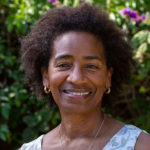
AAG Welcomes Spring 2023 Interns

Two new interns have joined the AAG staff this semester! The AAG would like to welcome Iman and Allison to the organization.

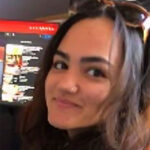
Photo of Iman SmithIman Smith is a junior at the University of Maryland, pursuing a B.S. in Geographical Sciences and a minor in Geographic Information Systems. Her areas of interest include agricultural monitoring and crop management, and global food security. In her spare time, Iman likes to travel, crochet, make pottery, and she also hosts a college radio show.

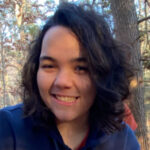
Photo of Allison RiveraAllison Rivera is a senior at the University of Connecticut pursuing a B.S. in Geoscience and a minor in Geography. She is mostly interested in geomorphology and physical geography and is currently completing a senior thesis on such topics. After graduation, Allison hopes to attend graduate school and pursue further research in the field of geomorphology. In her spare time, she enjoys watching cartoons, going for walks, and reading.

If you or someone you know is interested in applying for an internship at the AAG, the AAG seeks interns on a year-round basis for the spring, summer, and fall semesters.

Learn more about becoming an AAG intern
    Share

Laurence Allan James

Laurence Allan James passed from this world in the loving arms of his sister and niece on the night of December 3, 2022.

Allan (AKA, A.J.) was born in Hollywood, California, on March 18, 1949, into a family of many geologists. His family moved to Sacramento in northern California in 1956. He was active in Little League baseball and later attended Mira Loma High School, where he was on the Honor Roll, elected Senior Class President, played basketball and ran on the cross-country track team. He also began to write songs and play guitar with his friends. The garage band at 4425 Glen Oak Court was infamous.

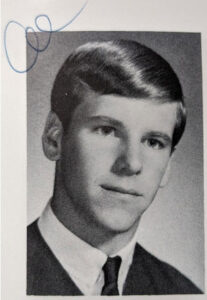
Photo of a young Laurence Allan James, Mira Loma High School yearbook, 1967

After high school, he interrupted his studies at University of California, Berkeley a number of times to pursue his singer-songwriter aspirations. Allan helped run a café on Bleeker Street in New York City and busked in Europe. He hitchhiked across the United States to greet his newborn niece.

He earned his bachelor’s degree in 1978 and moved to Madison, Wisconsin, where he pursued two Masters of Science degrees, in Water Resources Management and in Geography, with Jim Knox as his advisor. His Ph.D., also from the University of Wisconsin, was held jointly in Geography and Geology, with James C. Knox and David M. Mickelson as his dissertation advisors. While in Madison, he researched several family pioneers, including a Civil War hero who has a statue there.

Allan taught at the University of Wisconsin and in Atlanta, Georgia before moving to the University of South Carolina in 1988, where he was a professor in the Geography Department for three decades. He also served as Director of the BioGeomorphology Laboratory and Senior Associate in the Environment and Sustainability Program.

His teaching and research primarily focused on fluvial geomorphology with emphases on river sedimentation, floodplain and channel morphogenesis following human activities, interactions between alluvium and flooding, and the use of spatial analysis in geomorphology. Specific themes included investigations of hydraulic mining sediment in California, historical erosion by rills and gullies and floodplain sedimentation in the U.S. southeastern Piedmont, concepts of legacy (anthropogenic) sediment, Quaternary glaciations of the northwestern Sierra Nevada in California, geomorphometry and geomorphic change detection.

He was a member of national and international societies encompassing the field of geomorphology, including the Geological Society of America (GSA) and the American Association of Geographers (AAG) and received a number of Distinguished Career awards. The Southeastern Division and Water Resources Specialty Group of AAG honored him with Distinguished Career awards in 2018. The Geomorphology Specialty Group (GSG) of the AAG presented him with the Grove Karl Gilbert Award for Excellence in Research in 2015 and the Melvin G. Marcus Distinguished Career Award in 2023. (He was notified of the latter award by his friends prior to his death.)

Allan was predeceased by his parents, Laurence B. and Elizabeth M. James, and his brother Benjamin. He is survived by his sister Catherine (JJ) DeMauro, his brother Stephen, his niece Stacey Swatek Huie and her spouse Jeremy, their daughters Madeleine and Miriya, his ex-wife Myrna N. Skoda James, her sons Joseph Skoda, Jr. and Jesse Skoda, granddaughters Chloe and Kylie, and his beloved companion Dr. Marcia Ehinger.

According to his wishes, he will be cremated and interred in his parents’ plot at East Lawn Cemetery on Greenback Lane in Sacramento, California. Celebration of life events are planned at his sister’s home and at the AAG annual meeting in 2023.


Written by Dr. Marcia Ehinger

    Share

It’s Up to Us: #AAG2023’s Low-Carbon Travel Campaign

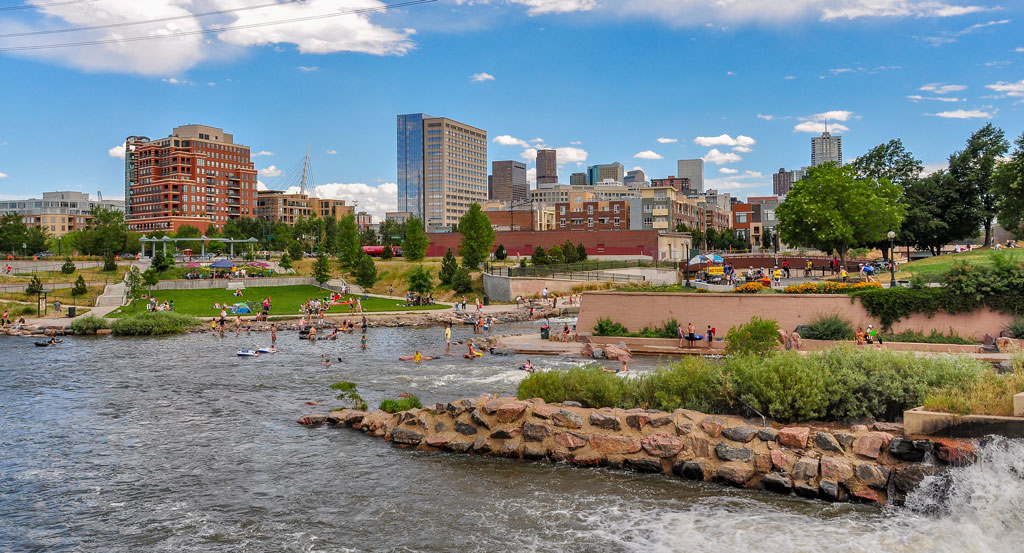
A view of Confluence Park beach and Denver skyline by Kent Kanouse, CC BY 3.0
Confluence Park beach and Denver skyline by Kent Kanouse, CC BY 3.0

AAG has set an ambitious goal of reducing our carbon emissions from each annual meeting by 45% by 2030 and 100% by 2050. As we return to our first in-person meeting in years, the travel choices we make really matter.

To encourage AAG 2023 participants to consider their travel options and lean away from carbon emissions whenever they can, AAG’s Climate Action Task Force prompted us to create the #AAG4Earth campaign. We encourage you to join in, explore your choices, and create a low-carbon adventure to arrive in Denver.

Getting there

Try Rail: Travel Amtrak to arrive at elegant Denver Union Station, a more than century-old Beaux Arts train station. Connect via the California Zephyr, a train route from Chicago to San Francisco. Visit Amtrak to explore your travel options. For groups of 8 or more, Amtrak Share Fares provide a discount of up to 60% off tickets. Groups of 15 or more can earn discounts or a free escort ticket for each 20 travelers. Visit Amtrak’s website or call 1-800-USA-1GRP for more information if your group is 15 or more passengers.

Arrive by Bus: Travel to Denver from virtually anywhere in the U.S. on Greyhound or Express Arrow. Use a service like Busbud or WanderU to find your best route and price.

Have to travel by plane? Denver International Airport (DEN) has taken steps to reduce its global carbon footprint.

On the ground

Even if you are traveling too long a distance to reduce your carbon footprint much, you still have lots of options for curtailing emissions from your activity once you’re in Denver:

Transit in Denver

Denver’s Regional Transit District offers schedules, trip planning, and real-time predictions of arrival from its website or app. Within the downtown area, you can hop on the Free MallRide and MetroRide buses departing from Union Station and continue down 16th Street and 18th/19th Streets, respectively.

Biking, Scooting, Rolling, and Walking

Check out Denver’s Wheelchair Accessibility Guide. And see Denver’s Shared Micromobility Program which offers information on scooters and bikes to rent. From the Visit Denver website, you can download a city bike map or use the Denver Regional COG’s interactive map to explore the many routes in bikeable Denver. There are 20 miles of bike lanes in downtown, convenient to the Cherry Creek and Platte River trails. Cycleton rents bikes from its location about 15 minutes’ drive and 30-40 minutes from Union Station by transit.

Denver’s walkable downtown begins with the 16th Street Mall, a car-free pedestrian space that is the fastest way to the AAG meeting hotels from Union Station, with a drop-off point next to the Sheraton Denver Downtown. The 16th Street Mall also features dining options from fast casual to upscale as well as shopping and breweries. Pedestrian bridges link 16th Street with nearby Commons Park and nearby LoHi neighborhood. Overall, downtown Denver is rated as one of the city’s most walkable places.

When choosing restaurants, shopping, and amusement parks, check for their commitment to shrinking their carbon footprints. For example, the Denver Beer Company spells out its commitment to reducing emissions and ethical product sourcing on its website.

We’re in this together. The decision to travel in a low-carbon way is a community-oriented decision and should be shared and celebrated communally. As you make your travel plans, show your pride in your decisions with the #AAG4Earth hashtag.

    Share

AAG Action on Climate Change

David M. Mark

David M. Mark, The University at Buffalo, The State University of New York (UB) Distinguished Professor Emeritus in the Department of Geography and an internationally recognized leader in the field of GIScience, died Sept. 24 after a brief illness. He was 74.

Jeri Jaeger, UB professor emeritus of linguistics and Mark’s partner of 15 years, was by his side.

Mark joined the UB faculty in 1981 and had a major impact on the Department of Geography and the university more broadly, and his influence on the disciplines of geography, GIScience and human spatial cognition/languages was seen on an international scale. Among his many achievements, he worked with Andrew Frank, Andrew Turk, David Stea and others to establish the field of ethnophysiography — the perception and description of landforms by different cultures.

Mark served as director of the UB site of the National Center for Geographic Information and Analysis (NCGIA), funded by NSF to UB, UC Santa Barbara, and University of Maine from 1995-2013. NCGIA helped establish a national and international presence for the burgeoning field of GIScience.

Mark’s own research began with geometric descriptions of the land surface and evolved toward ethnophysiography. Along the way, he pioneered methods for representing these landforms using digital computers, which helped usher in the field of GIScience. He and other NCGIA colleagues simultaneously developed a formal theory for spatial thinking, grounded in cognition and linguistics. His ethnophysiographic and ontological research has been a major component of the theoretical foundation of GIScience. Collectively, his work has profoundly influenced the knowledge body of GIScience and the research directions pursued in the field today.

A prolific scholar, Mark published well over 200 manuscripts that have been cited over 18,000 times. He was lead investigator on numerous large grants, including from the National Institutes of Health and two National Science Foundation (NSF) Integrated Graduate Education, Research and Training (IGERT) projects, which funded and launched the careers of about 50 doctoral students.

He was the recipient of numerous awards and honors, including the University Consortium for Geographic Information Science Researcher of the year (2004), Educator of the Year (2009) and Elected Fellow (2010); the American Association of Geographers’ Robert T. Aangeenbrug Distinguished Career Award (2013); Simon Fraser University’s Outstanding Alumni Award for Academic Achievement (2016); and the Waldo-Tobler GIScience Prize from the Austrian Academy of Sciences (2016).

A native of British Columbia, Canada, he earned a B.A. in geography from Simon Fraser in 1970, an M.A. in geography from the University of British Columbia in 1974 and a Ph.D. in geography from Simon Fraser in 1977. He was an assistant professor at the University of Western Ontario before joining the UB faculty.

Aside from his academic achievements, Mark was an enthusiastic “birder” for many decades. He and Jaeger traveled extensively, including to the Amazon River, the coast of Alaska, game parks in Africa, Egypt and the Nile River, and India. He added to his lifetime list of birds wherever he traveled.

In years past, David was a member of the geography department’s soccer team and goalie for the floor hockey team. Many of his teammates were his graduate students. He was a dedicated fan of the Buffalo Sabres and Bills, and went to many games with friends. Having bonded with the Bills during the Super Bowl years of 1991-94, he had been looking forward to this year with great anticipation.


Contributed by members of the University at Buffalo Geography Department.

    Share

The International Encyclopedia of Geography

The International Encyclopedia of Geography: People, the Earth, Environment, and Technology

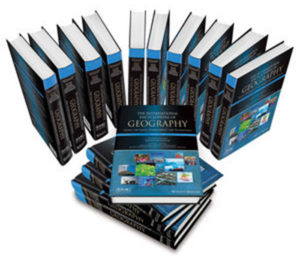
Image showing complete set of The International Encyclopedia of Geography: People, the Earth, Environment, and TechnologyRepresenting the definitive reference work for this broad and dynamic field, The International Encyclopedia of Geography: People, the Earth, Environment, and Technology arises from an unprecedented collaboration between Wiley and the American Association of Geographers (AAG) to review and define the concepts, research, and techniques in geography and interrelated fields. Available as an online resource and as a 15-volume full-color print set, the Encyclopedia assembles a truly global group of scholars for a comprehensive, authoritative overview of geography around the world.

  • Contains more than 1,000 entries ranging from 1,000 to 10,000 words offering accessible introductions to basic concepts, sophisticated explanations of complex topics, and information on geographical societies around the world
  • Assembles a truly global group of more than 900 scholars hailing from over 40 countries, for a comprehensive, authoritative overview of geography around the world
  • Provides definitive coverage of the field, encompassing human geography, physical geography, geographic information science and systems, earth studies, and environmental science
  • Brings together interdisciplinary perspectives on geographical topics and techniques of interest across the social sciences, humanities, science, and medicine
  • Features full color throughout the print version and more than 1,000 illustrations and photographs
  • Annual updates to the online edition

Online advantages

Online access provides many benefits for scholars, researchers, professors, students and librarians:

  • publishes annually for the most comprehensive reference available in the field
  • 24/7 use
  • enhanced search and discoverability
  • search by keyword or phrase across the full text
  • browse by table of contents and topic to explore the breadth of coverage
  • export citations
  • click through reference links
  • bookmark content to share with social networks
  • unlimited concurrent user access
  • perpetual access rights with one-time purchase
  • COUNTER-compliant usage data
  • no DRM restrictions
  • enhanced MARC records at no extra charge
Learn more about topics and recent articles


For more information, contact Jennifer Cassidento.

    Share

William Laatsch

The geographer who loved nothing more than exploring unfamiliar territory has embarked on his next journey, to a destination not found in any atlas. William Ganfield Laatsch, 84, passed away September 14, 2022.

William Laatsch was born June 20, 1938, in Waukesha, WI, to Wayland and Elizabeth (Ganfield) Laatsch. His lifelong love of learning and exploring began in childhood, nurtured by family trips to Northern Wisconsin and the east coast. An only child, he often joked about how, instead of being chaotic and crowded affairs, holidays were often spent reading, surrounded by aunts and uncles who would do the same until cocktail hour.

I don’t expect them all to become geographers. I just expect them to be better stewards of the Earth and its people.
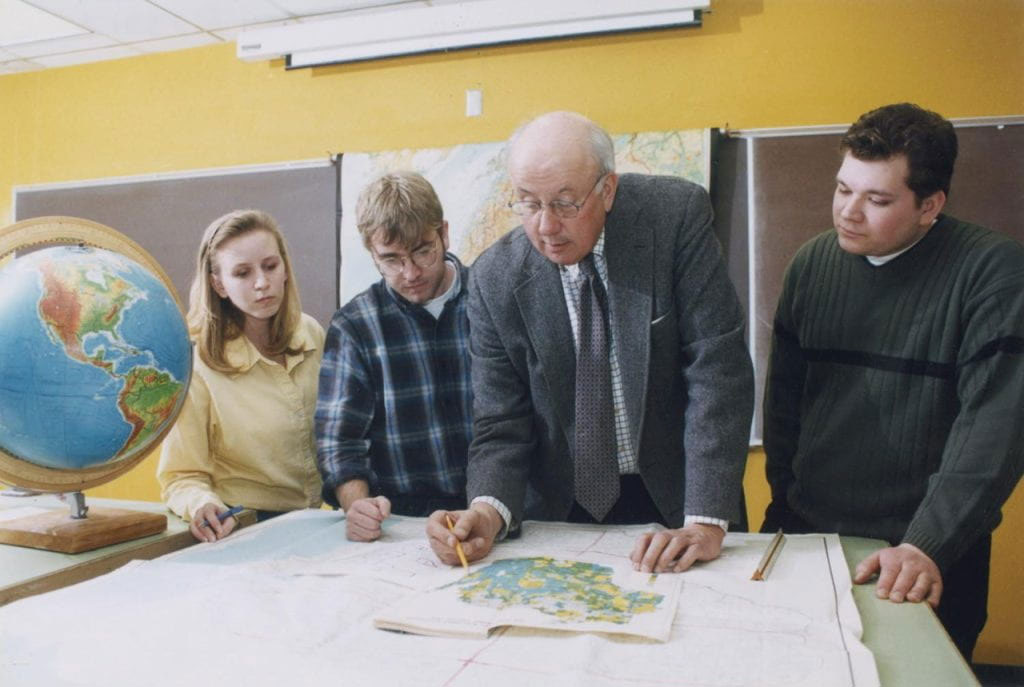
Photo of William Laatsch pointing to a desk map with students looking on

While Bill’s immediate family was small, his youth in Waukesha was surrounded by a close knit group of families that included Richard and Elizabeth Hunter and their daughter Frances. Growing up on the same block, Fran and Bill would accompany each other to school which was the start of a loving relationship that would see them marry on August 18, 1962 and go on to spend the next 60 years together. Fran was Bill’s partner as he pursued his academic career, and together they traveled widely, across North America, Europe, and Asia. They had a special affinity for the American West. Together Bill and Fran would raise two children, Ann (Shorewood, WI) and David (Wauwatosa, WI).
Photo of William Laatsch pointing to a large wall map with student looking on

In 1956 Bill enrolled at Carroll College, now Carroll University, where his family ties to the institution ran deep. His grandfather, William Arthur Ganfield, served as the College’s sixth president and Bill’s parents, aunts, and uncle also attended Carroll. He continued his studies at the University of Oklahoma where he earned a Master of Science in physical geography, and the University of Alberta in Edmonton. There, he studied high latitude geography, mining development, and town site development. (Decades later, he would be honored with a Yukon ecological reserve named after him in recognition of his 1970’s doctoral dissertation recommendation that the region emphasize ecotourism as a hedge against the decline of mining). After earning his Ph.D. in cultural geography, he accepted a position in the Department of Regional Analysis at the University of Wisconsin-Green Bay.
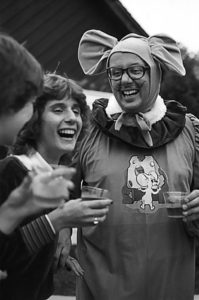
Photo of William Laatsch wearing a mouse costume for the annual fall Bill Laatsch Wine and Cheese Classic, courtesy University of Wisconsin library digital archivesBill spent 43 years at UWGB as a Professor of Geography and Department Chair, and postponed retirement to fill the position of Interim Provost and Vice Chancellor for Academic Affairs. For decades, he hosted the Bill Laatsch Wine and Cheese Classic each fall, where he—dressed as a 6’4” gray mouse (shown at right)—would welcome students back to campus with his signature warmth and good humor. Bill retired in 2009, and became the first faculty member to have a classroom named in their honor. During the course of his career he earned numerous prestigious awards for teaching excellence, both locally and nationally. Bill inspired generations of students to pursue careers in teaching, urban planning, cartography, GIS, remote sensing, and other professions related to cultural geography’s focus on the Earth and how humans interact with it. About his students, he remarked “I don’t expect them all to become geographers. I just expect them to be better stewards of the Earth and its people.”

He also served as a consultant for the U.S. Department of Defense, Wisconsin Department of Transportation and the Wisconsin Department of Development. He was a member of the Editorial Board of the “Voyageur” Historical Review, former chairman of the State of Wisconsin Historic Preservation Review Board, Chairman of the Midwest division of the Association of American Geographers and Fellow of the American Geographical Society. He is a former President of the Heritage Hill Corporation, which operates the Heritage Hill State Historical Park for the Department of Natural Resources.
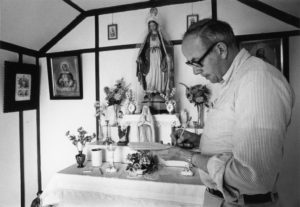
Photo of William Laatsch taking notes near an alter with religious artifactsA professional interest in Belgian settlement in northeastern Wisconsin culminated in helping to establish the Belgian Heritage Center in Namur, Wisconsin, which is dedicated to telling the story of Belgian settlement in Wisconsin and works to preserve unique elements of Belgian culture. Bill loved leading bus tours of the Southern Door County Belgian architectural and historical sites for students, tourists, and anyone who would seek out his expertise and, to his children’s horror, terrible jokes.

A deep allegiance to his alma mater, Carroll, is evident in Bill’s years of service to the institution. He served on the Board of Trustees for 19 years (1991-2010) chairing numerous committees and ultimately as Chairman of the Board.

Bill revered the Earth’s beauty, and was moved to tears when he saw Mount Everest in person in 1996. He loved Jake’s corned beef, deep belly laughs, early morning fresh cheese curd runs, Door County, and striking up conversations with strangers across the world (whether they spoke his language or not). A champion trapshooter, he loved shooting and found joy in teaching his children to enjoy the sport as well. Above all else, he loved being Papa to his grandchildren. He treated everyone he met with respect and kindness, and gave generously of his time and energy to environmental, educational, historical, and artistic causes.

Bill was preceded in death by his parents and his beloved in-laws Richard and Elizabeth Hunter. He is survived by his wife Frances Hunter, daughter Ann Laatsch, son David (Tara) Laatsch, and his two amazing grandchildren, Elizabeth and Andrew, as well as countless friends, colleagues, and students who he inspired, encouraged, and mentored.


Reprinted with permission from the Feerick Funeral Home.

    Share

Climate Justice Demands an Integrated Geography 

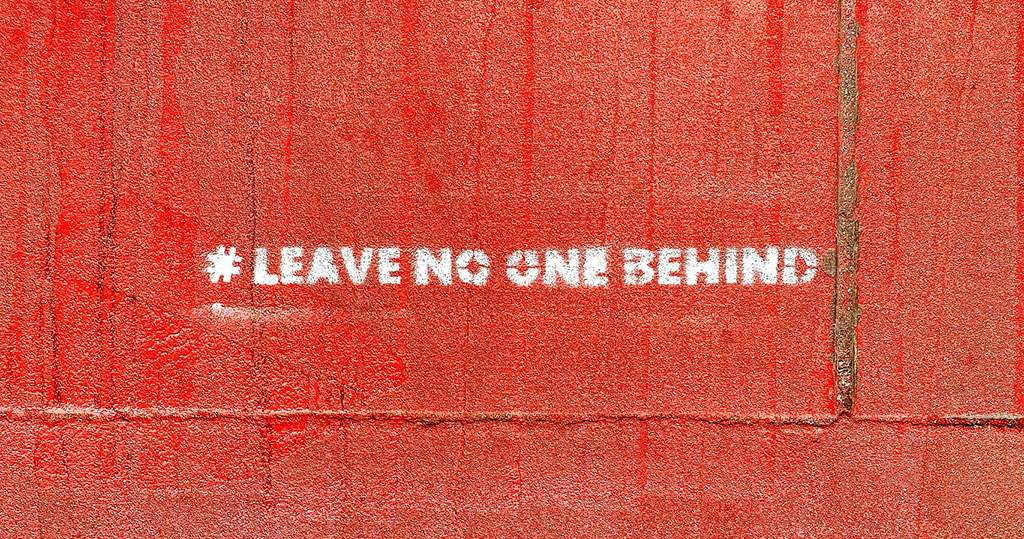
Message painted on wall that says "asterisk" Leave no one behind; photo by Etienne Girardet for Unsplash
Image by Etienne Girardet for Unsplash

Photo of Marilyn Raphael by Ashley Kruythoff, UCLA

Some months ago, I was asked to speak about climate justice at a monthly seminar series. The invitation welcomed my “perspectives on the role of Earth Observations (EO) for climate justice, areas of momentum within the geography research community [as] well as areas where attention is needed.” I was immediately tempted to say “no” because I felt that there were people better able to address this topic at that level, but the invitation cast the request within the context of my roles as the president of American Association of Geographers and director of UCLA’s Institute of the Environment and Sustainability, two groups which should definitely have something to say about climate change and climate justice. So, I agreed, taking it as an opportunity to do a deeper dive into the issue of climate change and climate justice, from the perspective of a physical geographer. I learned a lot — here is some of what I learned.

Climate science and climate justice

Historically, climate scientists have treated the climate as if it were a phenomenon separate from ourselves. We saw it as a very complex phenomenon that functioned on its own, largely beyond our control, its variability something that we could measure objectively, describe, and analyze. The study of climate variables that affected human comfort and survival was prioritized and predictions of the same were used to prepare for drought, floods and the like.

Climate justice demands that climate scientists no longer ignore what is right in front of our eyes but recognize and redress the ways in which our practice of science contributes to this injustice.

Human-induced climate change has changed that perspective. Primarily we now see that our use of the planetary resources, particularly fossil fuels, is directly responsible for the changes in climate that we are experiencing. The largely negative impacts of climate change, are unequally distributed so that people who are already disadvantaged and least responsible for the greenhouse gas emissions that forced climate change, are the most vulnerable. Climate justice, which recognizes how these inequities are exacerbated by climate change, is a movement as well as a way of approaching the climate crisis. The climate justice movement highlights the connections between climate change and social injustice.  Most importantly, climate justice demands that climate scientists no longer ignore what is right in front of our eyes but recognize and redress the ways in which our practice of science contributes to this injustice.

To understand the role of EO for climate justice requires talking to climate justice organizers and activists themselves, given that climate justice, like environmental justice, is a movement more than an area of academic application and research. Physical scientists need to know the needs of groups working to advance climate justice. We also need to know the uses — present and potential, by and for whom or what — of the kinds of knowledge tools (datasets, models) we are working to construct. Additionally, often the need is not for additional research but rather a redistribution of resources to tackle problems whose causes and consequences are already sufficiently clear — especially to those who are most affected by them. So, we have to think in terms of community data needs as well as the relationships between producers of scientific knowledge and affected communities.

More generally, physical scientists need to pay more attention to the role of scientific representations of climate change in obscuring climate injustice. This is an ongoing issue. Here is one example — attributing responsibility for climate change to a generalized “humanity” instead of to a specific set of powerful human institutions that have a long track record of harming, exploiting, and extracting wealth from colonized and marginalized people and places. In this context, “climate change” might be more productively addressed as a symptom rather than a cause.  We, rightfully, talk about the disproportionate impacts of climate change on marginalized groups but this framing can elide the underlying processes producing both climate change and systemic marginalization — for instance, settler colonial control of land that facilitates fossil fuel extraction and industrial development while undermining the ability of Indigenous communities to adapt to climate change’s effects.

A geographical approach to linking climate science and climate justice

In geography, there is an is an emerging body of work called Critical Physical Geography, which may be used as a lens and guiding framework for bringing climate justice into climate science. Critical physical geography advocates paying more reflexive attention to how knowledge is produced — how we conceptualize our research and the methods that we use. It argues that social inequalities and power relations are implicitly woven through what we study and should not be ignored if a thorough understanding of our science is our goal.

A recent paper puts urban climatology at the center of this discussion. Arguably, the city is the place where human impact on the landscape and climate is concentrated and where measurable and perceived climate change was noted well before global climate change was widely confirmed. Even today, the temperature increase attributed to large cities (the Urban Heat Island) is larger than the global average temperature increase. And cities are major sites of greenhouse gas emissions. The city is also the place where much work on environmental justice is done because of the unequally distributed negative impacts of the increased temperatures and air pollution, among other things. critical urban climatology draws on the tenets of critical physical geography to argue that we need both urban climatology and environmental justice to fully understand urban climates because they are shaped both by legacies of colonialism, and race, gender, and class; and by the nature of the urban energy budgets, the variation in air quality, and the thermal and moisture characteristics that define them.

Going forward, what do we do?

In those brief preceding paragraphs, I have barely touched the surface. There is so much more to learn, to inform how we practice and use our science. Physical scientists (physical geographers) have made great strides to understand the physical nature of climate and climate change. However, our understanding of climate, climate change and its impacts is limited by the fact that we do not incorporate the human element. The divide between these perspectives is nothing new, as Mei-Po Kwan pointed out in 2008, but this has to change, because our environments are no longer only physical or only human. Was it ever so? Bridging the gap between physical and human geography practice will not only better address climate justice but will also improve our science.

Learn more about AAG’s work on climate action and justice


DOI: 10.14433/2017.0115


Please note: The ideas expressed in the AAG President’s column are not necessarily the views of the AAG as a whole. This column is traditionally a space in which the president may talk about their views or focus during their tenure as president of AAG, or spotlight their areas of professional work. Please feel free to email the president directly at raphael [at] geog [dot] ucla [dot] edu to enable a constructive discussion. 

    Share