American Indians of Washington, D.C., and the Chesapeake

When Captain John Smith sailed up the Potomac River in 1608, he found 13 American Indian villages along its banks. Spanish incursions beginning in 1521 brought diseases, land grabs, resource destruction, military assaults, and slave raids. Nonetheless, there were several large villages and fortified towns by the time of John Smith’s 1608 visit. At that time, three major political groups vied for power in the region: the Susquehannock in Pennsylvania; the Piscataway Chiefdom in southern Maryland; and the Powhatan Chiefdom in Virginia and farther south.

Every place in the Western Hemisphere has an ongoing American Indian story, and the Washington, D.C., area is no exception. People had settled on the shores of Washington’s Anacostia and Potomac rivers as early as 9,500 BCE. Their descendants still reside here. The Nacotchtank Indians of what is now D.C. were part of the Piscataway Chiefdom, with settlements stretching along the Potomac River. Anacostia, a rendering of the word “Nacotchtank” by the English Jesuits who came with Leonard Calvert in 1634, was the home of their most important leader.

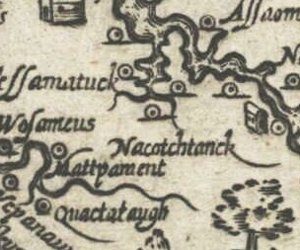
Captain John Smith’s map (1612) showing Nacotchtank details (Library of Congress)

Indians of the Chesapeake Bay would form early and lasting impressions on the newly-arriving European settlers. This is where Pocahontas met Captain John Smith, after all, setting up one of the great legends of early American settlement. But the presence of Indians also played a role in racial segregation laws that were only recently changed.

Chesapeake Indians were riverine communities, drawing sustenance from the waterways for as much as 10 months of the year. The Powhatan confederacy of Indians that greeted the Jamestown settlers included tribes from the Carolinas to Maryland. The Piscataway often sided with the Powhatan Chiefdom against the English, and when the Powhatan were defeated in 1646, English settlements quickly expanded. King Charles deeded Piscataway territories to Lord Baltimore in 1632, and European settlements reached what is now Washington, D.C., by 1675.

British settlement during the 17th century followed the usual pattern of expansion. Indians were pushed off their lands. Treaties and alliances were made, then promises broken. Frontiersman pushed into Indian land at the expense of the communities. Epidemics of introduced diseases decimated the Indigenous population, down to perhaps a tenth of its former number.

“There is petition after petition, speech after speech, on record by the chiefs to Maryland Council, asking them to respect treaty rights,” says Gabrielle Tayac, niece of Piscataway Chief Billy Tayac. “Treaty rights were being ignored, and the Indians were getting physically harassed. The first moved over to Virginia, then signed an agreement to move up to join the Haudenosaunee [Iroquoise Confederacy]. They had moved there by 1710. But a conglomeration stayed in the traditional area, around St. Ignacious Church. They’ve been centered there since 1710. Families mostly still live within the old reservation boundaries.”

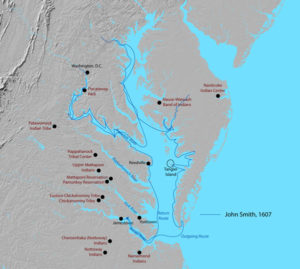
Map of the American Indian Tribes of the Chesapeake region (courtesy Doug Herman)

“By 1700, the English had settled and established plantation economies along the waterways, because they are shipping to England,” says anthropologist Danielle Moretti-Langholtz at the College of William and Mary. “Claiming those pathways pushed the Indians back, and the back-country Indians become more prominent. Some Natives were removed and sold into slavery in the Caribbean. This whole area was kind of cleaned out. But there are some Indians that remain, and they are right in the face of the English colonies. We can celebrate the fact that they’ve held on.”

But it was racial laws and policies that pushed for the near “disappearance” of Indians from the region. In Bacon’s Rebellion of 1676, white indentured servants united with black slaves in an uprising against the Virginia governor in an attempt to drive Indians out of Virginia. They attacked the friendly Pamunkey and Mattaponi tribes, driving them and their queen Cockacoeske into a swamp. Bacon’s Rebellion is said to have led to the Virginia Slave Codes of 1705, which effectively embedded white supremacy into law, driving a wedge between whites and blacks that came to dominate American social dynamics.

Perhaps most damaging of all was the Racial Integrity Act of 1924, pushed forward by the white supremacist and eugenicist Walter Ashby Plecker, the first registrar of Virginia’s Bureau of Vital Statistics. This Act made it unsafe—and, in fact, illegal—to be Indian. Plecker decreed that Virginia Indians had so intermarried—mostly with blacks—that they no longer existed. He instructed registrars around the state to go through birth certificates and to cross out “Indian” and write in “Colored.” Further, the law also expanded Virginia’s ban on interracial marriage.

While many Indians simply left, the Mattaponi and Pamukey stayed isolated, which protected them. They kept mostly to themselves, not even connecting with the other Virginia tribes. But they continue today to honor their 340-year-old treaty with the Governor of Virginia by bringing tribute every year.

On the Eastern side of the Chesapeake Bay, the Nanticoke mostly fled into Delaware, while a small band called the Nause-Waiwash moved into the waters of the Blackwater Marsh. “We settled on every lump,” said the late chief Sewell Fitzhugh. “Well, a lump is just a piece of land that is higher, that doesn’t flood most of the time.”

The remnant Maryland tribes consolidated under the name of Piscataways, and around 1700 removed to southern Pennsylvania. There they came under the protection of the Iroquois, where they became known as the Conoy. By the end of the 18th century their official numbers had been reduced to 320 persons. Their lands and political autonomy were completely destabilized, and reservation boundaries were not respected past 1700.

Virginia’s ban on interracial marriage would not be overturned until 1967, when the U.S. Supreme Court ruled in Loving v. Virginia. Mildred Loving is often identified as black. She was also Rappahannock Indian. But consequent to Plecker’s actions, Virginia Indians faced considerable challenges proving their unbroken lineage—a requirement necessary for achieving status as a Federally Recognized Tribe. The Pamunkey received Federal recognition in 2015, and six other Virginia tribes in January 2018—500 years after Pocahontas.

The Smithsonian National Museum of the American Indian located on the National Mall, welcomes you to visit and learn more about the Piscataway and other Indigenous peoples of the Americas during your visit to Washington, D.C., for the 2019 AAG Annual Meeting.

Recommended readings:

The Aborigines of the District of Columbia and the Lower Potomac – A Symposium, under the Direction of the Vice President of Section D. Otis T. Mason; W J McGee; Thomas Wilson; S. V. Proudfit; W. H. Holmes; Elmer R. Reynolds; James Mooney. American Anthropologist, Vol. 2, No. 3. (Jul., 1889), pp. 225-268. https://www.jstor.org/stable/658373?seq=1#page_scan_tab_contents

Joe Heim, 2015. “How a long-dead white supremacist still threatens the future of Virginia’s Indian tribes.” Washington Post, July 1, 2015. https://www.washingtonpost.com/local/how-a-long-dead-white-supremacist-still-threatens-the-future-of-virginias-indian-tribes/2015/06/30/81be95f8-0fa4-11e5-adec-e82f8395c032_story.html?utm_term=.dc92b208fd4f

WE HAVE A STORY TO TELL: The Native Peoples of the Chesapeake Region. Teacher Resource, National Museum of the American Indian, 2006. https://nmai.si.edu/sites/1/files/pdf/education/chesapeake.pdf.

John Smith’s Chesapeake Voyages, 1607-1609. Helen C. Rountree, University of Virginia Press, 2008.

DOI: 10.14433/2017.0038

    Share

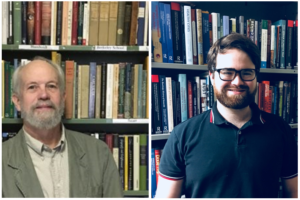
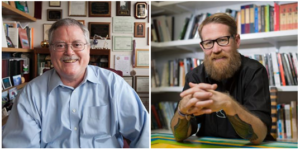
Meet the AAG Journals Editors – David Butler and Nik Heynen

Published six times a year since 1911, the Annals of the American Association of Geographers is one of the world’s foremost geography journals. The articles in the journal are divided into four theme sections that reflect the various scholarship throughout the geographic discipline: Geographic Methods; Human Geography; Nature and Society; and Physical Geography, Earth and Environmental Sciences. There are editors responsible for each of the four themes, two of which are David Butler and Nik Heynen.

The Physical Geography, Earth and Environmental Sciences section editor of the Annals of the American Association of Geographers is David Butler. Butler is a Texas State University System Regents’ Professor in the Department of Geography at Texas State University where he teaches courses on geomorphology, landscape biogeography, biogeomorphology, and Nature and Philosophy of Geography.  With research interests that include geomorphology, biogeography, natural hazards, mountain environments and environmental change, Butler has considerable experience working with physical geography topics. He has also been the recipient of several awards during his career including the Distinguished Career Award from the Biogeography Specialty Group, the Geomorphology Specialty Group, and the Mountain Geography Specialty Group of the AAG as well as a variety of teaching and mentoring awards.

Aside from working with the AAG Journals, Butler has editorial experience that includes serving as Section Editor for Geomorphology for the AAG International Encyclopedia of Geography, as a section editor for the international journal Progress in Physical Geography, and as long-time book review editor for the journal Geomorphology. He has also guest edited/co-edited nine special issues of the journals Physical Geography and Geomorphology.

As an editor for AAG Journals, Butler feels a sense of satisfaction that he is helping to advance physical geography within the discipline. In his mind, the most pressing issue within physical geography right now is “figuring out how to address the concept of the Anthropocene in classical physical geography research and teaching.”  For those who are looking to publish research in physical geography, David says to be sure potential authors completely understand and respect the journal to which they wish to submit research. He adds, “Beyond that, don’t give up! If you feel like you have something important enough to say to be published somewhere, you’re probably right. If your first journal of choice ultimately rejects you, take to heart their critiques and try another journal!”

Nik Heynen is the Human Geography editor for the Annals of the American Association of Geographers, a Professor in the Department of Geography at the University of Georgia, and an adjunct Professor in the Department of Anthropology. At the University of Georgia, Heynen teaches mostly large introductory classes, in addition to graduate seminars.

Heynen’s research, for which he has won several awards including the AAG’s Glenda Laws Award for geographic contributions to social justice research, focuses on urban geography, especially urban social movements and urban political ecology. He is also interested in environmental justice; food/hunger studies; race, class, and gender, and science and technology studies.

While also serving as an AAG Journals editor, over the last seven years Heynen has invested time helping to establish UGA’s Center for Integrative conservation (CICR) and for over three years served as the Director of the Integrative Conservation (ICON) PhD Program that was established by a group who came together through CICR. He recently became the Director of the Geography of the Georgia Coast Domestic Field Study Program based on Sapelo Island.

In addition to the teaching and administrative activities he does at UGA, and he is also currently an editor at a variety of outlets in addition to the Annals. He serves as an editor for Environment and Planning E: Nature and Space and was also the founding editor of UGA’s Geographies of Justice and Social Transformation book series. Since 2006 he has been involved with the journal Antipode, first as the Book Reviews and Interventions editor, than as a general member of the editorial collective and he continues to serve as a trustee of the Antipode Foundation, a U.K. based charity. Part of the work he still does at Antipode is Chair Antipode’s Institute for the Geographies of Justice (IGJ).

Heynen enjoys seeing the work of his colleagues and, as an editor, helping their work develop and be published. He believes that both Black geographies and Feminist geographies are the two most exciting areas of geographic thought at this time, but continues to find great value in Marxist Geography.

Learn more about Nik’s research by visiting his website: nikheynen.com.

    Share

Toddlers and Tears on the Texas Border

his column begins with special thanks and recognition of our outgoing President Dr. Derek Alderman, and outgoing Past President Dr. Glen MacDonald. Please join me in recognizing their leadership in moving the association forward on so many important fronts, ranging from civil rights to environmental security. We must carry this momentum forward from the strong foundations they established, and I am honored to take up the baton as your new AAG president. I offer many thanks to the AAG staff, and to current and outgoing council members, as well for their hard work on difficult issues, and welcome new AAG officers, councilors and committee members. It takes dedicated volunteers to make our association a community that makes a difference, and I thank all of you for serving, especially our first cohort of AAG Fellows. Finally, I ask us to thank and recognize the dedicated work and many accomplishments of AAG Executive Director Dr. Douglas Richardson, who announced his countdown to retirement at the New Orleans AAG meetings. There is much work to do to ensure a smooth transition and AAG’s continued positive trajectory, contributions, and influence. In my first presidential column, I address a matter of human rights and global understanding, to which geographers have much to contribute.

I began writing this column in the back country of the Petén, Guatemala, having journeyed by bus and 4WD pickup truck through lively Guatemalan towns and villages, on muddy track roads to the field camp of El Zotz. In Belize the week before, and also at El Zotz, our team was field validating some of the latest findings in airborne LiDAR mapping: fabulous stone structures, temples, settlements, waterworks, and agricultural features of the ancient Maya Civilization, more numerous than ever imagined. Our research questions are about resilience and collapse, long-term environmental change, and about population, landesque capital, technology, agriculture, and sustainability, all in a changing and challenging environment. Meanwhile, on our way from the modern world to this ancient world emerging from the Petén jungle, we passed a busy market square where, since my last visit, motorized tuk tuks spewing exhaust have replaced three wheeled bicycles for local transport on narrow streets. As the day turned to dusk and then into night on our journey towards field camp, glimpses of modern Central American life continued to pass by, people gathered for discussions and cold drinks in LED-lit tiendas, in church halls softly illuminated by candlelight and song, and families cooking dinner at home, some over smoky cookfires in outdoor kitchens, together with their children. Which family will have enough to eat? Enough clean water? Mosquito nets? Pencils and notebooks for school? And, which child could be the next Sally Ride? The next Albert Einstein? So much potential, and so much poverty. How do we extend the opportunities we Americans have to the next generation, and across borders, to understand and move our global society and environment forward, together?

After our field research ended, I took another bumpy, muddy, and dusty truck ride out of El Zotz, and a bus from Flores, Guatemala to Belize to fly home to Austin, Texas, with no trouble crossing the borders and no visa required. I recall an earlier Belize-Mexico border crossing and the Mexican Green Guardians who kindly helped us with a flat tire; and recall the many kindnesses our Central American hosts have bestowed over the years. Back home in Texas, a dead-serious drama is currently playing out on the border of my adopted home state as I continue this column for the publication deadline. Central American families seeking asylum from deplorable conditions, threats, and abuses, and seeking better lives for their children, are being arrested under a U.S. government zero-tolerance policy for illegally crossing the U.S.-Mexico border. Children, some too young to even write or know their parents’ formal names, are being separated from their mothers and fathers and placed into caged warehouses, with no clear reunification plan. Those families have names and dreams, and they have deep care for and hope for their children. I have seen the hope and optimism with which parents escort their children to school in small villages in Mexico. Are former big box store warehouses the best America can offer to our tired, poor, and huddled masses? America offered far more to my immigrant Czech great-grandparents. But our American tolerance and generosity seem to come in waves: despite the welcome my Czech family received in California, WWII saw internment camps arise and imprison their Japanese-American neighbors. How can 21st century America slip so easily back into an “us vs. them” mindset? Not all hope is lost, airlines and local governments are beginning to publicly resist complicity in related federal actions. As of press time, the U.S. President has signed an executive order, after repeatedly blaming others and denying the ability to do so, to suspend the family separation orders for families arrested crossing the border. This order solves few problems, because there is no clear plan in place for the thousands of children who remain separated from their parents. As Glen MacDonald’s past president’s address called us to action on the environment, and Past President Derek Alderman called us to action on civil rights, I call us to action now on human rights, which encompasses both, and takes positive steps towards solving long term environmental and social crises driving migrants from their homes.

Make a Difference with a Focus on Human Rights

This leads us to one of the major themes for my presidential year, and that is Science, Geography and Human Rights. We too, the American Association of Geographers, are 12,000 individuals who can, will, and do make a difference. Under the bold leadership of outgoing President Derek Alderman, we have strengthened our commitment to civil rights, to saying no to bullying, violence, harassment and discrimination. Under the inspiring leadership of Past President Dr. Glen MacDonald, we have recommitted ourselves to protecting and cherishing science and our environment, culminating in his tour de force 2018 past presidential address calling us to action on the grand challenges of climate change and environmental degradation. I call upon us now to broaden our scope to human rights, where on the world stage science, society and the environment can all benefit from the expertise and unique global and spatial perspectives that geographers bring to bear. It is the moment where “we, too” can change the world.

A specific area for geographers to take action is within the AAAS Science and Human Rights Coalition, by becoming involved as an independent scholar. AAG, under the leadership of Executive Director Doug Richardson, was a founding member organization for this coalition in 2009, and has participated ever since on multiple projects, working groups and biannual meetings on a variety of human rights themes. A quick way to become involved is through the AAAS On-call Scientists, to target assistance where it is needed the most, by sharing your respective regional and systematic expertise in geography. Many universities may also have human rights and law centers seeking volunteers or affiliates. Imagine 12,000 geographers working together to solve the most difficult global challenges.

Recognize Those Who Make a Difference, and Stay Involved

I close this column with a reminder that there are numerous committees and awards for which to nominate AAG Members. Please honor those who work hard to make a difference by nominating someone today. Also, begin plans for your active participation in sessions, papers, posters, and field trips at the AAG Annual Meeting in Washington D.C. April 3-7, 2019. The AAG meeting themes for 2019 will include Geography Science and Human Rights, among others including Geography, Sustainability, and GIScience. Let’s make this our biggest annual meeting yet: we look forward to seeing you in Washington, D.C. Come home to Meridian Place!

Please share your ideas with me via email: slbeach [at] austin [dot] utexas [dot] edu

— Sheryl Luzzadder-Beach
Professor and Chair, Geography and the Environment, The University of Texas at Austin
President, American Association of Geographers

DOI: 10.14433/2017.0037

    Share

New Books: June 2018

Every month the AAG compiles a list of newly-published books in geography and related areas. Some are selected for review in the AAG Review of Books.

Publishers are welcome to send new volumes to the Editor-in-Chief (Kent Mathewson, Editor-in-Chief, AAG Review of BooksDepartment of Geography and Anthropology, Louisiana State University, Baton Rouge, LA 70803).

Anyone interested in reviewing these or other titles should also contact the Editor-in-Chief.

PLEASE NOTE: Due to current public health policies which have prompted the closing of most offices, we are unable to access incoming books at this time. We are working on a solution during this transition and will continue our new books processing as soon as we can. In the meantime, please feel free to peruse previous books from our archived lists.

June 2018

Architectures of Revolt: The Cinematic City circa 1968 by Mark Shiel (ed.) (Temple University Press 2018)

The Battle for Paradise: Puerto Rico Takes on the Disaster Capitalists by Naomi Klein (Haymarket Books 2018)

Climate Change and Human Mobility: Global Challenges to the Social Sciences by Kirsten Hastrup and Karen Fog Olwig (eds.) (Cambridge University Press 2017)

Communications/Media/Geographies by Paul C. Adams, Julie Cupples, Kevin Glynn, André Jansson, and Shaun Moores (Routledge 2017)

Down to Earth: Politics in the New Climatic Regime by Bruno Latour (Polity Books 2018)

An East Asian Challenge to Western Neoliberalism: Critical Perspectives on the ‘China Model’by Niv Horesh and Kean Fan Lim (Routledge 2018)

Environmental Justice in Postwar America: A Documentary Reader by Christopher W. Wells (ed.) (University of Washington Press 2018)

The Ethnobotany of Eden: Rethinking the Jungle Medicine Narrative by Robert A. Voeks (Univeristy of Chicago Press 2018)

Food and Animal Welfareby Henry Buller and Emma Roe (Bloomsbury Academic 2018)

Franco-America in the Making: The Creole Nation Withinby Jonathan K. Gosnell (University of Nebraska Press 2018)

The Geopolitics of Spectacle: Space, Synecdoche, and the New Capitals of Asia by Natalie Koch (Cornell University Press 2018)

How the West Was Drawn: Mapping, Indians, and the Construction of the Trans-Mississippi West by David Bernstein (University of Nebraska Press 2018)

Ice: Nature and Cultureby Klaus Dodds (Chicago University Press 2018)

Immigrants, Evangelicals, and Politics in an Era of Demographic Change by Janelle S. Wong (Russell Sage Foundation 2018)

On Decoloniality: Concepts, Analytics, Praxis by Walter D. Mignolo and Catherine E. Walsh (Duke University Press 2018)

Popular Geopolitics: Plotting an Evolving Interdiscipline by Robert A. Saunders and Vlad Strukov (eds.) (Routledge 2018)

The Road to Inequality: How the Federal Highway Program Polarized America and Undermined Cities by Clayton Nall (Cambridge University Press 2018)

    Share

Patrick Shabram

EducationM.A. in Geography (San Jose State University), B.A. in Geography (University of Colorado Boulder)

What attracted you to a career in education?
I’ve spent a number of years working in private industry, yet early on began to teach part-time as an adjunct. I had spent several years teaching on the side before realizing that it is my passion. At age 42, I made the switch to full-time.

How has your education/background in geography prepared you for your teaching career?
Typically, a Master’s degree is needed to teach at a community college, along with teaching experience. Many of my colleagues have Ph.D.’s, but education is not sufficient for a position like this; without classroom experience, getting a full-time position is nearly impossible. Starting off as an adjunct or teaching as a graduate student is necessary. Personally, I brought experience from my consulting and research work in the private industry, which I believe improved my chances of securing my full-time position.

What do you do in the wine industry?
The federal government has a system in place for recognizing unique regions for viticulture, both to serve as a benefit for consumers and to protect geographic names in the industry. If a winemaker wants to use one of these geographic names on their label, 85% of the grapes used to make the wine needs to come from within the boundaries of that region (e.g., Napa Valley or Russian River Valley). To establish an area as a unique American viticultural area (AVA), a petition to the Alcohol and Tobacco Tax and Trade Bureau (TTB) is necessary. These petitions require details that identify why the area is geographically unique as a winegrowing region, as well as identify boundaries that best encompass these characteristics. I do studies that look at climate, soils, topography, viticulture and viticultural practices, and other aspects of the area to determine what makes the area unique (or determine if the area does not meet TTB requirements) and recommend boundaries. The findings are often used by growers, wineries, or grower associations to support petitions for new AVAs or to modify the boundaries of existing AVAs.

What geographic skills and information do you use most often in your work? What general skills and information do you use most often in your work?
I teach several different classes, but since I most commonly teach introductory physical geography, a well-rounded knowledge of earth sciences is essential. Technical skills in GIS, Google Earth, and other applications and online resources help in creating and running laboratories. When I interact with local organizations on building and promoting internship opportunities, an understanding of careers that are out there also helps.

Writing skills should never be overlooked. There tends to be administrative work with my job requiring the ability to present written ideas clearly and concisely.  The same goes for my work in the wine industry—that work is about 40% writing.

Are there any skills or information you need for your work that you did not obtain through your academic training? If so, how/where did you obtain them?
Networking. The importance of networking was engrained in some of my employment outside academia, where I was commonly expected to attend networking events. Someone might wonder why I need to network now, since students come to me, and I don’t really need to find new business or a new job. I’ve found a lot of excellent opportunities for collaboration, however, through my contacts at other institutions. These opportunities all have been about students. I’ve worked on grants, helped students find jobs, helped solve transfer issues, learned new teaching techniques, and found interesting subject matter all through my contacts at other colleges, non-profits, and private companies.  As an example, FRCC is in the third year of a student-focused collaborative grant with an NSF facility all as a result of networking with professionals outside my college.

Do you participate in hiring, screening, or training of new employees? If so, what qualities and/or skills do you look for?
Yes, I’ve served on several hiring committees, hired an assistant for an NSF grant, and currently help hire and manage our part-time faculty. I look for student-focused candidates; the common mistake candidates make for community college positions is focusing too much on research and not on education. Unless their research is in education, candidates need to be able to put emphasis on students and classroom experiences.

What do you find most interesting/challenging/inspiring about your work?
Seeing my students’ lives change. I’ll have students get in touch with me after having left FRCC to tell me how their time here made a difference in their lives. There’s nothing more satisfying than seeing a former student graduate from the four-year college they transferred to, and to then see the kinds of great careers they go into.

What advice would you give to someone interested in a job like yours?
Get teaching experience in any way you can. Don’t just stand in front of a room and lecture, but really think about education and your pedagogy. Strive to be a great educator.

The other advice is to be geographically flexible. If you are looking to land a job in your hometown, you may be waiting a long time.

What is the occupational outlook for career opportunities in your field, esp. for geographers?
It is competitive, but not like in other disciplines. There are usually only one or two full-time geographers at a community college, and full-time faculty tend to stay, so a position at any given college doesn’t come along very often. Someone with a degree in geography tends to have a lot of good options though, so we sometimes find we are competing for the best candidates. Chances are someone looking for a full time position won’t find a job right away, but since I’ve been here, we’ve seen a number of our adjuncts take full time positions at other institutions.

    Share

Kate Bishop

Education: Ph.D. in Geography and Anthropology (Indiana University), M.A. in Anthropology (Indiana University), B.A. in French (Bates College)

Describe your job. What are some of the most important tasks or duties for which you are responsible?
In my role as an evaluator, I am responsible for measuring, analyzing, and reporting on the results of international agricultural development projects.  I train, advise, and lead multicultural teams in mixed-method research projects such as baseline studies, qualitative assessments, midterm and final evaluations, and impact evaluations.  I also help project staff in field offices to create and implement performance management plans and develop research budgets.  I have supervised evaluations of projects in Burkina Faso, Cameroon, Ghana, Guinea-Bissau, Liberia, Mali, Niger, and South Africa that were funded by the United States Agency for International Development, the United States Department of Agriculture, and various foundations.  This work is important because it helps project funders, including U.S. taxpayers, to understand whether they have achieved programmatic goals promoting agricultural development.  Equally important, the research contributes to reconceptualizing and refining project strategies to expand outreach and improve outcomes for everyone involved.

What attracted you to this career path?
I joined the Peace Corps after I graduated from Bates College with a degree in French.  Working in Africa and teaching others about Africa has always been very important to me.  Working with NGOs was a great way to work towards social and environmental justice, learn foreign languages, and gain diplomacy skills.

How has your education/background in geography prepared you for this position?
I entered grad school after working in the field of international development for a decade.  One of my goals in studying geography was to improve my research skills, in particular methods and theories appropriate to evaluating programs in Africa.  While I gained a lot of practical knowledge as an applied researcher, it was not until I studied geography that I was able to understand and analyze important dimensions of development that are often ignored or understudied in professional research such as political economy, human-environment interactions, culture, and history.

What geographic skills and information do you use most often in your work? What general skills and information do you use most often in your work?
Geographic skills important to this work include the ability to use mixed data collection methods, to integrate qualitative and quantitative data, to analyze human-environment interactions, and to conceptualize processes through time and across space.  More generally this work requires: the ability to develop and implement culturally-appropriate research design; foreign language skills; the ability to lead and work as a team member; strong writing and presentation skills; and, resourcefulness and adaptability in a challenging fieldwork environment.

Are there any skills or information you need for your work that you did not obtain through your academic training? If so, how/where did you obtain them?
I began learning French in high school and had already spoken the language for years before entering graduate school.  I began studying Portuguese during my master’s program, and it was incredibly helpful in expanding my knowledge of Lusophone Africa.  In addition, I had a lot of experience in cross-cultural settings prior to my academic training in geography.  Building interpersonal and communication skills requires a life-long effort.

Do you participate in hiring, screening, or training of new employees? If so, what qualities and/or skills do you look for?
When I am part of the hiring process some important candidate qualities I look for include knowledge and experience in the field or position, foreign language competency, writing skills, and creativity.  For program evaluation positions in particular, I look for attention to detail, ability to conceptualize program strategy and rationale, communication skills, and generally outgoing/approachable personality.

What advice would you give someone interested in a job like yours?
My advice would be to apply to the Peace Corps or another long-term service or teaching position in a developing country in order to obtain in-depth field experience.  I would study at least one foreign language.  Become familiarized with the history, politics, arts, and geography of a country or region of interest.  Take a home-office position with an NGO in Washington, D.C. or elsewhere as a Monitoring and Evaluation Associate or Coordinator and build a career from there.  Importantly, enter this profession with a humble attitude.  You will find that your counterparts and coworkers in developing countries are often much more knowledgeable than you may expect, and that research in the field of international development is always a learning experience.

What is the occupational outlook for career opportunities in your field/organization, esp. for geographers?
Due to USAID’s emphasis on strong program evaluation across all projects, the field has been growing fairly rapidly for nearly a decade.  There appears to be plenty of opportunity for applied researchers for U.S. Government-funded programs for now, although changes in the State Department related to the policies of the current administration may lead to shifts in funding priorities.  Other opportunities exist at multilateral institutions such as the World Bank, the United Nations Development Program, and the Food and Agriculture Organization of the UN, as well as at bilateral institutions and foundations.

    Share

Newsletter – June 2018

PRESIDENT’S COLUMN

As the Student Goes, So Goes Geography

By Derek Alderman

Derek AldermanThis marks my last presidential column. Serving as President of the Association over the past year has been a true pleasure and honor. I have appreciated the opportunity to represent you and the discipline of geography. As someone who first began attending AAG meetings as a young graduate student, I never dreamed that one day that I would be allowed to serve in this capacity. I am a direct product of the type of significant investments that my academic programs, employers, mentors, and my Association have made in me over the years. Thank you.

For these final remarks, I would like to come back to where it started for me and for so many of us—the student experience.

Continue Reading.

Read past columns from the current AAG President on our President’s Column page.


ANNUAL MEETING

2018 AAG Annual Meeting Videos on YouTube

AAG YouTube ChannelIf you missed or want to review the high-profile sessions from AAG 2018 New Orleans, you can now watch recordings of these events on the AAG YouTube channel. Available videos include the Opening Session with welcoming remarks from Executive Director Doug Richardson and Mayor-Elect LaToya Cantrell followed by Derek Alderman’s Presidential Plenary, Glen MacDonald’s Past President’s Address, and Honorary Geographer Robert Bullard’s talk.

Watch the recordings.

Save the date for #aagDC

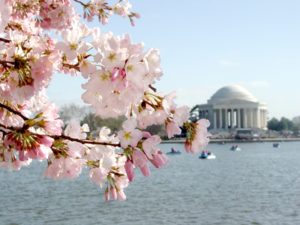
washington dc Take-a-stroll-along-the-Tidal-Basin-in-the-spring-to-catch-a-glimpse-of-the-Jefferson-Memorial-and-the-iconic-Cherry-Blossom-trees-courtesy-of-washington.org_The 2019 AAG Annual Meeting will take place from Wednesday, April 3 to Sunday, April 7, 2019. Sessions will occur in the Marriott Wardman Park and Omni Shoreham. The Annual Meeting will overlap with the celebrated National Cherry Blossom Festival, a four week festival held during the bloom of the area’s renowned Cherry Blossom Trees. The festival includes many free and family-friendly activities. In 2019, the festival will take place from March 21 – April 15!

Start planning your visit to Washington, DC.


ASSOCIATION NEWS

Meet the Editors of AAG Journals: Barney Warf and Blake Mayberry

Warf and Mayberry

To continue the AAG’s newest series on the editors of the AAG Journals, the editorial team from The Professional Geographer is featured this month in AAG News and through the AAG social media accounts. Barney Warf, professor of geography at University of Kansas, currently serves as the editor for The Professional Geographer and Blake Mayberry, assistant professor of geography at Red Rocks Community College, serves as the journal’s editorial assistant.

Find out more about the AAG Journals editors.


POLICY

Geography Policy Updates from AAG Policy Analysis

Image-118 capitol buildingAAG continues to monitor and update you on key issues that have a clear impact on geography or in which our discipline can serve as a valued stakeholder in shaping viewpoints and policy outcomes. Recent activities by the AAG include support for funding for the National Agriculture Imagery Program through a sign-on letter. In addition, AAG reports on a House Appropriations Bill, which provides significant increases for the National Science Foundation and the U.S. Census Bureau. AAG also lists information on its policy page to help you take action within your communities.

Keep up to date with US policies.


MEMBER NEWS

Erin Torkelson named 2018 Charlotte W. Newcombe Doctoral Dissertation Fellow

Erin Torkelson

AAG member Erin Torkelson has been named one of 21 Charlotte W. Newcombe Doctoral Dissertation Fellows for 2018 by the Woodrow Wilson National Fellowship Foundation. Erin is a Geography Ph.D. candidate at University of California, Berkeley, completing their dissertation, titled Taken for Granted: Geographies of Social Welfare in South Africa, which explores how an enormous and ambitious social welfare program has become a new means of dispossession in post-apartheid South Africa. The Newcombe Fellowship is the nation’s largest and most prestigious award for Ph.D. candidates in the humanities and social sciences addressing questions of ethical and religious values. Each Fellow will receive a 12-month award of $25,000 to support their final year of dissertation work.

More about the award.

Profiles of Professional Geographers

When it comes to landing a career in geography, Bishop and Shabram agree, the most important thing is to have experience either in the classroom to be an educator or in the field to work in international studies and research. Read more about the two working geographers interviewed this month, Kate Bishop an Evaluation Consultant at Winrock International and Visiting Assistant Lecturer at University of New England in the Department of Environmental Studies and Patrick Shabram a Professor of Geography at Front Range Community College on the Larimer Campus, in AAG’s Profiles of Professional Geographers.

Learn more about Geography careers.


RESOURCES & OPPORTUNITIES

Contribute to the AAG Guide to Geography Programs in the Americas

While the deadline for submitting materials for the 2018 Guide has passed, the AAG will continue to accept late submissions through Tuesday, June 12, 2018. Updated each academic year, the Guide is an invaluable reference for students and faculty throughout the world and includes detailed information on hundreds of geography programs in the U.S., Canada, and Latin America, including: program specialties, degrees offered, application requirements, curricula, faculty listings and qualifications, financial assistance, degrees completed, and more! Your program will also appear alongside hundreds of other top geography programs in our Interactive Map that students can use to explore and discover geography programs, with easy-to-use search tools to find programs by degree type, region, and program specialization.

List your program and find out more.

AAG Snapshot: Grants & Awards

AAG-Snapshots-logoCurious to know more about the more than 43 annual awards the AAG administers on an annual basis? Is there a colleague that is deserving of an AAG honor? The AAG Grants and Awards program offers a variety of ways to recognize deserving geographers for their commitment to the discipline, their students, and their communities as well as application programs for students to obtain assistance for travel or research. This AAG Snapshot provides insight into getting involved in the AAG Grants and Awards program from multiple avenues.

Learn more about Grants and Awards.

AGI Wildfire Management Webinar Video Available

On Wednesday, May 16, 2018, the AAG sponsored a webinar hosted by the American Geosciences Institute entitled “Adapting Wildfire Management to 21st Century Conditions.” A full video recording of the webinar is now available on the AGI’s website. Special guests for this webinar included Tania Schoennagel, Ph.D., Research Scientist, University of Colorado-Boulder; David Godwin, Ph.D., Southern Fire Exchange / University of Florida; and Vaughan Miller, Deputy Chief, Ventura County Fire Department.

Watch a recording of the webinar.

Call for Nominations for AAG Honors, AAG Fellows, and Committees

Please consider nominating outstanding colleagues for the AAG Honors, the highest awards offered by the American Association of Geographers, and the AAG Fellows, a program to recognize geographers who have made significant contributions to advancing geography. Individual AAG members, specialty groups, affinity groups, departments, and other interested parties are encouraged to nominate outstanding colleagues by June 30. Openings are also available to serve on either the AAG Honors Committee or the AAG Nominating Committee. Nominations of members who wish to serve on these committees are also due June 30.

More information about AAG Committees and Awards.

REP Conference and Mentorship Workshop for Early Career Scholars

The Race, Ethnicity, and Place Conference invites early career scholars from underrepresented groups to apply for the 2018 REP Mentorship Workshop. The one-day workshop will take place on Tuesday, October 23, 2018, in Austin, Texas the day prior to the conference. This workshop is funded by the National Science Foundation (NSF) to provide early career faculty and advanced PhD students with the opportunity to receive practical advice, strategies, information, and resources from experienced senior scholars. Workshop participants will continue their professional development by presenting their own research during the subsequent IX REP Conference, held from Wednesday October 24 – October 25, 2018. Accepted participants will have registration, meals and hotel expenses covered for both the workshop and the subsequent REP Conference. Eligible early career participants are PhD students with ABD status, recent PhD graduates, and assistant or adjunct faculty at US institutions.

Learn more about the REP and Mentorship Workshop.


IN MEMORIAM

Roger Barry

Roger BarryFormer Director of the National Snow and Ice Data Center and Distinguished Professor at University of Colorado, Roger Barry, passed away on March 19, 2018. Barry was 82 years old. Known for his work in polar and mountain climates, Barry received numerous academic accolades throughout his lifetime and contributed to the Intergovernmental Panel on Climate Change (IPCC) assessments in 1990, 1995, and 2001 as well as served as a review editor for IPCC Working Groups 1 and 2 in 2007, an effort that earned the IPCC the Nobel Peace Prize.

Read more.

Emilio Casetti

Emilio CasettiOhio State Department of Geography Emeratis Professor, Emilio Casetti, passed away on January 11, 2018. Casetti was a professor at Ohio State from 1963 until his retirement in 1993. Holding a doctorate from Northwestern University in Mathematical Modeling, Casetti contributed to the growth of geographical analysis techniques.

Continue reading.

Robert W. Kates

Robert W. KatesGeographer and sustainability scientist, Robert W. Kates, died the day before Earth Day, on April 21, 2018, at the age of 89. Though Kates had a varied career, most recently as Presidential Professor of Sustainability Science at the University of Maine, his work was grounded in big picture questions of sustainability and the question of “What is, and ought to be, the human use of the earth?” Kates has been honored with a variety of awards throughout his life including being the recipient in the first annual MacArthur Fellowship in 1981.

Read more.


PUBLICATIONS

Volume 4, Issue 1 of ‘GeoHumanities’ Online Now

GeoHumanities features articles that span conceptual and methodological debates in geography and the humanities; critical reflections on analog and digital artistic productions; and new scholarly interactions occurring at the intersections of geography and multiple humanities disciplines. There are full length scholarly articles in the Articles section and shorter creative pieces that cross over between the academy and creative practice in the Practices and Curations section.

Peruse the manuscripts.

New Books in Geography — April 2018 Available

New Books in Geography illustration of stack of booksLooking to expand your summer reading list with some of the latest geography related research? The April list of newly published books in geography is here! Browse titles covering a variety of topics such as the rebirth and rebuilding of New Orleans, extinction and evolution of plants and animals, climate change, and the expansion of the United States.

Browse the list of new books.

Read the May 2018 Issue of the ‘Annals of the AAG’

Annals-cvr-2017

The AAG is pleased to announce that Volume 108, Issue 3 (May 2018) of the Annals of the American Association of Geographers is now available. While the Annals features original, timely, and innovative articles that advance knowledge in all facets of the discipline, each issue highlights one article chosen by the editors. This month’s editors’ choice is Governing Dispossession: Relational Land Grabbing in Laos by Miles Kenney-Lazar.

Full article listing available.

May 2018 Issue of the ‘Professional Geographer’ Published

PG cover

The Professional Geographer, Volume 70, Issue 2, has been published. Of note to geographers interested in the Public Engagement theme for #AAG2018, the focus section in this issue is Out in the World: Geography’s Complex Relationship with Civic Engagement. The issue also includes short articles in academic or applied geography, emphasizing empirical studies and methodologies.

See the newest issue.

Spring 2018 Issue of ‘The AAG Review of Books’ Now Available

Volume 6, Issue 2 of the quarterly The AAG Review of Books has now been published online. In addition to scholarly reviews of recent books related to geography, public policy and international affairs, this issue features longer book review fora of Refugees in Extended Exile: Living on the EdgeThe Rise of the Hybrid Domain: Collaborative Governance for Social Innovation, and The Great Baseball Revolt: The Rise and Fall of the 1890 Players League.

Read the reviews.


OF NOTE

AAG Speaker Charles Ray Becomes Coast Guard’s Vice Commandant

On May 24, Admiral Charles Ray was sworn in as the 31st Vice Commandant of the U.S. Coast Guard. The Vice Commandant is the second-in-command of the Coast Guard’s 88,000-member workforce. Admiral Ray was nominated to the position in early March and confirmed by the Senate on May 16. In 2016, he was a panelist during the AAG Annual Meeting in San Francisco in a session entitled, “The American Arctic: The United States as an Arctic Power in Science, Technology, and Security.” At the time, Ray was serving as Commander of the Coast Guard’s Pacific Area, which oversees maritime and research support activities in the Arctic. The session was sponsored by the Polar Geography Specialty Group and also featured remarks from Fran Ulmer, Chair of the U.S. Arctic Research Commission.


GEOGRAPHERS IN THE NEWS

IN THE NEWS

Popular stories from the AAG SmartBrief


EVENTS CALENDAR

Submit News to the AAG Newsletter. To share your news, email us!
    Share

As the Student Goes, So Goes Geography

This marks my last presidential column. Serving as President of the Association over the past year has been a true pleasure and honor. I have appreciated the opportunity to represent you and the discipline of geography. As someone who first began attending AAG meetings as a young graduate student, I never dreamed that one day I would be allowed to serve in this capacity. I would have never made it this far if not for the generous support of my academic programs, employers, mentors, and professional organizations. Thank you.

For my final remarks, I would like to come back to where it started for me and for so many of us—the student experience. Students are a large and important community within the AAG, constituting over 40% of membership. Recognizing this fact, the Association recently took the long overdue step of creating a Student Councilor position with full voting power on governance issues. Please join me in congratulating Sarah Stinard-Kiel of Temple University, who was just elected to serve in this role.

Our Association is increasingly interested in helping students take full advantage of their membership to reach their educational and professional aspirations. The recent New Orleans meeting saw career mentoring sessions, a networking happy hour, and other professional development discussions organized for students. These programs and the Student Councilor position signal a greater valuing of student voices and experiences than in the past, although there is still more that can and should be done.

In this column, I suggest that we might benefit from recognizing the capacity of students to be an important “compass” for assessing the current health and direction of geography and planning the future of the discipline and the AAG. The concept of compass, while a convenient and evocative metaphor for geographers, is also meant to capture the role that students already play and can play further in helping direct—rather than simply follow—the trajectory of the profession. There are a number of innovative student initiatives within geography that suggest that this leadership is already happening and that perhaps we need to rethink the traditional faculty-student divide in terms of disciplinary impact.

Foundational to my remarks is a firm belief that we need to create more opportunities to listen and respond to the views and concerns of our student members—building upon the strides underway in the AAG. This should be done at the level of individual programs, departments, and knowledge communities as well as the wider discipline and Association. As an early attempt at this process, I solicited feedback from undergraduate and graduate students within the AAG to several open-ended questions. It is impossible to do justice to the many wonderful responses received, but I wish to focus on a few key findings that might serve as points of intervention in the future.

I conclude this column with a “hail and farewell,” welcoming our new AAG President, paying tribute to our retiring Executive Director, and encouraging members to remain vigilant in supporting their colleagues and programs as we continue to move through an uncertain time.

Students decorated a whiteboard with their school logo at the International Reception held during the 2018 AAG Annual Meeting in New Orleans.

Student as Compass

It might strike some as strange to think of students as a compass. After all, it is the job and responsibility of faculty and other experienced practitioners to guide, mentor and facilitate the learning and preparation process for students and early career professionals. As I argued in my first president’s column, effective mentorship of those new to the field is crucial to the health and sustainability of geography. But, I also suggested in that same column that mentorship must be a two-way process between junior and senior colleagues; any and all of us can learn from others regardless of rank, reputation, and years in the game.

In my own experiences as a department head and faculty member and in my travels as AAG President, I have seen numerous instances of students being important mentors and leaders in geography. The classroom is an obvious place where our students have a major guiding influence. Graduate student instructors are often well versed in active learning strategies and they increasingly ask their departments and programs for more organized opportunities to hone these skills. It is not by accident that some of our best recruiters of undergraduate student majors and minors are graduate student teachers. Given this fact, it is strange that AAG teaching-related awards appear to be restricted—at least in practice—to faculty instructors.

Students play a compass role in contributing to and protecting the intellectual vitality of geography. They are at the forefront of discovery, collaborating with faculty rather than merely assisting them. And, in many instances, students guide and drive research innovation themselves. They are frequent participants at academic conferences. I would dare to say that some of our AAG Regional Division meetings would struggle to survive if not for student attendees. Students —including undergraduates—have led the organization of their own geography meetings. One of the most impressive of these efforts is the South Dakota State Geography Convention, which will celebrate its 50th birthday in 2019. Student-led geography symposia are also found at Texas State UniversityUniversity of AlbertaUniversity College London, and my own University of Tennessee.

Students are also our compass in bringing key social and environmental problems and struggles to our attention and challenging us to do something about them. They are important voices of activism in a time when the stakes are high for effective science communication, evidence-based public debate, and social justice activism. The Youth Mappers Network is an impressive effort for cultivating student leaders who can leverage spatial data collection, analysis and visualization to support international development projects,crisis response, and public education about issues.

Students are proving to be passionate and determined advocates for the discipline. Students at the University of Nebraska-Lincoln recently protested a proposal to eliminate the school’s Geography Program. I have been told that this show of geography student support, along with a letters written by alumni, made a real difference in convincing administrators of the need to take Nebraska Geography off the cut list.

Other students, such as Sarah Diamond, have advocated for fairness and consistency in the graduate student experience in geography. In 2015, Sarah proposed to the AAG Council a “best practices” document to guide departments in their relationships with graduate students. Although the guidelines went unapproved by the Council, they hold promise in encouraging geography programs to develop policies to ensure that students receive, among other things, objective progress evaluations, access to formal processes for handling harassment, and clearly defined expectations regarding authorship and ownership of intellectual property.

Sarah’s proposal suggested a best practice worthy of adoption across the discipline—namely that students should be treated as “professionals and junior colleagues.” To see students in this way disrupts the traditional social hierarchy within education that has long contributed to faculty elitism and made students to feel inferior or second class. Thinking of students—even undergraduates to some degree—as early professionals assists us in fully recognizing and realizing the contributions they make in shaping the field. The idea of “student as professional and junior colleague” also communicates the high expectations that we have for this community to take seriously their work and studies in geography—all of which has a direct bearing on the future of our discipline.

During small-group career mentoring sessions at the 2018 annual meeting in New Orleans students gathered to speak with experienced geography professionals and faculty members about creating resumes and cover letters, finding jobs using geography skills, choosing a graduate program and developing networks.


Creating Moments to Listen and Act

The idea of the student as a compass is meant to recognize the value of paying greater attention to the power of students to define agendas and advance conversations within geography, but it is also about being responsive to the personal and professional needs of students as we work with them to plan and build programs, workplaces, and associations. Students are important compass bearings for faculty, reminders of why we teach and the importance of keeping curriculum, technology, and policies current as we prepare and support the new generation of professional geographers.

The prominence and relevance of our discipline is ultimately tied to the personal, social, and career well-being of students. Recent research encourages “timely and ‘actionable’ dialogue around how to better support” this sense of well-being of students. Scholarship by geographers, in particular, highlights the need for departments to create “caring collectives” that move beyond a focus only on the “individual actions of supervisors, or the individual quality of students.” Importantly, these collectives should address the non-academic as well as academic needs of students and mobilize a “distributed responsibility” for the care and support of students and wider disciplinary and academic communities.

One of the first ways of creating supportive and caring environments is to listen to students, using their feedback to think about where the discipline is going and where it needs to go in the future. I reached out several months ago to members of the AAG Graduate Student Affinity Group (GSAG) and the Undergraduate Student Affinity Group (USAG), asking them what anxieties they have about pursuing a career in geography, their perceptions about the effectiveness of their departments and the AAG as well as their ideas for new resources and tools to assist with their professional development. The comments of undergraduate and graduate students are collapsed because of space constraints, but clearly a full reporting would recognize that each group has its own unique perceptions and professional challenges. My hope is that even a brief summary of their comments might inform individual departments, the Council, and AAG staff as we support students and engage in further strategic planning and program development.

Perhaps expectedly, students expressed anxiety about landing employment after graduation, whether that is an academic position or one in another sector of the economy. In particular, among both undergraduate and graduate students, there is concern about finding non-academic employment, especially opportunities outside the area of GIS. There is also anxiety among students about geography being seen as less scientifically legitimate than other fields and hence hurting their employability. Graduate students especially worry about the neoliberal structure of universities, what they describe as a shrinking academic job market, and balancing the demands of work and life. Some students called for the creation of additional professional development seminars and workshops in their departments and at conferences to help them think through and strategize responses to these issues.

Students expressed satisfaction with and appreciation for their current programs and departments, but also note things that they would like to see improved. I used “departmental culture” in my initial prompt and students focused heavily on the things that compromise the culture in their programs. Problems identified include segregation and rivalries between sub-fields; a shortage of sufficient mentoring for students; a lack of engagement with the world outside academia; struggles to achieve gender diversity; and the difficulty in recruiting and retaining students and faculty of color. One respondent wanted her/his department to hold “town halls” in which students can air their concerns openly to faculty and administrators.

When asked about the effectiveness of the AAG, students gave high marks to the Association’s journals, annual meetings, public relations, policy involvement, free childcare at conferences, and networking opportunities. But respondents also had ideas about what needs to improve. Students would like to see AAG regional conferences more important and better attended. Several who provided feedback applauded the collective voice that Association has taken on political issues, but feel we can keep working in this area and make even stronger stands. Students appreciated the job resources provided by the AAG but they would also like to see a greater posting of non-academic jobs on its web site.

While students praised AAG’s ever expanding communication channels, they also asked that the Association use its organizational power to engage in more advertising of geography and getting geographers noticed by the public, other disciplines, and communities. A major concern among several students is the fact that geography remains a mostly white, male discipline. In the words of one respondent: “The AAG should find a way to productively engage this situation, including facilitating discussion on the degree to which it represents a problem, what the root causes are, and solutions.”

Finally, I asked undergraduate and graduate students about what additional resources, programs, or tools they would like to see developed by the AAG to assist them in their professional development and the overall health of geography. Their suggestions included: (1) periodic webinars on job searching, project management and consulting, and best practices in teaching, publishing, and writing grants; (2) podcast discussions with invited guests about timely research or the state of the discipline; (3) a regular column in the newsletter on career development for students and early-career professionals; (4) greater online job application materials, such as samples of cover letters and teaching philosophies specific to geography; (5) opportunities for conference attendees to get in touch with NGOs or other nonprofits in the city hosting the conference each year so that students can offer their services; and (6) more outreach to high schools and middle schools and greater pressure from AAG to have geography represented in state K-12 curriculum.

Many of the concerns identified by students mirror comments we receive from more senior colleagues, suggesting that students have a clear and quite sophisticated understanding of the challenges facing the discipline. Yet, students also identified concerns previously unknown to me. Importantly, they offered some “actionable” suggestions for supporting our student colleagues and improving the health of AAG and its geography programs.

Hail and Farewell

In July, Sheryl Luzzadder-Beach of the University of Texas at Austin begins her term as AAG President. Sheryl will do a fantastic job. She brings a great deal of vision, energy, and leadership experience to the post. Sheryl has a highly engaged and conscientious set of Regional, National, and Student Councilors with whom to work. Our Council meeting in New Orleans was especially productive and marked by many hours of discussion, debate, and decision-making.

Like me, Sheryl will benefit from hearing directly from AAG members and learning about your successes, needs, and frustrations. Only by knowing these experiences can she guide the Council and the wider Association to identify and address the issues affecting geographers across a range of institutional and vocational settings. I encourage you to reach out not only to Sheryl but to all AAG Councilors with your views, ideas, and concerns.

Executive Director Doug Richardson recently announced that he is transitioning to retirement; the 2019 AAG meeting in Washington D.C. will be his last in that capacity. A committee in charge of searching for a new executive director has been constituted and will soon begin its work. In his over 17 years of leadership, Doug has helped the AAG achieve great success in growing membership, creating a major endowment, enhancing the profile of the Association’s publications, achieving record-level annual meeting attendance, and advocating for the value of geography in research, education, and public policy circles. Please join me in congratulating and thanking Doug for his tireless and excellent service-leadership.

While we have much to be proud of, we cannot lose sight of the difficulties faced by fellow students, faculty, and other professionals in geography. Some have endured austere budget cuts, crippling natural disasters, the potential elimination of departments and majors, travel bans and inhumane border security, the trauma of harassment and discrimination, and state attacks on academic freedom, science, and progressive scholarship. Please consider lending your aid and solidarity to these embattled colleagues. If just one of us—individually, collectively, or programmatically—is under attack, then the entire discipline is weakened and vulnerable.

Please share your thoughts and experiences by emailing me (dalderma [at] utk [dot] edu) or share on Twitter #PresidentAAG.

— Derek Alderman

Professor of Geography, University of Tennessee
President, American Association of Geographers
Twitter: @MLKStreet

I wish to express special appreciation to Doug Allen, Lauren Gerlowski, Chris Hair, Shadi Maleki, and Mia Renauld for their assistance in collecting student feedback and preparing this column.

DOI: 10.14433/2017.0036

    Share

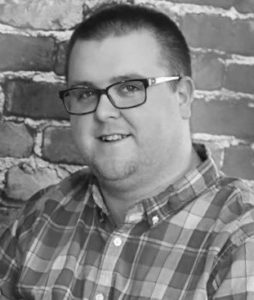
Meet the AAG Journals Editors – Barney Warf and Blake Mayberry

Barney Warf and Blake Mayberry work on The Professional Geographer, one of three academic journals published by the AAG. The Professional Geographer, published four times a year, was initially a publication of the American Society of Professional Geographers but became a journal of the American Association of Geographers in 1949 after the two organisations merged. The focus of this journal is on short articles in academic or applied geography, emphasizing empirical studies and methodologies. These features may range in content and approach from rigorously analytic to broadly philosophical or prescriptive. The journal provides a forum for new ideas and alternative viewpoints.

Barney Warf is the current Editor for The Professional Geographer and a Professor of Geography at the University of Kansas. His professional interests lie within the broad domain of human geography. Much of his research concerns information technology and telecommunications, notably geographies of the internet, including fiber optics, the digital divide, and e-government. He has also written on military spending, electoral geography, religious diversity, cosmopolitanism, and corruption. While most of his research involves secondary data, Barney’s most memorable research experiences have involved doing interviews in Latin America, particularly in Panama and Costa Rica, that added a human depth to the topics he researched. He has authored, co-authored, or co-edited eight research books, three encyclopedias, three textbooks, 50 book chapters and more than 100 refereed journal articles.

In addition to serving as editor of The Professional Geographer, he also currently serves as the editor of Geojournal, co-editor of Growth and Change, and edits a series of geography texts for Rowman and Littlefield publishers. For Barney, the best thing about being a journal editor is “reading about the diverse set of topics that authors write about. It’s truly astonishing the things people choose to research. Being an editor has exposed me to all sorts of issues and worldviews that I didn’t know existed.” For new authors, Barney encourages them to “keep an eye on important issues in the world like poverty and inequality. I worry that at times geography becomes overly ‘academic’ and too concerned with relatively obscure issues that have little bearing on the ‘real world.’”

Barney’s teaching interests include urban and economic geography, the history of geographic thought, globalization, and contemporary social theory. When asked about which area of geographic thought needs the most attention at this point in time, Barney believes “human geography today is at the confluence of several intersecting lines of theory, including poststructuralism, postcolonialism, feminism, queer theory, and the social construction of nature. I think the most interesting works are those that bring these perspectives into a creative tension with one another.”

Blake Mayberry is the editorial assistant for the Professional Geographer where his role is to help screen manuscripts initially for style and then to assign appropriate peer reviewers. Blake is also currently Assistant Professor of Geography at Red Rocks Community College where he edits an on-campus student-oriented scholarly journal, teaches in the Water Quality Management Program (a four-year program), and serves on the City of Golden Planning Commission.

Blake’s path to become a geographer has been appropriately circuitous, but he could start in the beginning: as a child he slept with a globe instead of a teddy bear! At times Blake wanted to be Indiana Jones, and at other times, Leonardo DaVinci. He found that geography was the best way to satisfy the scientific, analytical side of my brain, while also indulging my more romantic, artistic side. As a career, He also found geography to be extremely rewarding. Blake has worked as an urban planner in the Omaha metropolitan area, and with environmental groups conducting ecological restoration and advocating for the protection of native ecosystems.

Blake has done research on topics ranging from urbanization and water resources in the southwestern United States, to the Indian Removal Period during the nineteenth century. However, his real passion is for grasslands. His master’s thesis at the University of Nebraska-Omaha focused on the effort to create a national park in western Iowa’s Loess Hills in the aftermath of the Farm Crisis, specifically, the role that media play in natural resource conservation policy. Expanding on that theme, his dissertation research at the University of Kansas involved an ethnographic study of environmentalists working to restore prairies on the Great Plains and how cultural identity and sense of place influence people’s actions to remake the landscape. In his spare time Blake enjoys reading maps, drawing maps, and exploring places real-life places that he find on maps.

Blake encourages prospective authors to read as much as they can before publishing: “Engage with the literature, all of it, in depth, all the time, all throughout your research… as someone who sees a lot of manuscripts come and go at the PG, the really successful ones, and the ones that end up having the most impact on the discipline, are the those that engage deeply with theory, and from multiple perspectives. Resist the temptation to get into a ‘citation silo,’ where you only engage with the literature on your subject matter from the perspective of your PhD advisor and their former students. There is nothing more I love than to see a manuscript on spatial regression that cites Tuan! I tell my students that your written work reflects your effort, and I’d say the same about being a scholar – your lit review tells us whether you did your homework or not. Doing your homework will go a long way towards preventing revise and resubmits, and outright rejections.”

    Share

Robert Stoddard

The geography community at the University of Nebraska Lincoln lost a treasured colleague when Robert H. Stoddard died on May 21, 2018 at age 89.

Stoddard was born in Auburn, Nebraska, on August 29, 1928, the son of Hugh Pettit Stoddard and Nainie Lenora Robertson Stoddard. He married Sally E. Salisbury in 1955 and had three children: Martha, Andrew, and Hugh.

He started his studies at Nebraska Wesleyan where he earned a bachelors in 1950. Stoddard then earned his master’s in 1960 at the University of Nebraska. He received his doctorate at the University of Iowa in 1966 and joined the faculty at the University of Nebraska the following year. He remained there for 40 years, until his retirement in 2006. Altogether, Stoddard has taught for more than 40 years at Nebraska Wesleyan University and the University of Nebraska-Lincoln.

Stoddard was a specialist in the Geography of Asia, publishing especially on the geographic patterns of pilgrimages and sacred sites. He put his geography into practice by travelling widely with his family throughout Asia (and beyond), including extended stays in India and China. Bob had a strong sense of social justice and a keen appreciation of the many legitimate ways to live in this diverse world. Stoddard also taught high school in India (1952-57), and was Visiting Professor at Tribhuvan University in Kathmandu, Nepal (1975-76), and the University of Columbo in Sri Lanka (1986).

Dr. Rana P.B. Singh notes that “Bob was a pioneer in the geographic study of pilgrimages. He commenced his focus on the geography of religion with a Master’s thesis on the locations of churches in a Nebraska county (1960) and a Doctoral dissertation on Hindu holy sites in India (1966). He was co-editor of Sacred Places, Sacred Spaces (1997) and the GORABS chapter in Geography at the Dawn of the 21st Century (2003). His visits to many holy places in India have included the Himalayan sites of Kedanath and Gangotri.”

In addition to much productive research, many scholarly publications (notably Field Techniques and Research Methods in Geography, 1982), and unstinting university service, he also served his local community as a member of the Lincoln-Lancaster Planning Commission (1974-78). He was also a dedicated teacher and mentor, and these qualities were recognized when the National Council for Geographic Education gave him its Distinguished Teaching Award in 1992.

A collection of essays was published in 2016 in honor of Stoddard’s years of exemplary service. A copy of “Space, Region & Society: Geographical Essays in Honor of Robert H. Stoddard” is available online at https://digitalcommons.unl.edu/zeabook/48.

    Share