2016 Miller Award

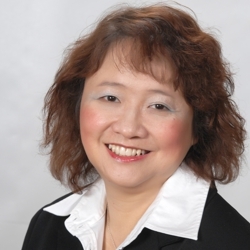
The AAG is pleased to announce that the winner of this year’s AAG E. Willard and Ruby S. Miller Award is Professor Mei-Po Kwan from the Department of Geography and Geographic Information Science, University of Illinois at Urbana-Champaign. This award recognizes members of the Association who have made truly outstanding contributions to the geographic field due to their special competence in teaching or research.
Kwan is one of the most distinguished and influential scholars in the discipline of geography today. Her broad research interests span environmental health, sustainable cities, human mobility, urban/social issues in cities, and GIScience, and she has made ground-breaking contributions to the discipline of geography in each of these areas.

One of the defining characteristics of her research is that it transcends and eschews boundaries and divides, both within our discipline and between geography and other disciplines.

Kwan is a highly productive scholar, having edited or co-edited 31 volumes (including two encyclopedias, five books and 24 journal special issues) and published over 150 peer-reviewed journal articles and book chapters. Her publications on time-activity analysis, feminist geovisualization, hybrid geographies, and the uncertain geographic context problem are among the most widely cited papers within the disciplines of human geography and GIScience.

She is internationally renowned for her work and has delivered approximately 170 keynote addresses and invited lectures in 18 countries. These presentations were given at major international conferences and in schools and departments of many different disciplines.

Kwan has received major research grants from sources including the National Science Foundation, the National Institutes of Health, the National Center for Geographic Information and Analysis, and the U.S. Department of Transportation.

Kwan’s record of research accomplishment, impact, and contribution, both within the discipline of geography and beyond, makes her a most outstanding and deserving winner of the Miller Award.

Funding for the award comes from the estate of Ruby and Will Miller. Will started the Geography Department at Pennsylvania State University while Ruby became the maps librarian, developing the collection and teaching classes on the use of maps. After retirement they co-authored more than 20 books and continued to travel around the world. Will was also founder of the Pennsylvania Geographical Society and played important leadership roles in the American Association of Geographers, American Geographical Society, and the National Council for Geographic Education.

    Share

2016 Mel Marcus Fund for Physical Geography

The AAG is pleased to announce that the Mel Marcus Fund for Physical Geography is awarded in 2016 to Hannah Cooper from the Department of Geosciences at Florida Atlantic University, Boca Raton. She receives a grant of $2,000 to support field research in Everglades National Park.

 Hannah is currently a third-year PhD student developing innovative models for sea level rise applications in the coastal Everglades.

Accurate ground elevation data is vitally important in the low-lying Everglades for various reasons including emergency planning and ecosystem management. However, the two best elevation datasets that are currently available have shortcomings; one did not include enough checkpoints to provide fine-scale mapping while the other lacked an accuracy assessment.

Hannah’s field survey will collect the survey-grade GPS and total station elevation measurements which will be used to validate and calibrate the LiDAR elevation data for different coastal vegetation substrate.

The data collection will focus on the coastal Flamingo district of Everglades National Park, an area consisting of estuarine forested wetland, estuarine scrub/shrub wetland, and estuarine emergent wetland.

Three colleagues from the Department of Geosciences at Florida Atlantic University will be involved in the fieldwork: Assistant Professor Dr Caiyun Zhang, fellow doctoral student Matt Sirianni, and graduate student Pramod Pandey.

The field experience will enable team members to learn new skills in field survey mapping tools and data post processing. They will also gain hands-on experience in the remote coastal Everglades learning about this unique habitat.

The objective of the Mel Marcus Fund for Physical Geography is to carry on the tradition of excellence and humanity in field work espoused by Dr. Melvin G. Marcus. Marcus was an internationally-recognized physical geographer and served as president of the Association of American Geographers in 1978-79. He was committed to making physical geography accessible to everyone with a love of the outdoors, including women, minorities, and the less-privileged. He created and oversaw programs that emphasized excellence in field studies and the translation of field studies into scholarly achievement. He took students on research expeditions to the Yukon and Alaska, the Himalayas, the Southern Alps, the Colorado Rockies, and the Grand Canyon, as well as many other locations. These expeditions were often life-transforming experiences for those students fortunate enough to participate. This award in his name enables faculty to involve students in field-based physical geography research in challenging outdoor environments.

    Share

2016 Anne U. White Fund

Every year the AAG provides funding to enable a member of the AAG to take their domestic partner on a research trip, regardless of them having any formal training in geography. One recipient was chosen this year from among eight applicants and receives $1,200.

Shouraseni Roy, Associate Professor in the Department of Geography and Regional Studies at the University of Miami, is conducting a research project entitled “Linking Gender Inequalities/Inequities with Impacts of Climate Change in the Global South.” The study explores how the detrimental impacts of climate change in the Global South affect women more than men.

The first stage of Shouraseni’s research is an analysis of secondary data. Using several variables from the 2015 Human Development Report and the World Bank’s Global Gender Gap Report, she will identify the spatial clustering of low levels of female education. She will then set this alongside data from the climate vulnerability index to reveal the different relationships that exist in different points in space.

The second stage of her research is to examine how regional scale spatial patterns relate to local level processes. In the Indian cities of New Delhi and Mumbai, she will meet with various NGOs working in women’s empowerment and environment. She hopes that her findings will expand the debate on the gendering impacts of climate change and help in effective gender mainstreaming in policy formulation.

The funding will enable Shouraseni’s partner, Oliver Martin, a Marketing Technical Adviser for Federal Express, to join her during her fieldwork in India.

The joy of working alongside one’s partner was something very dear to Anne Underwood, wife of geographer, Gilbert White. After their youngest child went off to boarding school, Anne joined with Gilbert in field studies of domestic water use in East Africa. This was the first in a series of studies on water supply and health that she completed independently or in collaboration with others.

In 1989, Gilbert and Anne donated a sum of money to the American Association of Geographers to establish the Anne U. White Fund specifically to support accompanied field research. Gilbert White and other donors subsequently added substantially to the original gift.

    Share

2016 AAG Research Grants

Every year the AAG provides small grants to support research and fieldwork that address questions of major importance to the discipline. Three recipients were chosen this year from among 15 applicants and will each receive $500.

Laura-Anne Minkoff-Zern is Assistant Professor of Food Studies in the Department of Public Health, Food Studies and Nutrition at Syracuse University, as well as an Affiliated Faculty in the departments of Geography, and Women’s and Gender Studies. She has received support for a project entitled “The New American Farmer: Immigration, Race, and the Struggle for Sustainability.” This research explores the transition of immigrant Latinos from farmworkers to farm owners, looking at racial discrimination, agrarian identity, and inclusivity in food and farming in America. She is comparing four sites across the United States, each of which has a significant and unique group of Latino farmers who have struggled against multiple levels of inequality to start their own farm businesses. The funds from the grant will be used for travel to her final fieldwork location of Yakima, Washington in spring 2016 to conduct interviews.

Margaret Sugg is an Assistant Professor in the Department of Geography and Planning at Appalachian State University. She has received support for a project entitled “A multiscale approach to assessing heat-health vulnerability.” With a large number of hospitalizations and deaths each year related to heat exposure, this research seeks to identify individual to regional patterns of heat-health vulnerabilities and the thermal environments that control these patterns. The funds from the grant will be used to purchase 12 Maximum Integrated thermocron ibutton Devices which measure the ambient temperatures experienced by wearers both indoors and outdoors. Students from Appalachian State University will test the devices before they are given to heat-vulnerable populations such has outdoor laborers and high school athletes.

Sophie Webber is a Postdoctoral Research Fellow in the Department of Geography at University of California, Los Angeles. She has received support for a project entitled “Climate Service: Commercializing science for urban adaptation and infrastructure planning.” This research explores the relations between states, markets, and science in the context of climate change, particularly the commercialization of climate science through ‘climate services.’ She will be looking at major global climate service governance organizations such as the World Bank and the Climate Services Center, conducting key informant interviews, analyses of policies and documentation, and participant observation at conferences and meetings. The funds from the grant will be used for travel to Washington DC and New York City to study these organizations that produce climate services.

The AAG Research Grants are competitively awarded to scholars to provide direct expenses for research or fieldwork, excluding master’s or doctoral dissertation research.

    Share

2015 AAG Book Awards

The AAG’s three annual book awards recognize outstanding works written by geographers and published by during the previous year. 

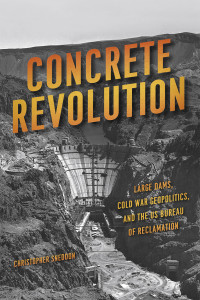
The Meridian Book Award for Outstanding Scholarly Work in Geography goes to a volume that makes an unusually important contribution to advancing the science and art of geography. This year’s winner is Concrete Revolution: Large Dams, Cold War Geopolitics, and US Bureau of Reclamation by Christopher Sneddon. It was published in 2015 by the University of Chicago Press.
The story of the Bureau of Reclamation and the damming of America’s rivers has been told before, but never from the fresh and provocative perspective found in Concrete Revolution. As told by Sneddon, this is a story that transcends the United States and led to the redesign of drainage systems across the developing world, as American dam building became an instrument of Cold War rivalry for the affection of peoples in the emerging economies of the non-aligned world.  It is also a story that takes us to the philosophical heart of modernity and its radical reimagining of human relations with the natural world.  All of this Sneddon does in a style that is accessible and engaging, but also serious and masterly.

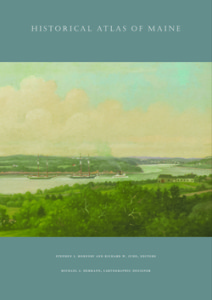
The Globe Book Award for Public Understanding of Geography is for a book that conveys most powerfully the nature and importance of geography to the non-academic world. This year’s winner is the Historical Atlas of Maine, edited by Stephen J. Hornsby and Richard W. Judd, with the Cartographic Design by Michael J. Hermann. It was published by the University of Maine Press in 2015.

This is one of the most significant atlases to appear in the United States in recent decades. It covers the period from the end of the last ice age to AD 2000, telling the history of Native peoples, European exploration and settlement, the American Revolution, Maine statehood, industrial development, and the rise of tourism and environmental awareness. Almost every plate in the atlas is based on new research. The creation of the atlas, which took 18 years from conception to publication, was envisioned as an outreach project from the University of Maine to the state’s residents, visitors, and the general public. The result is not only a unique interpretation of Maine, but also a splendid visual record of the state’s history.

The John Brinckerhoff Jackson Prize is awarded to a serious but popular book about the human geography of the contemporary United States that conveys the insights of professional geography in language that is interesting and attractive to a lay audience.

This year’s winner is Hispanic and Latino New Orleans: Immigration and Identity since the Eighteenth Century by Andrew Sluyter, Case Watkins, James P. Chaney, and Annie M. Gibson. It was published in 2015 by Louisiana State University Press.

The four authors of this book seamlessly combined their expertise and varied perspectives to produce a well-written account of a little-known aspect of New Orleans’ cultural and historical geography. Thanks to their careful study of census records, archival research, interviews, and other sources, we now know that Hispanic and Latino individuals and communities have been part of the city throughout its history. Previous assumptions about the basic similarities of Latino and Hispanic immigrants become much more nuanced in this study, as the authors explain the diversity of Spanish-speaking immigrants from Mexico, Latin America, South America, and the Caribbean – people who made distinct impressions on their respective neighborhoods and contributions to the city’s rich culture. These immigrants’ experiences also varied significantly depending on many factors, not least when they came. The book also contributes to the emerging literature on Hispanics in the South and the cultural diversity of Hispanic and Latino immigration from the period of early European contact up to the present.

The AAG congratulates each of the winners and would like to thank the three book award committees who considered this year’s nominations.

The AAG Book Awards will be conferred during the AAG Awards Luncheon on April 2, 2016, at the Hotel Nikko in San Francisco.

    Share

AAG Provides Awards to Students from Community Colleges

Three students were selected to receive an AAG award for students from community colleges. Every year the AAG provides support for students from community colleges, junior colleges, city colleges, or similar two-year educational institutions.

Community college students who plan to transfer to a four-year institution to major in geography in the coming academic year applied for the 2016 Darrel Hess Community College Geography Scholarship. Eligible students must demonstrate scholastic excellence and academic promise. The scholarship provides students with $1,000 for educational expenses.

This year’s honorees include Eric Sheley of Front Range Community College in Colorado; and Leann Silvia of the College of Southern Nevada.

Eric Sheley decided to return to college after working 15 years in various jobs. His plan was to study History until he took a geography class. He said of his experience, “My mind was blown!” Today, Sheley is absolutely passionate about geography, has attended every geography class available at the college, scored top grades, and participated in all geography-related extra-curricular activities.

Eric will transfer to the University of Northern Colorado in the fall of 2016 where he will pursue a bachelor’s degree in geography. He will complete a geography internship over the summer. Sheley hopes to study more about food and agriculture, as well as different aspects of cultural geography. His contagious enthusiasm for geography, commitment to his studies, the quality of his work, and his contributions in the classroom and beyond, made him a standout candidate for faculty at Front Range Community College to nominate for this scholarship.

Leann Silvia, also a 2016 honoree, had a long list of possible college majors and wondered what she wanted to do with her life until she took a physical geography course at the College of Southern Nevada and completely fell in love with the subject. Silvia says, “I have yet to stumble upon another discipline area that excites, challenges, inspires, and fuels my curiosity as much as geography does, so effortlessly, on a daily basis.”

Leann will transfer to the University of Nevada, Reno in the Fall of 2016 to pursue a bachelor’s degree in geography. However, she has her sights set on a doctorate and a career where she can use her passion for nature to make a positive impact on the planet. Faculty at the College of Southern Nevada had no hesitation in nominating Leann for this scholarship; she is a natural student who will bring enthusiasm, positivity and creativity to her new university department.

Darrel Hess, coauthor of the textbook Physical Geography: A Landscape Appreciation, published by Prentice Hall, funds the Darrel Hess Community College Geography Scholarships. 

The AAG Community College Travel Grant provides financial support for outstanding students to attend the AAG Annual Meeting, covering conference registration fees and providing travel expenses, as well as complimentary membership in the AAG for one year. Darrel Hess and Robert and Bobbé Christopherson generously provide these travel funds.

This year the grant is awarded to Jennifer Lumpkin from Sinclair Community College in Dayton, Ohio, who has stood out among her classmates on geography and GIS courses. She has shown a particular talent for geospatial technologies, quickly mastering the more technical aspects of GIS, and applying her skills to projects in the local area.

On a mapping project in the Wright Dunbar neighborhood of Dayton, Lumpkin proved her leadership credentials as she forged a connection between community members and students working on the project, ensuring that local people were fully involved and ensuring that the project would have a real impact on the area.

Lumpkin also shone on a service-learning project that focused on the mapping and interpretation of visitors to sites along the Aviation Trail, a self-guided heritage tour in the Dayton area. She presented about this project at the annual meeting of the AAG East Lakes Regional Division at Kent State University in October 2015 and was awarded second place in the undergraduate paper competition.

Jennifer has a great enthusiasm for geography, particularly for all things related to mapping, and a determination to use mapping to make a difference in her local community. Attending the AAG Annual Meeting in San Francisco, where she will proudly represent Sinclair Community College, will enrich her geographical interests.

    Share

AAG Announces Inaugural Award for Program Excellence

The AAG is pleased to announce that the Department of Geography at DePaul University will receive the inaugural AAG Award for Program Excellence, which was established to recognize geography programs at U.S. colleges and universities. This award honors non-PhD granting geography programs that have significantly enhanced the prominence and reputation of geography as a discipline, and demonstrated the characteristics of a strong and engaged academic unit.

The Department of Geography at DePaul University, housed in the College of Liberal Arts and Social Sciences, offers a BA in Geography. DePaul’s dynamic and innovative department has seven tenure-track faculty members along with two to three adjunct faculty members. Formed in 1948 as a single-person academic unit, the Department was threatened with closure in the late-1990s. In response, the Department set out an ambitious plan to rejuvenate and transform its institutional position and departmental health over the past 15 years.

The Selection Committee noted the success that the Department of Geography at DePaul has had in: 1) diversifying its faculty membership and student body; 2) developing a curriculum that advances urban social justice, community service, and geotechnology; 3) promoting Geography both on and off campus in Chicago; 4) taking a leadership role in the West Lakes division of the AAG; 5) engaging in local, national and international scholarly debates and research; 6) attracting talented students who later pursue graduate study in geography or geography-related careers; and 7) creatively using social media to maintain and advance alumni relations and public outreach.

The DePaul program’s application was marked by effusive letters of praise and support from current students, alumni, the Dean’s office, and colleagues outside the university. The Geography Department at DePaul is led by Dr. Euan Hague, who serves as Chair.

The Selection Committee also chose to grant an honorable mention to the Geography Program within the Department of Geography-Geology at Illinois State University. Housed in the College of Arts & Sciences, the program offers BA and BS degrees in Geography with four possible thematic concentrations and a Geography Teacher Education Major. Illinois State University had the first stand-alone Geography department in Illinois, dating back to 1902, and was among the very first in the country. Now residing in a blended department with Geology and Hydrogeology, the Geography Program embraces shared governance built upon consensus-building, participative leadership, accountability, open communication, and a commitment to diversity.

With eight tenure tenure-line faculty members who balance scholarship, teaching, and outreach activities, Illinois State Geography’s curriculum is deeply rooted in liberal arts tradition while also demonstrating innovations in field-based education, internationalization of learning, and individualized undergraduate research. Every major student is required to engage in off-campus experiential learning and career preparation and the program’s geospatial initiative, called GEOMAP, is a frequent source of collaborations for faculty and students. The Illinois Geographic Alliance has been headquartered on campus since 1987. The Geography-Geology Department at Illinois State is led by Dr. Dagmar Budikova, who serves as Chair.

The AAG Award for Program Excellence will be presented in alternate years to bachelor’s programs and master’s programs with the inaugural 2016 award going to a department that offers no higher than an undergraduate degree.

    Share

2016 AAG Susan Hardwick Excellence in Mentoring Award: Kenneth Foote

The AAG bestows an annual award recognizing an individual geographer, group, or department, who demonstrates extraordinary leadership in building supportive academic and professional environments and in guiding the academic or professional growth of their students and junior colleagues.

The Award was launched last year, and its inaugural awardee was the late Susan Hardwick. It has since been renamed in her honor and memory.

Dr. Kenneth E. Foote has been selected for this Award in recognition of his career-long dedication to not only being a mentor, but to helping others be successful mentors themselves.

His co-leadership in the AAG’s Enhancing Departments and Graduate Education (EDGE) and resultant books and articles uncovered and disseminated effective means of mentoring graduate students. His launch, organization, and dedicated hosting of the Graduate Faculty Development Alliance (GFDA) workshops (2002 – 2015) and of the Department Leadership workshops (2010 – 2015) have included sessions on working with and mentoring graduate students, as well as approaches to mentoring junior faculty.

Foote has worked diligently to mentor department chairs and other leaders, and he has tirelessly promoted and encouraged colleagues along their career paths. He constantly shows and acts upon his desire to transform the academy through mutually supportive environments for faculty and students of all backgrounds.

It is for these and so many more reasons that we are pleased to recognize Dr. Kenneth E. Foote as the AAG’s 2016 Susan Hardwick Excellence in Mentoring Awardee.

    Share

2016 AAG Enhancing Diversity Award: Lawrence Estaville

The AAG is pleased to bestow an annual award honoring geographers who have pioneered efforts toward, or actively participated in efforts toward, encouraging a more diverse discipline over the course of several years.

Dr. Lawrence Estaville has been selected for this Award in recognition of his career-long dedication to championing greater inclusion of a wide range of minorities at various institutions and in the discipline of Geography.

He has served as a mentor and professionally active and creative leader, including developing a Geography Department at Clemson University, an MA Program at UC Fresno, and developing a lecture series focused on women and minorities in the 1980s and 1990s, not a common practice in those years. At the AAG, Estaville led the establishment of the AAG Ethnic Geography Specialty Group and participated in the AAG’s inaugural Diversity Task Force, as well as co-authoring their final report. In addition, he has served on the Board of the Race, Ethnicity, Place Conferences, raising funds and contributing to their growing success.

Estaville’s career includes service to a range of diverse and underrepresented minorities, from teaching geography to dyslexic students early in his career, to hiring eight minority women into tenure track positions at Texas State University, to mentoring numerous minority scholars of great talent, to publishing seminal works that address diversity in pedagogy and planning for university administrators and faculty.

It is with great pleasure that we therefore recommend Dr. Lawrence A. Estaville as the 2016 AAG Enhancing Diversity Awardee.

    Share

Matt Rosenberg to Receive AAG Media Achievement Award

The 2016 AAG Media Achievement Award is presented to Matt Rosenberg in recognition of his success in promoting greater understanding of geography through his work in the web and in social media. He has developed his website geography.about.com into one of the most popular in the internet devoted exclusively to geography. Through this work as well as his books and outreach activities, Rosenberg has become an outstanding spokesperson for geography, geographical literacy and geography education.

Matt Rosenberg, About.com

Matt Rosenberg is awarded the 2016 Association of American Geographers Media Achievement Award in recognition of his success in promoting greater understanding of geography through web and social media, as well as through his other publications and work. Over a period of 18 years, Matt’s hard work and enthusiasm built one of the most popular sites in the internet devoted exclusively to geography.

In addition to his site at geography.about.com, Matt has published two books about geography, including The Handy Geography Answer Book. Matt has been featured on PBS and NPR and has conducted many interviews about geographical topics for television, radio, and newspapers. In October 2006, Matt was awarded the Excellence in Media Award from the National Council for Geographic Education for his contributions over the years to the discipline of geography and to geography education.

Mr. Rosenberg holds a master’s degree in geography from California State University, Northridge and a bachelor’s in geography from the University of California, Davis. His master’s thesis was natural hazards in Ventura County, California; a topic close to Matt’s other professional work as a disaster manager for the American Red Cross. Matt has served on more than two dozen major disaster relief operations around the United States. He has traveled widely across North America, Europe, Asia, Africa, and the Middle East and is an active member of the Association of American Geographers and the National Council for Geographic Education.

For his exceptional contributions to geography in the web, for his engagement with media, and his contributions to geography education and the promotion of greater public understanding of geography, we honor Matt Rosenberg.

    Share