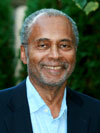
Michael Solem to Receive AAG Gilbert Grosvenor Geographic Education Honors
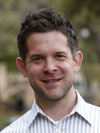
The 2015 AAG Gilbert Grosvenor Geographic Education Honors is presented to Dr. Michael N. Solem for advancing geographic education through his research, writing, and leadership. As Director of Educational Research and Programs at the Association of American Geographers, Solem emerged as a national and international leader in creating, guiding and shaping educational and outreach programs which have had a lasting impact on our discipline.
A citation for Michael Solem follows.
Michael N. Solem, Association of American Geographers
Solem
Dr. Michael N. Solem is awarded the Association of American Geographers 2015 Gilbert Grosvenor Geographic Education Honors in recognition of the leadership role he has played at the national and international levels in advancing educational research and practice across the entire discipline. Currently the AAG’s Director of Educational Research and Programs, Solem has emerged as one of the preeminent scholars of geography education in the world today. Through his work as a writer, grant developer, principal investigator, project manager, administrator, facilitator, and advisor, Solem is recognized as one of geography’s key public advocates of national and international educational reform and innovation.
Solem’s contributions signal both great personal accomplishment and exceptional promise for geography’s future. His insights into the relationships among globalization, citizenship and geographic literacy have helped many to clarify their thinking about the challenges we face in advancing geographic education in the very complex 21st century educational environment. In this regard Michael’s research, conference presentations, many curricular related grants and publications have been highly significant and timely for geographers and social scientists across the disciplines. Since 2003, he has been PI or Co-PI on 13 grants, 10 from the National Science Foundation, to support these projects. It is notable that Solem has maintained his connection to the university environment through an academic appointment at Texas State University where he continues to teach and interact with colleagues and students.
Solem’s efforts to promote professional development and career preparation within geography have also been exceptional. Through books such as Aspiring Academics; Teaching College Geography; and Practicing Geography, as well his participation in the Geography Faculty Development Alliance workshops, Solem has helped to make the AAG a leader in advancing professional development as a key element of disciplinary life. Similarly, his work as a co-director of the new National Center for Research in Geography Education, as a member of the Geography Education National Implementation Project, a member of the steering committee of the Education Committee of the IGU, and as a member of the Roadmap to Geographic Literacy project is having a lasting impact across primary, secondary and higher education.
Dr. Solem has become one of geography’s key public advocates. His ability to speak with authority, depth and clarity on educational issues has had a remarkable influence on contemporary geography, and its future.
Share
Post
AAG Ronald F. Abler Distinguished Service Honors: John Frazier, Rita Gardner
The AAG is pleased to award the 2015 AAG Ronald F. Abler Distinguished Service Honors to Dr. John Frazier and Dr. Rita Gardner.
This award will be presented to Frazier for his sustained and exceptional dedication to furthering the public good through applied academic and intellectual pursuits. Frazier has worked consistently and steadily to encourage departments and universities to recognize the importance of applying scholarship to practice. The applied geography conference which he was instrumental in bringing to fruition is now in its 35th year. More recently he has expended similar energies toward funding and organizing biennial Race, Ethnicity, and Place conferences which succeed largely because of his vision to preserve a place for intellectually divergent ideas on the some of the most vexing and complicated issues in the world today.
Gardner receives the Distinguished Service Honor in recognition of the leadership and support for the discipline of geography worldwide. As Director of the Royal Geographical Society with the Institute of British Geographers since 1996, Gardner has worked tirelessly to advance geographic research; improve geography at all levels of education; broaden outreach to diverse publics; and promote the interests of geography on numerous national and international committees.
Citations for John Frazier and Rita Garner follow.
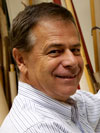
John Frazier, Binghamton University, State University of New York
Frazier
Professor John Frazier was selected for the 2015 AAG Distinguished Service Honors from a field of noteworthy candidates because of the enthusiastic and compelling support he received from a large and diverse group of academics and practitioners.
A number of common themes stand out in their endorsement. They consistently note his “unselfish commitment to advancing knowledge and serving others through creative initiatives and sustained engagement, . . . he rarely puts himself in the forefront, but by actively following through on good ideas, he has had a transformative impact on our discipline and our profession.” “The mark he has made on the reputation of the Department of Geography at Binghamton University, which under his guidance has become one of finest Masters level departments in the country is worthy of note not by just by his students – many of whom wrote letters in support of his nomination – but by the University system which last year, awarded him the Chancellor’s Award for Excellence in Distinguished Service. Along with this honor, he was promoted to the rank of University Distinguished Service Professor.
His work mentoring students and early career geographers has made geography a far more diverse and welcoming field for racial, ethnic and foreign-born minorities,” due in large part to his pragmatic approach, which inspired many young professionals to use geographic skills and toolkits to make a difference in the world.
In addition to his work in the academy, Frazier has also been appointed a member of several interdisciplinary teams involved with local and regional comprehensive planning agencies, HUD, and the U.S. Census Bureau. Through this work, he has been a champion of geography and helped to educate many outside the field of its value – and centrality – in understanding topics such as gentrification, epidemiology, migration, and housing.
Frazier has also served as a National Councillor for the Association of American Geographers and a Councilor for the American Geographical Society. The AGS strives to connect geographers in academics, government and business. Given his critical role in outreach to applied geographers, Dr. Frazier has been particularly active in the AGS Council to make certain the work of applied geographers is promoted and recognized. His work was recognized by the Association in awarding him the James Anderson medal for Applied Geography.
One supporter noted that remarkably few geographers have been able to make significant contributions to more than one subfield within the discipline. Dr. Frazier has been a founder, leader, and energizer of two: one in applied geography, and one in race and ethnicity. . . his record reflects someone with a patient, enduring commitment to the discipline, to teaching, and to addressing pressing social problems. When we look back on geography some decades from now, and in doing so see discipline that supports those who give unselfishly and generously to the discipline, we will be pleased that we recognized John Frazier for his tireless efforts.
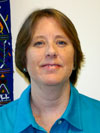
Rita Gardner, Royal Geographical Society with the Institute of British Geographers
Gardner
Dr. Rita Gardner is awarded the 2015 Association of American Geographers Ronald F. Abler Distinguished Service Honors in recognition of the leadership and support for the discipline of geography worldwide that she has provided as Director of the Royal Geographical Society and Institute of British Geographers especially her promotion of geography at all levels of education, her outreach to diverse public, and her service on national and international committees.
Gardner has served as Director of the Royal Geographical Society and the Institute of British Geographers since 1996, the internationally respected learned society and professional body for geography and geographers in the UK. Under her leadership the Society has modernized and expanded its activities reaching out to more than 16,000 members and fellows from 160 different countries as well as millions of people worldwide through research, expeditions, education and public engagement.
Among her many accomplishments are the Action Plan for Geography to support and expand geography in UK schools and projects to engage public audiences in geography including public understanding of Britain’s geography from the air and walking and community partnerships and programs for diaspora groups and young people from disadvantaged backgrounds. She has also been a strong supporter of research, raising funds for early career grants, and encouraging greater awareness of the value of geographic research to government.
Her support of research and fieldwork reflects her interests and achievements as geomorphologist prior to her appointment with RGS holding academic posts at King’s College London and Queen Mary College. Her research and publications include results from international field research programs studying environmental change, including soil erosion in Nepal and dunes in India.
Dr. Gardner has served on many national and international committees including for the British Antarctic Survey; the Academy of Social Sciences; and British Council. She was Secretary General of the European Association of Geographical Societies and the advisor for Geography to the UK Secretary of State for Education and Skills. She was awarded a CBE (Commander of the British Empire) for ‘Services to Geography’ in 2003. She holds Honorary Doctorates from the Universities of Gloucestershire and Southampton, and an Honorary Fellowship of Queen Mary College London.
Share
Post
Elizabeth Oglesby to Receive AAG Gilbert White Public Service Honors
In recognition of her contributions to human rights practice as well as research and teaching through theoretically-informed ethnographic research and the courage to share her results in the most public of forums, the Association of American Geographers is pleased to confer the Gilbert White Public Service Honors Award to Dr. Elizabeth Oglesby.
A citation for Elizabeth Oglesby follows.
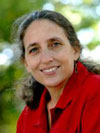
Elizabeth Oglesby, University of Arizona
Oglesby
Dr. Elizabeth Oglesby is awarded the Association of American Geographers 2014 Gilbert White Public Service Honors in recognition of her contributions to human rights research and practice. Her ethnographic fieldwork began in the 1980s and has led to uniquely valuable testimony on the displacement and violence suffered by Guatemalan Mayans. She has made it a point to collaborate and disseminate her research locally; through teaching and coordinating a study abroad program, she has also has introduced hundreds of students to human rights issues. Her integration of academic research and teaching with public service is truly exemplary.
As a research assistant to anthropologist Beatriz Manz, Oglesby helped to conduct some of the first field research in Guatemala on refugee repatriation. She was a researcher for Guatemalan anthropologist Myrna Mack, who was assassinated by the Guatemalan army for her work on Mayan displacement and genocide. Along with other members of Myrna Mack’s research team, Oglesby completed and published Mack’s work. She was later asked to contribute to Guatemala’s Truth Commission on the history of armed conflict in Guatemala and its impacts on the Mayan population. With the Latin American Studies Association and the American Association for the Advancement of Science, she co-organized a fact-finding mission to Guatemala in 2002 on human rights and academic freedom (co-sponsored by the AAG), as well as ongoing campaigns in support of threatened scholars in Guatemala. When the Truth Commission’s findings resulted in charges against the former Guatemalan head of state for genocide and crimes against humanity (the first genocide trial to be held in regular domestic courts within the country where the crimes were committed), Oglesby’s report and testimony on the geography of displaced populations and the importance of territorial control contributed to an initial guilty verdict. (A higher court later reversed the decision, but a new trial is scheduled for 2015).
She has also contributed to similar work in other regions of the world, speaking at international human rights conferences in South Africa, Turkey, Costa Rica, Germany and the UK. Within the US, she regularly serves as an expert witness in political asylum cases involving Central Americans.
Oglesby’s commitment to public service can be found in her home university as well. As faculty coordinator for the University of Arizona’s study abroad program to Guatemala, Liz has supervised approximately 300 students. She is also on the Executive Committee of the university’s Global Human Rights Direct Project, which coordinates human rights activists with educators from across the university. She teaches courses on Latin America and human rights at the undergraduate and graduate levels, bringing her personal experience into the classroom. In 2013, she was awarded the Excellence in Advising and Mentoring Award by the Honors College of the University of Arizona.
In short, to use the words of one of the nominating letters, “I can think of no one more worthy in the field of geography at this time for recognition as a scholar dedicated to excellence in research and in public service.”
Share
Post
AAG Distinguished Scholarship Honors: Anthony Bebbington, Ruth DeFries
The 2015 AAG Distinguished Scholarship Honors is presented to Dr. Anthony J. Bebbington and Dr. Ruth DeFries.
Bebbington will receive this award for his exceptional record of scholarly achievement and policy relevance in the fields of development studies, natural resource management, and sustainable livelihoods.
DeFries is being recognized for the contributions that she has made to our understanding of the patterns and impacts of anthropogenic landscape change, and for her ability to link that research to larger international policy discussions aimed at reducing greenhouse gas emissions from tropical deforestation.
Citations for Anthony J. Bebbington and Ruth DeFries follow.
Anthony Bebbington, Clark University
Bebbington
Dr. Anthony J. Bebbington is awarded the Association of American Geographers 2015 Distinguished Scholarship Honors for his record of achievement in development and environmental studies especially his path-breaking research on natural resources, poverty reduction, livelihoods and sustainable development in the Andes and beyond, and its recognition by policy makers and practitioners of development.
This recognition is most evident in his election to the National Academy of Sciences in 2009, a rare tribute to a relatively young scholar. Bebbington is noted for his interdisciplinary approaches in the fields of development studies, political science, economics, agriculture science, and geography. His research has contributed to the understanding of sustainable rural development, natural resource management, poverty, and social movements such as indigenous and grassroots organizations, especially in Latin America and the Andean region. He has combined extensive fieldwork in Peru and Ecuador, with institutional analyses to promote the understanding and respect of farmers and indigenous knowledge, the role of non-governmental organizations, the value of social capital to development, and the agency and empowerment of people and communities in the developing world. Bebbington’s publications include more than 20 edited or co-authored books, many in Spanish, and numerous journal articles and book chapters such as highly cited papers in World Development, the Annals of the AAG, and Economic Geography.
In addition to his experience in academia, his work informs economic policies in international development agencies such as the World Bank, the CGIAR, and the United Nations Food and Agriculture Organization. These applied aspects of his work have fueled his ability to engage in both applied and theoretical approaches with indigenous groups, as well as global development programs.
Bebbington has taught geography and development at the University of Manchester and the University of Colorado at Boulder, and he is currently Director of the Graduate School of Geography at Clark University. He has supervised a large number of graduate students who have gone on to careers in academia, NGOs and government. His scholarship and policy insights have also had influence through his work with the World Bank, the International Institute for Environment and Development, and the Overseas Development Institute.
It is with great pleasure that we recognize Dr. Bebbington’s extensive and profound contributions to the fields of geography and development studies more broadly.
Ruth DeFries, Columbia University
DeFries
In recognition of the significant and extensive contributions that she has made to our understanding of the impacts of anthropogenic landscape transformation on climate, biogeochemical cycling, and biodiversity, Dr. Ruth DeFries is awarded the 2015 Association of American Geographers Distinguished Scholarship Honors.
DeFries is currently Denning Professor of Sustainable Development at Columbia University. Prior to joining Columbia in 2008, she was professor in the Geography Department at the University of Maryland, served as senior project officer with the Committee on Global Change at the National Research Council (NRC), and taught at the prestigious Indian Institute of Technology in Mumbai, India. She received her Ph.D. from the Department of Geography and Environmental Engineering at Johns Hopkins University and her B.A. in Earth Science, summa cum laude, from Washington University in St. Louis, MO.
Driven by losses due to expanding human infrastructure, timber harvesting, resource extraction, and agricultural activities, habitat conversion remains the leading threat to global biodiversity. DeFries is credited with transforming the way that scientists track and analyze changes to the planet’s vegetation through the use of satellite imagery, which can cover large areas at repeated time intervals. Landscape transformation may, however, have far reaching impacts beyond the direct conversion of species habitats. Research conducted by DeFries emphasizes the intersections among land use, agriculture, climate and conservation throughout the tropics, with a focus on the Amazon and India. In particular, her work has illuminated the widespread consequences of changing the extent and pattern of Earth’s vegetation, including the effects on emissions of greenhouse gases that cause climate change, the loss of habitat for other species, and the potential movement of disease vectors.
Throughout her career, Dr. DeFries has published over 120 refereed journal articles and book chapters. These have appeared in many of the top journals in the world, including Science, Nature, Proceedings of the National Academy of Sciences, Nature Climate Change, PLos One, Global Change Biology, Remote Sensing of Environment, Ecology and Society, Journal of Biogeography and Conservation Biology, among many others. In recognition of her achievements, she was elected to the U.S. National Academy of Sciences in 2006 and the American Association for the Advancement of Science in 2008. She is also a fellow of the Aldo Leopold Leadership Program, the Ecological Society of America, and the American Geophysical Union, and she has received fellowships from the MacArthur Foundation and the Fulbright Program. She is a lead author on the Intergovernmental Panel on Climate Change (Fifth Assessment) and a member of the NRC’s Board on Environmental Change and Society. She is also a former Chair of the NRC’s Ecosystems, Land Use, and Biodiversity Panel of the Decadal Survey for the Earth Sciences, Vice-chair of the NRC’s Committee on Earth Studies, Space Sciences Board, and member of the NRC’s Committee on the Assessment of NASA’s Earth Science program.
Share
Post
AAG Lifetime Achievement Honors: John Paul Jones III, Bobby M. Wilson
The AAG Honors Committee selected Jones for his exciting and theoretically rich intellectual forays into a broad range of topics and areas of inquiry especially socio-spatial theory and geographic methods; his innovative teaching and mentoring; his record of service within the discipline as editor of the Annals and other journals, and his creative and inspirational leadership at the universities where he has taught.
The Lifetime Achievement Award is presented to Wilson in recognition of his extraordinary contributions to scholarship, teaching, leadership, and service to the discipline of geography. Wilson’s career-long dedication to anti-racist scholarship, as well as his mentorship of many students and colleagues have had a lasting impact on contemporary geography.
Citations for John Paul Jones and Bobby Wilson follow below.
John Paul Jones, III, University of Arizona
Jones
Since beginning of his first faculty appointment Dr. John Paul Jones, III has brought his rigorous methodological and theoretical insights to various aspects of the field ranging from positivist spatial science to post-structuralist spatial theory. One supporter noted that although the topics he engages may seem highly cerebral and abstract, he approaches them with a wit, humor, and playfulness that have engaged broad audiences inside and outside geography.
A hallmark of Jones’s work is a spirit of collegial collaboration with scholars who, like himself have helped to shape contemporary geography in many ways. His work is intellectually rich; exuberant in its critique of geographic thought, history, and methodology; and constantly considering the ‘big picture’ in advancing the field of geography. His letters of support stressed how important his work has been in bridging the many subfields of geography — having a tremendous impact on connecting and reconciling diverse epistemological communities across the discipline. Jones’s understanding and curiosity about areas as diverse as physical geography and critical social theory have been of tremendous value to all. The letters of support included with Jones’s nomination stress repeatedly his passion for new ideas, his generosity, and his vital sense of collegiality.
Jones is an imaginative scholar with a strong reputation both in the United States and internationally. His edited books, book chapters, encyclopedia entries, and journal articles have played and continue to play a central role in key theoretical debates in geography. He is particularly noted for his strong influence on the field of critical geographical studies including such topics as the importance of poststructural and feminist approaches and scale and the production of social space in human geography.
In addition to his own scholarship and influence on the discipline, Jones is considered an outstanding teacher and mentor. He has supervised 23 Ph.D. dissertations, 20 master’s theses and currently supervises six doctoral candidates even as he served as chair of Geography and Development and then as Dean of the College of Social and Behavioral Sciences at University of Arizona. His students routinely receive NSF funding and have secured positions at outstanding research and teaching institutions around the world. He has an outstanding record of service within universities and the discipline, editing the Annals of the Association of American Geographers, serving on editorial boards, on numerous committees and visiting and speaking and universities around the world.
For these many reasons the 2015 AAG Lifetime Achievement Award is presented to Dr. John Paul Jones, III for his many contributions to the discipline throughout his career.]
Bobby M. Wilson, University of Alabama
Wilson
Dr. Bobby M. Wilson is awarded the Association of American Geographers 2015 Lifetime Achievement Award in recognition of his extraordinary contributions to the scholarship of urban and social geography, urban studies, and anti-racist theory and practice; his teaching and mentoring; as well as his exemplary leadership in support of geography.
In a career spanning more than four decades, Wilson has established a reputation for empirically rich, politically engaged, and theoretically sophisticated scholarship on issues of housing, urban revitalization, economic development, and social justice for Black communities. His numerous publications offer sophisticated theoretical appraisals of capitalist processes, social engineering, and neoliberalism and have led directly to a sharper scholarly perspective on spatial dimensions of the Black experience in the urban South.
Wilson’s two major works, America’s Johannesburg: Industrialization and Racial Transformation in Birmingham (2000) and Race and Place in Birmingham: The Civil Rights and Neighborhood Movements (2000) exemplify these contributions in their analysis of the geography of Birmingham, Alabama. As these titles suggest, his concern is both the large-scale processes of economic, political, social transformation as well as the on-the-ground social movements that respond to these forces.
At the regional and national levels, Wilson has been a leader in helping to address questions of racism and access within the institutional framework of the discipline. In the mid-1980s, he was a member of the AAG’s Commission on Afro-American Geography, the first such group to address racism and anti-racism with geography. He played a similar leadership role within the Southeastern Division of the AAG. He has also had a constant presence at the local level where his commitment to anti-racist scholarship has played out in contributions to his own community by working as a board member for many local agencies devoted to community wellbeing, and in a large number of community-based research projects.
As AAG president Audrey Kobayashi noted when presenting Wilson with the association’s Presidential Achievement Award in 2012: “Professor Wilson’s contributions to anti-racist practice in advancing the discipline of Geography have been unflagging. As an educator, he has constantly striven both to develop anti-racist practices in the classroom in general, and to contribute to the educational context, including historically black institutions, in which minority students can thrive.”
Based on these extraordinary achievements and contributions to geography, it is an honor to recognize Dr. Bobby M. Wilson with the 2015 Association of American Geographer’s Lifetime Achievement Award.
Share
Post
2015 AAG Excellence in Mentoring Award
The AAG bestows an annual award recognizing an individual geographer, group, or department, who demonstrate extraordinary leadership in building supportive academic and professional environments and in guiding the academic or professional growth of their students and junior colleagues.
Dr. Susan Hardwick has, throughout her long and meritorious career, served as primary mentor or advisor to countless graduate and undergraduate students, as well as supporting K-12 geography teachers in Oregon, Texas, California and elsewhere. Through her service within the AAG and other professional organizations, she has also contributed greatly to the mentoring of junior faculty members and graduate students outside her departments. Young scholars and faculty from across the US and overseas have contacted Susan for advice on career planning, life-work balance, tenure and promotion processes and she gives constructive, valuable advice to each of them. She does so tirelessly, with energy and great humor.
Her thoughtful interactions often inspire in her students, advisees and junior colleagues a commitment to follow her example. She has helped many young people enter into and pursue rewarding paths within our discipline.
Dr. Hardwick has been an especially valuable mentor to women in geography. Besides directly mentoring individual women in the discipline, she has also worked to raise awareness of the experiences of women as they seek to become successful in their careers as geographers. Furthermore, she is highly committed to diversity in the discipline and works for greater inclusiveness within the AAG and other professional organizations.
For these reasons the AAG presents Susan Hardwick with the AAG Excellence in Mentoring Award.
Share
Post
2015 AAG Stanley Brunn Award for Creativity in Geography
The AAG Stanley Brunn Award for Creativity in Geography in given annually to an individual geographer or team of geographers that has demonstrated originality, creativity and significant intellectual breakthroughs in geography. The award includes a prize of $1000.
Susan Hanson, Professor Emeritus at Clark University and Fellow of the National academy of Sciences, was instrumental in introducing feminist theories and gendered analysis to geography, thus creating new modes of interpreting and explaining our everyday worlds.
Her work challenged the field of transportation geography by bringing to the fore how difference – understood as gendered, classed and racialized – matters in people’s mobility, job opportunities, and access to services. by so doing, her research literally re-wrote the textbook on urban transportation geography. She has deepened these insights by extending her research into the gendered character of local labor market, women’s entrepreneurship and the role of networks in enabling and constraining women. Feminism is integral not only to her research but to her intellectual and pedagogical practices. Through her writings, teachings and everyday life, she has provided inspiration to several generations of geographers by understanding the importance of integrating familial responsibilities and the caring for others with career aspirations and obligations.
She also has continually worked to build networks for women in geography for research-focused geographers with interests in undergraduate education. The AAG recognizes Hanson for her creative and foundational contributions to feminist geography and for her role in transforming human geography.
The AAG is proud to award the 2015 AAG Stanley Brunn Award for Creativity in Geography to Susan Hanson.
Share
Post
Diana Liverman Selected for AAG Presidential Achievement Award
Diana Liverman for her extraordinary contributions to understanding the human dimensions of global change, including the impacts of climate on society and issues of equity and climate change, and for her leadership roles in numerous boundary organizations, including Future Earth, that strengthen partnerships with scientists, policymakers and stakeholders to promote regional and global sustainability.
The AAG Presidential Achievement Award was established by the AAG Council to recognize individuals who have made long-standing and distinguished contributions to the discipline of geography. Up to two individuals may be recognized each year.
Share
Awardees
2015 AAG Rose Award for Anti-Racism Research and Practice
The AAG Rose Award for Anti-Racism Research and Practice was created in 2012 to honor Harold M. Rose, who was a pioneer in conducting research on the condition faced by African Americans. The award honors geographers who have a demonstrated record of this type of research and active contributions to society to advance the discipline as well as impact anti-racist practice.
Bobby Wilson’s career exemplifies the principles for which the Harold M. Rose Award was established. Professor Wilson’s path-breaking research agenda examines the socio-spatial dialectics of race and class in the United States, and he demonstrates not only how racism perpetuates inequality but also how capitalism, in its structural dependence on inequality, perpetuates racism.
His journey to the insights he published in his multi-scalar studies America’s Johannesburg and Race and Class in Birmingham, began in childhood as he struggled to understand why his mother’s best job opportunities were hundreds of miles from home. Later on, as a doctoral student at Clark University, he consolidated his direct experience under the theoretical frame of historical materialism.
His leadership roles as a geographer, researcher, writer, teacher, mentor and community resource are the reasons why the AAG is pleased to recognize Bobby Wilson with this award.
Share
Awardees
2015 AAG Enhancing Diversity Award
The AAG is pleased to bestow an annual award honoring geographers who have pioneered efforts toward or actively participated in efforts toward encouraging a more diverse discipline over the course of several years.
This year, we are proud to award Wendy Jepson with the AAG Enhancing Diversity Award.
Dr. Jepson teaches Environmental Justice at Texas A&M University, sharing in her students an understanding of the economic and social problems inherent in environmental inequalities.
Wendy keenly understands the importance of increasing diversity in our discipline. In her role as Chair of the Texas A&M University Faculty Senate Committee on Diversity she has contributed to diversifying both faculty and student bodies. As director of undergraduate education in her department, she is spearheading a renewed recruiting effort to bring in diverse students. Wendy has also been working closely as a mentor to students who are the first in their family to attend college, as well as their parents.
For her service to diversity and as an active participant in efforts to achieve excellence through equality and inclusion, the AAG recognizes Wendy Jepson.
Share
Register for Free
Create an account to get free access to exclusive AAG content.
AAG Members get exclusive access to publications, prominent journals, unique advocacy, grant, scholarship and professional opportunities with access to industry focus communities, and event discounts, including our annual meeting.
Some content may only be accessible if you belong to specific Specialty or Affinity Groups. You can still update your membership below. You will need to go through the Join flow, but you do not need to repurchase your membership unless it is expired or about to expire.
To provide the best experiences, we use technologies like cookies to store and/or access device information. Consenting to these technologies will allow us to process data such as browsing behavior or unique IDs on this site. Not consenting or withdrawing consent, may adversely affect certain features and functions.
Functional
Always active
The technical storage or access is strictly necessary for the legitimate purpose of enabling the use of a specific service explicitly requested by the subscriber or user, or for the sole purpose of carrying out the transmission of a communication over an electronic communications network.
Preferences
The technical storage or access is necessary for the legitimate purpose of storing preferences that are not requested by the subscriber or user.
Statistics
The technical storage or access that is used exclusively for statistical purposes.The technical storage or access that is used exclusively for anonymous statistical purposes. Without a subpoena, voluntary compliance on the part of your Internet Service Provider, or additional records from a third party, information stored or retrieved for this purpose alone cannot usually be used to identify you.
Marketing
The technical storage or access is required to create user profiles to send advertising, or to track the user on a website or across several websites for similar marketing purposes.
To provide the best experiences, we use technologies like cookies to store and/or access device information. Consenting to these technologies will allow us to process data such as browsing behavior or unique IDs on this site. Not consenting or withdrawing consent, may adversely affect certain features and functions.
Functional
Always active
The technical storage or access is strictly necessary for the legitimate purpose of enabling the use of a specific service explicitly requested by the subscriber or user, or for the sole purpose of carrying out the transmission of a communication over an electronic communications network.
Preferences
The technical storage or access is necessary for the legitimate purpose of storing preferences that are not requested by the subscriber or user.
Statistics
The technical storage or access that is used exclusively for statistical purposes.The technical storage or access that is used exclusively for anonymous statistical purposes. Without a subpoena, voluntary compliance on the part of your Internet Service Provider, or additional records from a third party, information stored or retrieved for this purpose alone cannot usually be used to identify you.
Marketing
The technical storage or access is required to create user profiles to send advertising, or to track the user on a website or across several websites for similar marketing purposes.